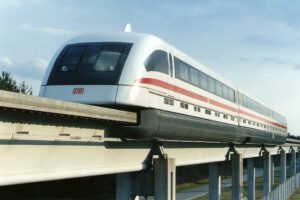
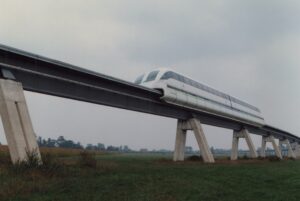
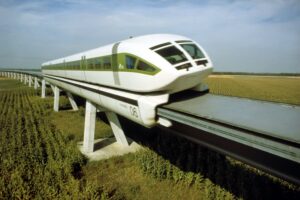
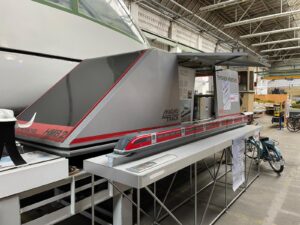
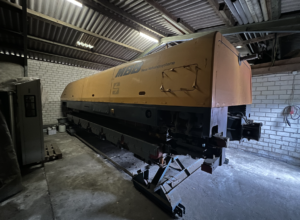
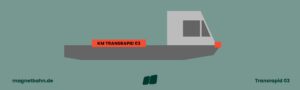
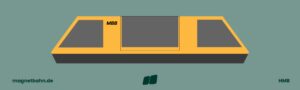
MBB KOMET (M)
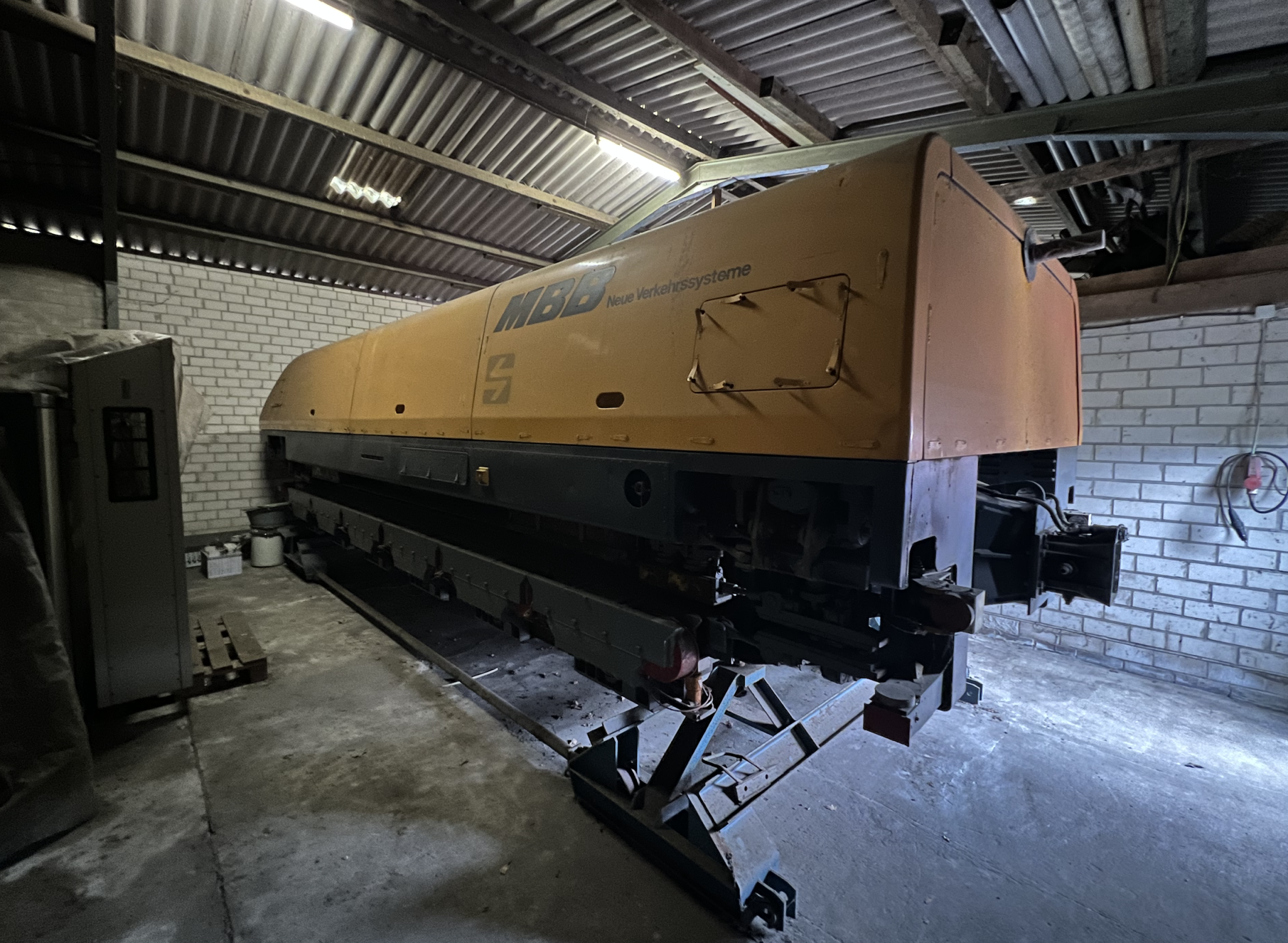
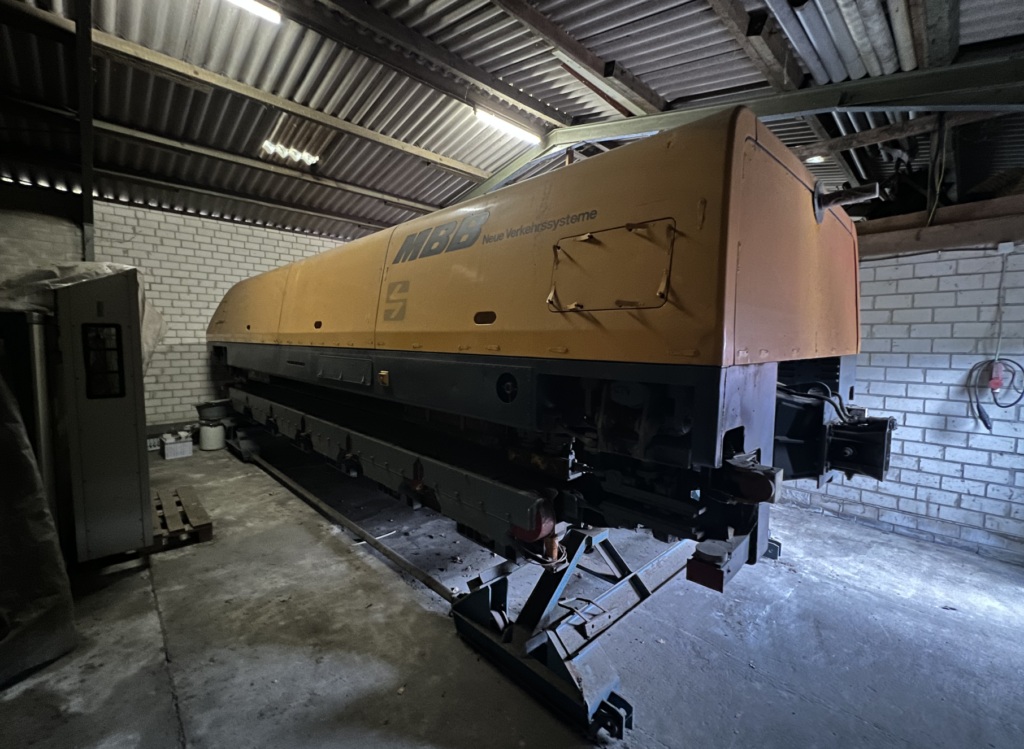
From 1975, MBB used the KOMET to test magnet control at very high speeds, up to 401.3 km/h. As the KOMET M, it was the first vehicle with individually controlled, sprung magnets.
Magnet control at over 400 km/h
The KOMET showed that a maglev running gear has to be sprung.
In 1974, MBB built a 1.3-kilometer track for a new EMS vehicle at the Manching military airfield near Ingolstadt. It was propelled by a rocket sled. The aim was to test the magnet control electronics at very high speeds, later up to 401.3 km/h.
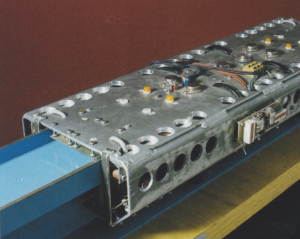
This revealed that the existing concept was problematic: the levitation and guidance magnets were mounted rigidly on the vehicle without suspension. The air gap was hard to maintain, and ride comfort would have been poor. At high speeds in particular, the car body developed natural vibrations that passed straight into the running gear without any suspension.
KOMET key facts
- Year built
- 1974
- Operation
- 1975–1978
- Company
- Messerschmitt-Bölkow-Blohm
- Route
- 1.3 km, Manching military airfield (Ingolstadt)
- System
- Short-stator linear motor
- Air gap
- 14 mm
- Rated speed
- 400 km/h
- Top speed reached
- 401.3 km/h
- Vehicle units built
- 1
- Empty weight
- 8.8 t
- Payload
- 200 kg
- Seats
- –
- Standing room
- –
- Length
- 15 m
- Width
- 3.4 m
- Height
- 2.8 m
KOMET M: individually controlled and sprung
In 1977, the KOMET was converted and renamed KOMET M. For the first time, it had six magnets on each side, each individually controlled and connected to the magnet frames by springs. The magnet frames in turn carried the car body and cushioned it separately.
The magnets were redundant for the first time, and ride comfort improved significantly. The KOMET's individual magnet control later fed into the Transrapid 05.
KOMET M key facts
- Conversion
- 1977
- System
- Long-stator linear motor
- Air gap
- 8 mm
- Empty weight
- 11 t
- Payload
- 200 kg
Stored in Lathen
The KOMET has been preserved and is kept in storage in Lathen, not open to the public.