Language
Language
Urban and regional maglev · Germany

Transport System Bögl (TSB)

A driverless maglev for cities and regions, developed by the Max Bögl group in Bavaria. Since November 2025 it holds the first licence for public maglev lines in Europe, but it has yet to win its first paying line.

The system

Maglev for the city, not the long haul

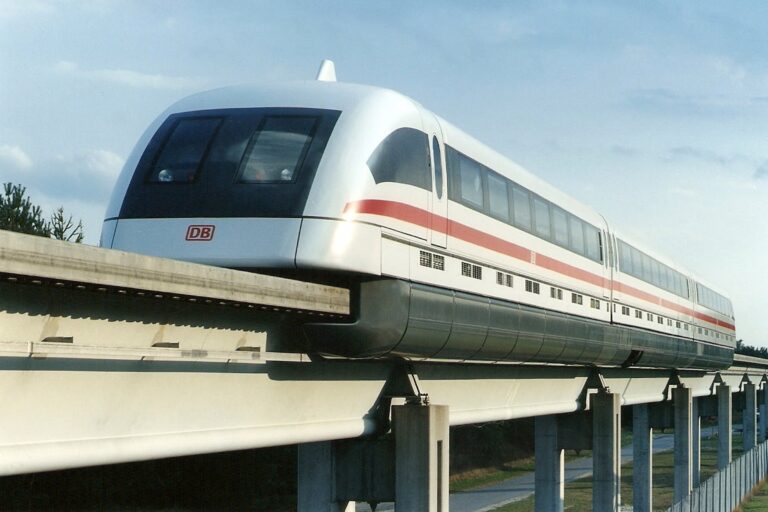
The TSB is the maglev for cities and regions. The Transrapid is the one for long distances.

Max Bögl has been developing the TSB since 2010 in Sengenthal, Bavaria. The company knows maglev guideways well: it produced guideway elements for the Transrapid line in Shanghai.

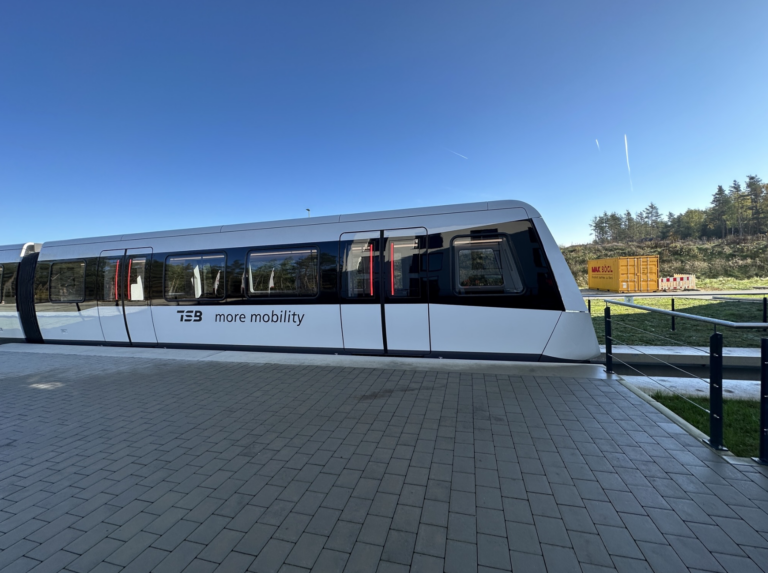
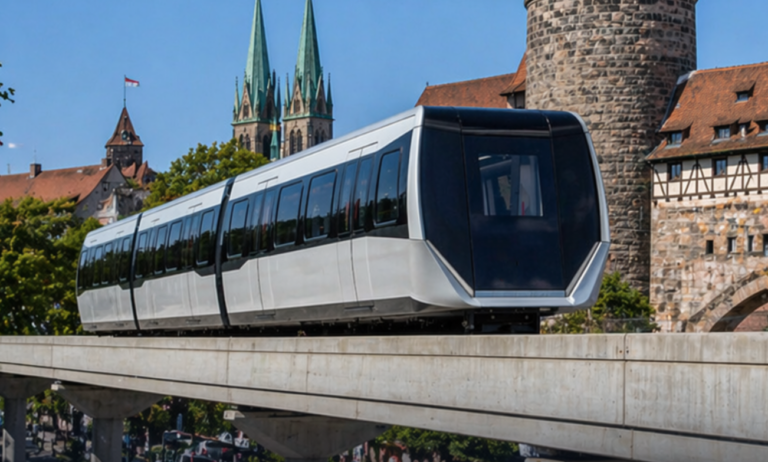
The TSB uses electromagnetic suspension. Unlike the Transrapid, its linear motor sits on the vehicle (short stator), which keeps the prefabricated concrete guideway simpler. Vehicles run without a driver and without overhead lines, and the guideway can be elevated over roads, rivers and other infrastructure.

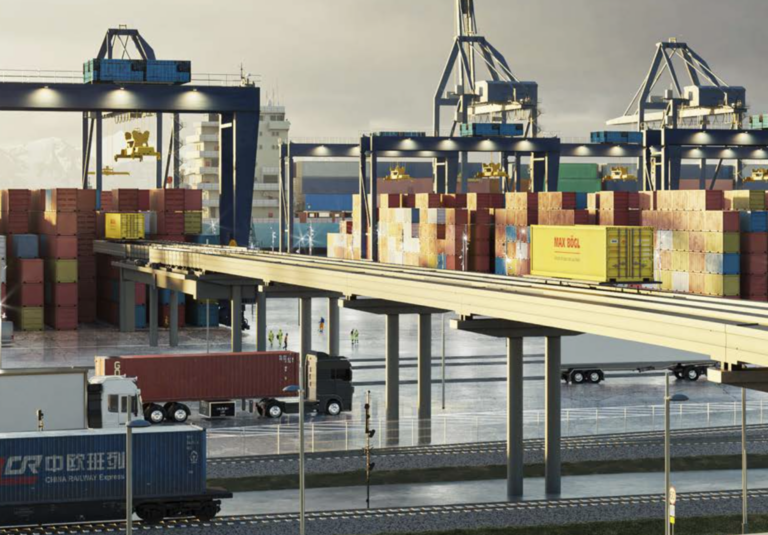
The target is routes of 5 to 50 km: airport links, suburban lines and connections between towns, for passengers and freight.

Fact sheet

Developer
Max Bögl group, Sengenthal (Germany)
In development since
2010
Principle
Electromagnetic suspension (EMS), short-stator linear motor
Operating speed
150 km/h (design)
Speed record
181 km/h (Chengdu, April 2024)
Capacity
up to 127 passengers per 12 m section
Gradient
up to 10%
Minimum curve radius
45 m
Test tracks
Sengenthal (about 820 m), Chengdu (3.5 km)
Licence
Operating licence from Germany's Eisenbahn-Bundesamt, November 2025
Status
Licensed, no public line yet

Manufacturer figures. Max Bögl also claims running costs about 20% below conventional wheel-on-rail systems; this has not been independently verified.

History

From Sengenthal to Chengdu

  1. 2010

    Development starts

    Max Bögl begins developing its own urban maglev.

  2. 2012

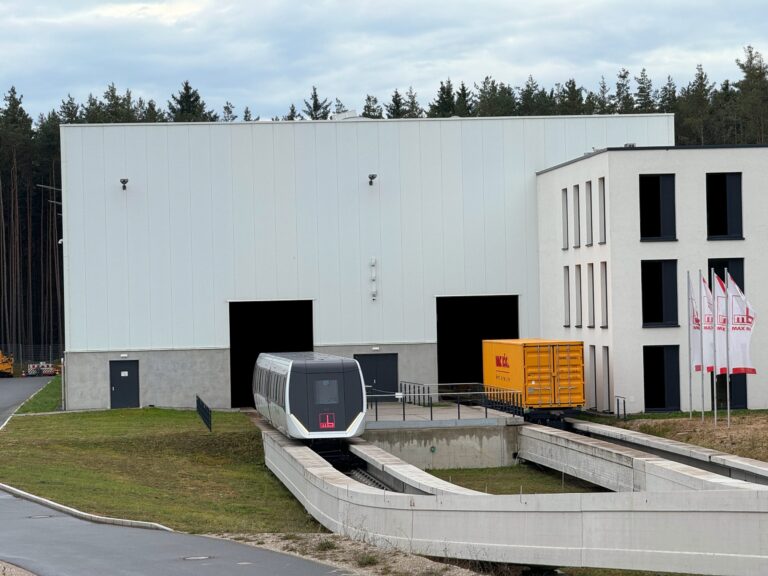
    Test track in Sengenthal

    Tests begin at the company headquarters. By 2018, more than 100,000 test runs have covered over 65,000 km.
    TSB_Teststrecke-scaled
  3. 2018

    Joint venture in China

    Together with Chengdu Xinzhu Road & Bridge Machinery, Bögl builds a 3.5 km demonstration line in Chengdu. The Chinese partner holds exclusive rights to the technology in China.

  4. 2021

    TSB Cargo in Hamburg

    A demonstrator shows how the TSB could move containers between port and hinterland. The same year, the TSB reaches 169 km/h.

  5. 2024

    181 km/h

    A three-section vehicle sets a new record for medium-low speed maglev in Chengdu, confirmed by an independent assessor.

  6. 2025

    Licence in Germany

    On 19 November, the Eisenbahn-Bundesamt grants TSB Betriebs GmbH a licence to operate public maglev lines, the first of its kind in Europe.

Status

Where the TSB stands in 2026

Technically, the TSB is mature and now licensed in Germany. Commercially, it still lacks its first customer. Possible applications have been studied in Nuremberg, Hamburg and between Herrenberg and Nagold, and a cargo demonstrator company was set up in Braunschweig. None of these has a construction decision yet. In September 2026, Bögl presented the system at InnoTrans in Berlin.

Assessment

Strengths and challenges

StrengthsQuiet, driverless, handles tight curves and steep gradients. Prefabricated, elevated guideway that fits into existing cities. A turnkey offer covering construction and operation.
ChallengesNo paying customer after more than 15 years of development. Competes with trams, buses and metros that cities already know. Demonstration work depends heavily on Chinese partners.
Downloads

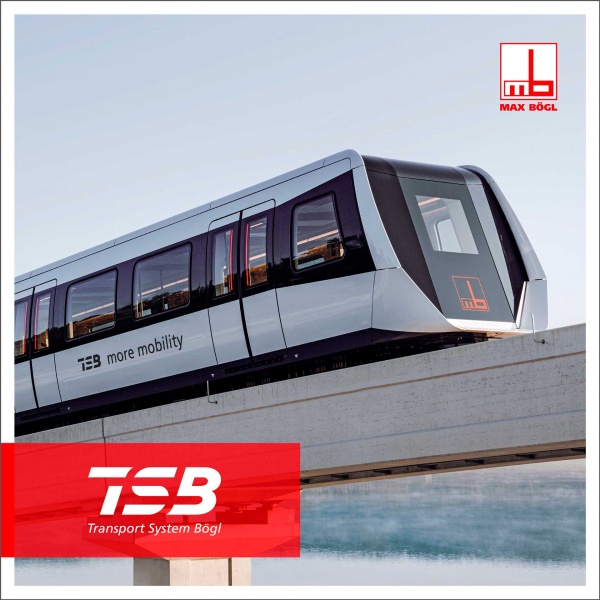
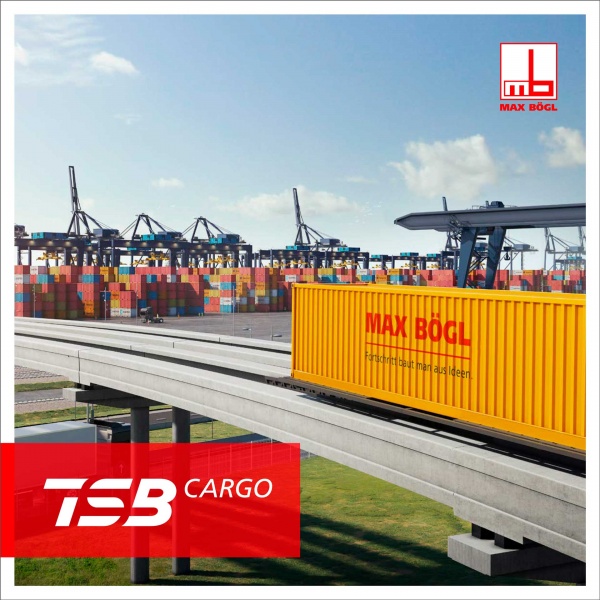
Official TSB brochures

The official brochures from Max Bögl explain the technology and its applications. Downloads open on transportsystemboegl.com.
Join the team

Help build maglevhub.com

maglevhub.com started in 2026 as the international offshoot of magnetbahn.de and is now growing on its own. We are looking for writers, translators, researchers, video makers and developers from all over the world.