Language
Language
Transrapid

Transrapid Routes Worldwide

From the exhibition line in Hamburg through the test facility in the Emsland region to Shanghai: here you will find every line on which the Transrapid has run or runs today.

All routes at a glance

Shanghai, China
29.9 km · since 2003 · commercial regular service
Test Facility Emsland, Lathen
31.5 km · 1984 to 2011 · not operational, preserved
Tongji University, Shanghai
1.5 km · since approx. 2005 · active
CRRC Qingdao, China
0.66 km · since 2020 · active
Hamburg, IVA 1979
0.9 km · 1979 · completely dismantled
Kassel
Length unknown · 1980 to 1983 · mostly dismantled
Shanghai, China

Shanghai: the first commercial Transrapid line

In Shanghai, the Transrapid has been proving for over 20 years that it works in everyday service.

Since the end of 2003, the Transrapid has been in commercial regular service in Shanghai, on a 29.9 km line. The contract was signed in January 2001, and construction began at the end of February 2001. The guideway design came from Germany, but it was built in China.

The vehicles of the Shanghai Maglev Train (SMT) are based on the TR08 and were built in 2002 and 2003. In 2003, an SMT reached 501.5 km/h. By 2024, the vehicles had covered around 28 million kilometers. In 2010, a vehicle manufactured in China was added, also based on the TR08.

  • Operation: since late 2003
  • Length: 29.9 km
  • Vehicles: SMT (based on TR08), PV04
  • Status: in operation
Lathen, Germany

Transrapid Test Facility Emsland

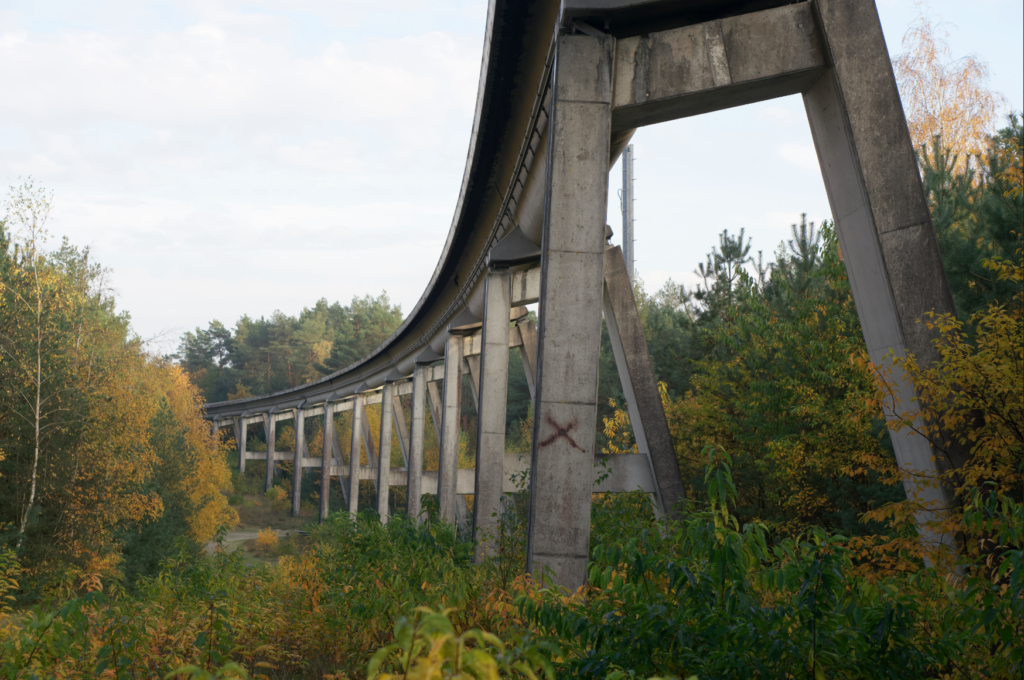
The Transrapid Test Facility Emsland (TVE) was built from 1980 to 1987 and was the full-scale (1:1) test track. This is where the Transrapid reached 450 km/h.

  • Operation: 1984 to 2011
  • Length: 31.5 km
  • Vehicles: TR06, TR07, TR08, TR09
  • Status: not operational, but fully preserved

You can find everything about the route, switches and guideway on the page about the Test Facility Emsland.
Bildschirmfoto-2023-05-14-um-12.50.17
Shanghai, China

Tongji University test track

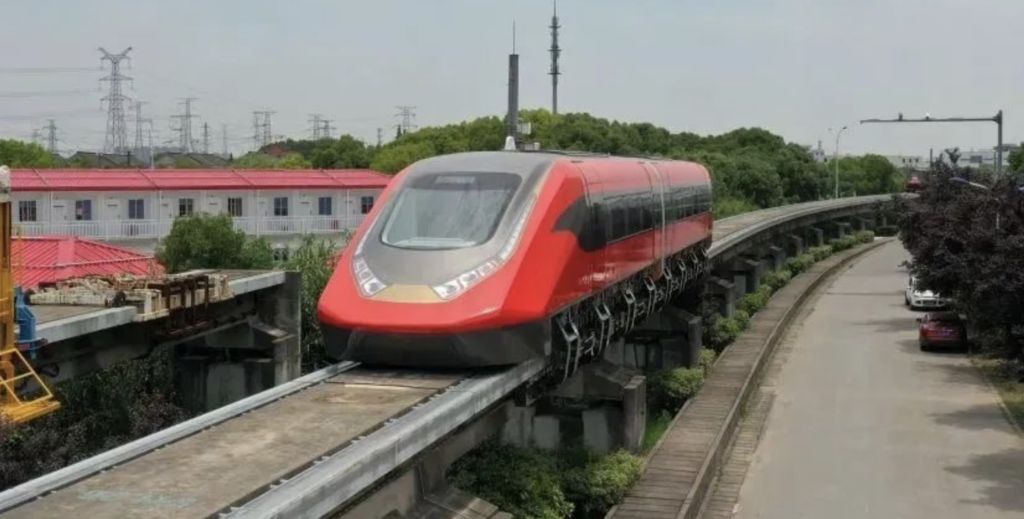
Tongji University operates a 1.5 km test track for Transrapid vehicles. It was built around 2005 from guideway girders left over from the construction of the Shanghai line, and is used for research. All Chinese Transrapid replicas used to be tested here. Since 2013, the university has hosted a joint research center with ThyssenKrupp.

  • Operation: since approx. 2005
  • Length: 1.5 km
  • Vehicles: CMT-01, CF-08, CF600 Sifang, CF200 Zhuzhou, CF600 Changchun
  • Status: active, currently with CF200 (Zhuzhou), CF600 (Sifang) and CF600 (Changchun)
Bildschirmfoto 2024-08-27 um 19.49.38
CF200 Zhuzhou on the Tongji track in Shanghai
Qingdao, China

CRRC test track in Qingdao

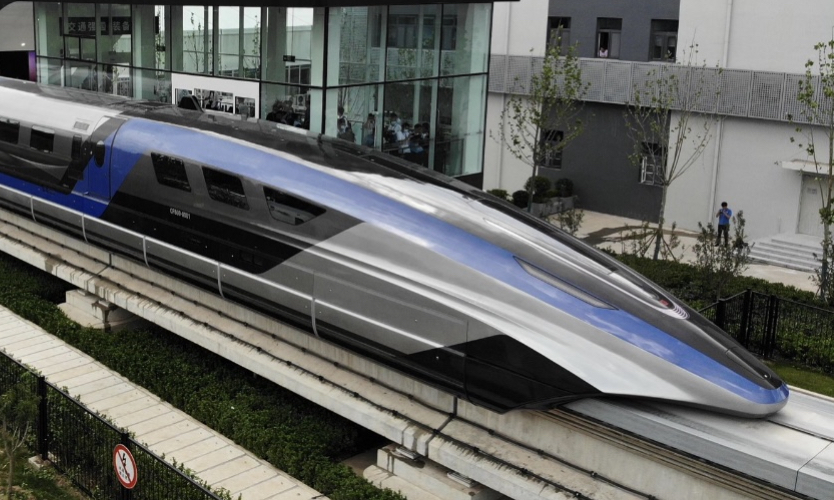
At a research center in Qingdao, CRRC Sifang is developing the CF600. The associated test track is only 660 m long and allows low speeds, which are sufficient to demonstrate the technology. Its bendable steel switch can be passed at 600 km/h (high-speed switch).

  • Operation: since 2020
  • Length: 0.66 km
  • Vehicles: CF600 Sifang, currently with four sections
  • Status: active
IMG_4398
CF600 Sifang on the test track in Qingdao
Former routes

Hamburg and Kassel: the first Transrapid lines

Hamburg (1979): For the 1979 International Transport Exhibition (IVA), the TR05 carried visitors from the Heiligengeistfeld to the exhibition grounds. The 0.9 km line was only 2.20 m wide; today's Transrapid guideway measures 2.80 m. It was dismantled after a few months and has since vanished completely.

Kassel (1980 to 1983): A section of the Hamburg line was rebuilt in Kassel. While the Test Facility Emsland was under construction, it was used for test runs, demonstrations and trials with the TR05. When operations started in the Emsland region in 1983, it was no longer used. Around 2011 most of it was dismantled, and the TR05 went to the Technik Museum Kassel. A small section with a station and control center has been preserved.

Join the team

Help build maglevhub.com

maglevhub.com started in 2026 as the international offshoot of magnetbahn.de and is now growing on its own. We are looking for writers, translators, researchers, video makers and developers from all over the world.