
Hyperloop
Pods levitating through tubes with almost no air, at airliner speed: that is the promise. After more than a decade, the best-funded company has closed, two European pioneers went bankrupt in 2026, and no passenger line exists anywhere.
Maglev plus a vacuum tube
No rolling friction, almost no air resistance: that is the theory.
In August 2013, Elon Musk published the Hyperloop Alpha white paper. It proposed passenger pods traveling through low-pressure tubes at the speed of an airliner. Between 2015 and 2019, a SpaceX pod competition inspired many university teams around the world.
Technically, a hyperloop combines a levitating vehicle, using magnets or air bearings, a linear motor, and a tube kept at a small fraction of normal air pressure. The idea of a vacuum train is much older than the name, but the 2013 paper started a wave of start-ups.
Who built what, and what happened
European Hyperloop Center
- Location
- Veendam, Netherlands
- Opened
- September 2023
- Test tube
- 420 m, 2.5 m diameter, with a lane switch
- Cost
- about 30 million euros, half from EU funds
- Status 2026
- Mostly idle after Hardt's bankruptcy; hosted European Hyperloop Week in July 2026
State-funded vacuum maglev
China follows a different path. The state-owned aerospace group CASIC tests a superconducting maglev in a 2 km low-vacuum tube in Datong and claims 623 km/h. More on that and other Chinese test platforms on our page about vacuum and ultra-high-speed tests.
Our assessment
Hyperloop is a research field, not a mode of transport that is about to arrive.
The physics works. Short tubes and pods have been tested many times. The problems appear when the idea is scaled up: keeping hundreds of kilometers of tube airtight, handling thermal expansion, evacuating passengers in an emergency, certifying safety, building junctions and stations with enough capacity, the energy needed for pumping, and above all the construction cost.
No Western developer has gone faster than about 172 km/h with a full-size vehicle. China's programs have long-term funding but also operate only on tracks a few kilometers long. Proven maglev systems such as the Transrapid or the SCMaglev already reach 430 to 600 km/h in open air.
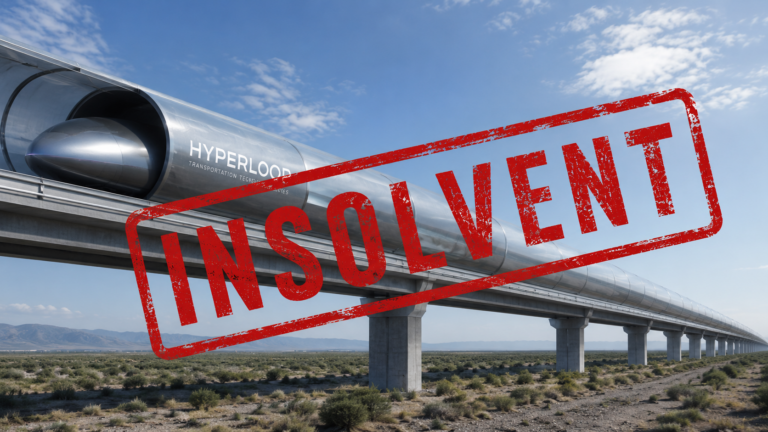 Oct 20, 2026 · HyperloopThe End of the Hyperloop Bubble: Almost a Billion Euros Wiped Out
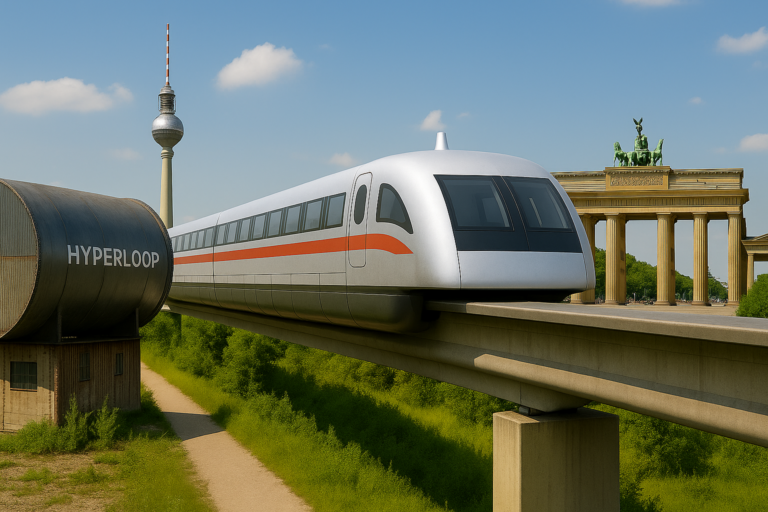 Oct 20, 2026 · HyperloopHyperloop Remains a Pipe Dream, While the Transrapid Has Long Been Ready
 Oct 20, 2026 · HyperloopHyperloop: Hamburg and Federal Government Plan Reference Line for Vacuum-Tunnel Maglev
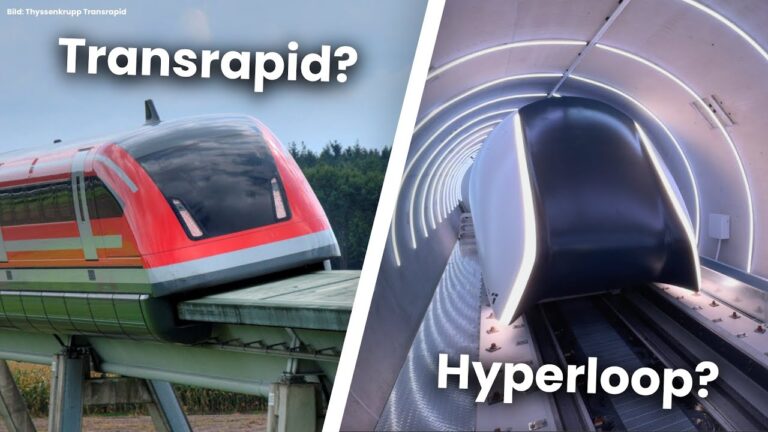 Oct 20, 2026 · HyperloopHow the Hyperloop Differs From the Transrapid
Sources
- Hyperloop projects 10 years after the ideaRolling Stock World
- Hyperloop One to shut down and sell its assetsE&T, December 2023
- Hyperloop pioneer Hardt files for bankruptcyIO+, March 2026
- Hardt sets speed record and demonstrates lane switchingHardt, 2024
- Hyperloop test center in Veendam seeks fundingFaillissementsdossier, 2026 (Dutch)
- Swisspod unveils hyperloop test track and secures 13 millionStartupticker, November 2025
- Swisspod hits new hyperloop speed recordElectronics360, 2026
- Hyperloop Transportation TechnologiesWikipedia
- Europe's first full-scale hyperloop test track opensTechnical University of Munich, 2023
- European Hyperloop WeekWikipedia