Maglevs Significantly Lighter Than Conventional Trains
A vehicle's weight plays a decisive role in rail transport, as it affects not only the amount of material needed but also energy consumption, environmental impact and wear on the infrastructure.
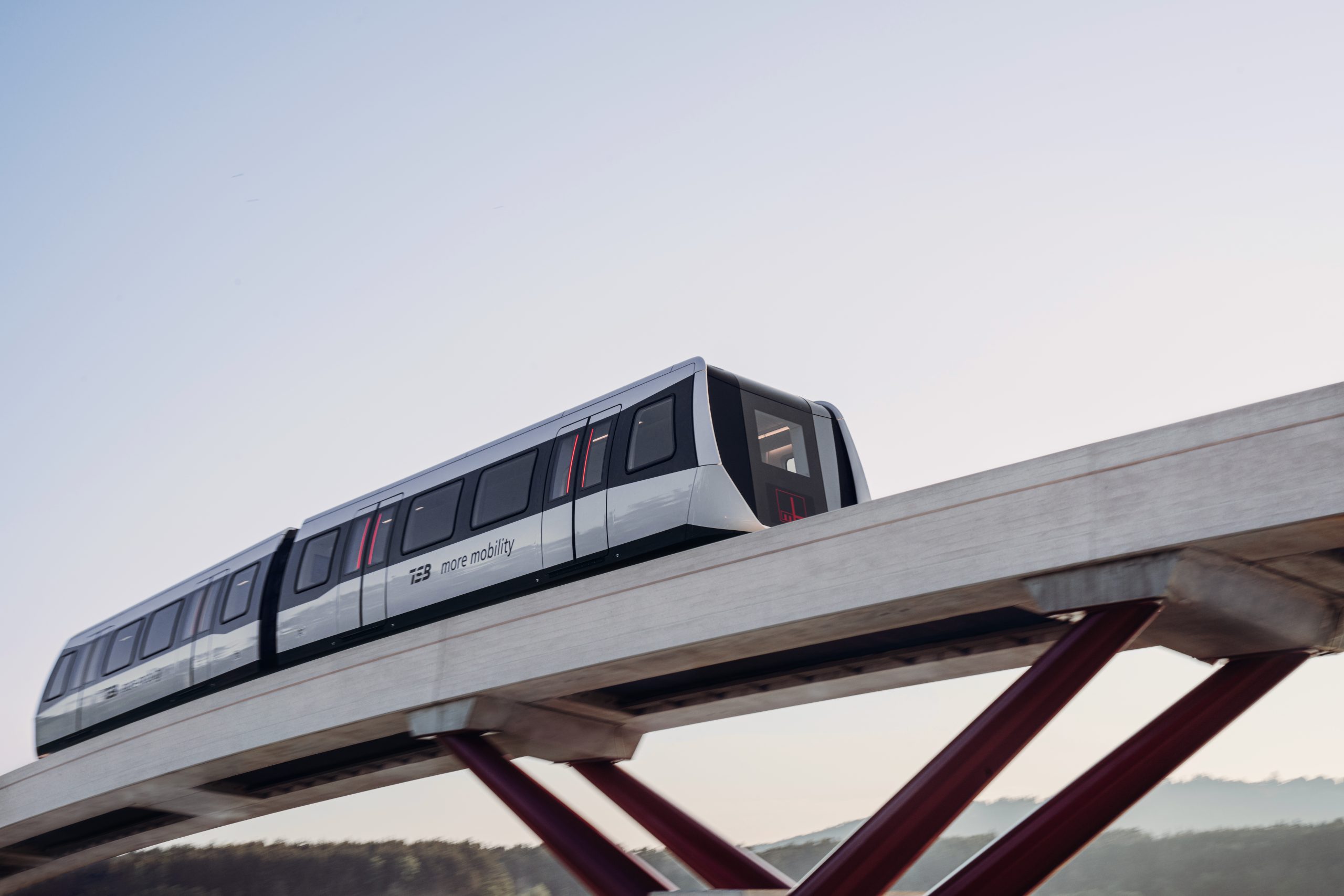
A vehicle’s weight plays a decisive role in rail transport, as it affects not only the amount of material needed but also energy consumption, environmental impact and wear on the infrastructure. While conventional trains depend on heavy bogies, axles and wheels, maglevs use a contactless levitation system that delivers major weight savings. The lighter construction offers not only economic advantages but also sets new standards for efficiency and sustainability.
Significantly lighter
One of the greatest advantages of maglev technology is its significantly lower weight compared with conventional trains. A concrete comparison illustrates this advantage:
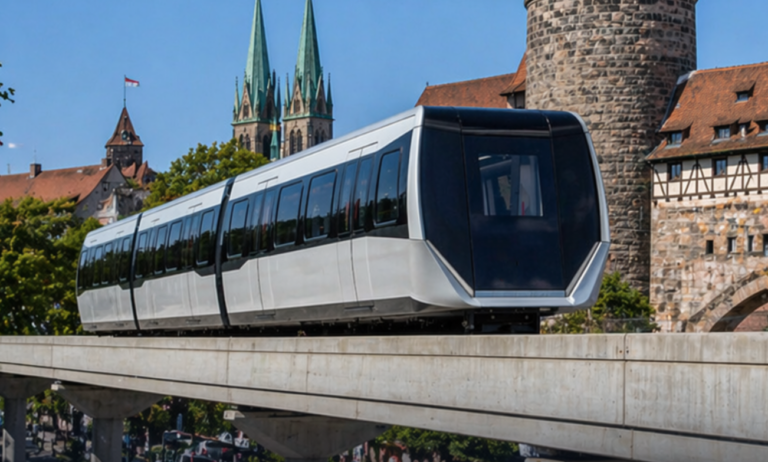
A suburban train (S-Bahn, Siemens BR425) with a capacity of 434 people weighs 114 tons in total. The Transport System Bögl (TSB) can carry 404 people and weighs only 74 tons. (The TSB can also carry more people if the number of sections is increased.)
Although the TSB offers a capacity similar to the S-Bahn, it is 35% lighter. The TSB’s lower weight results in reduced material requirements. Maglevs need no mechanical components such as wheels or axles, which leads to drastic weight savings.
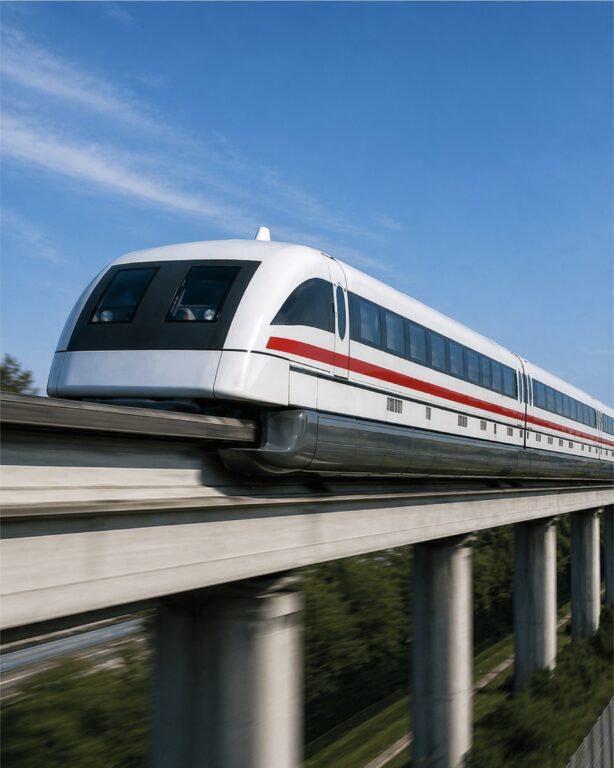
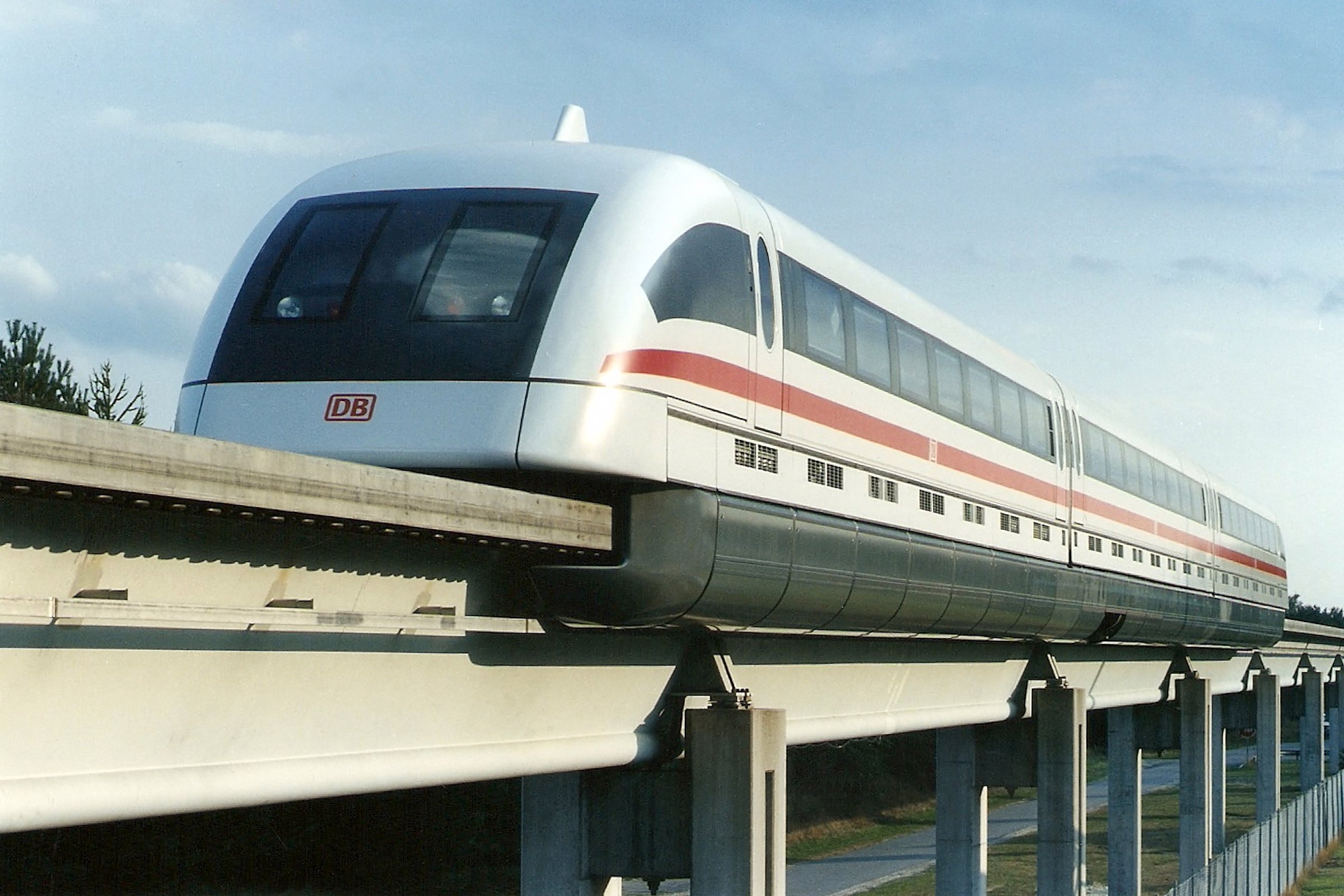
A comparison between a modern high-speed train and a maglev further illustrates the benefits of lightweight construction. The Siemens Velaro (ICE 3) reaches a top speed of 330 km/h and weighs 0.986 tons per seat. By comparison, the Transrapid delivers significantly better figures: with a top speed of over 500 km/h, it weighs only 0.567 tons per seat.
This comparison shows that the Transrapid is 42.5% lighter per seat than the Siemens Velaro, despite the much higher speed. The lower weight per seat means the maglev is significantly more efficient, needs less energy and uses fewer resources at comparable capacity.
Less wear
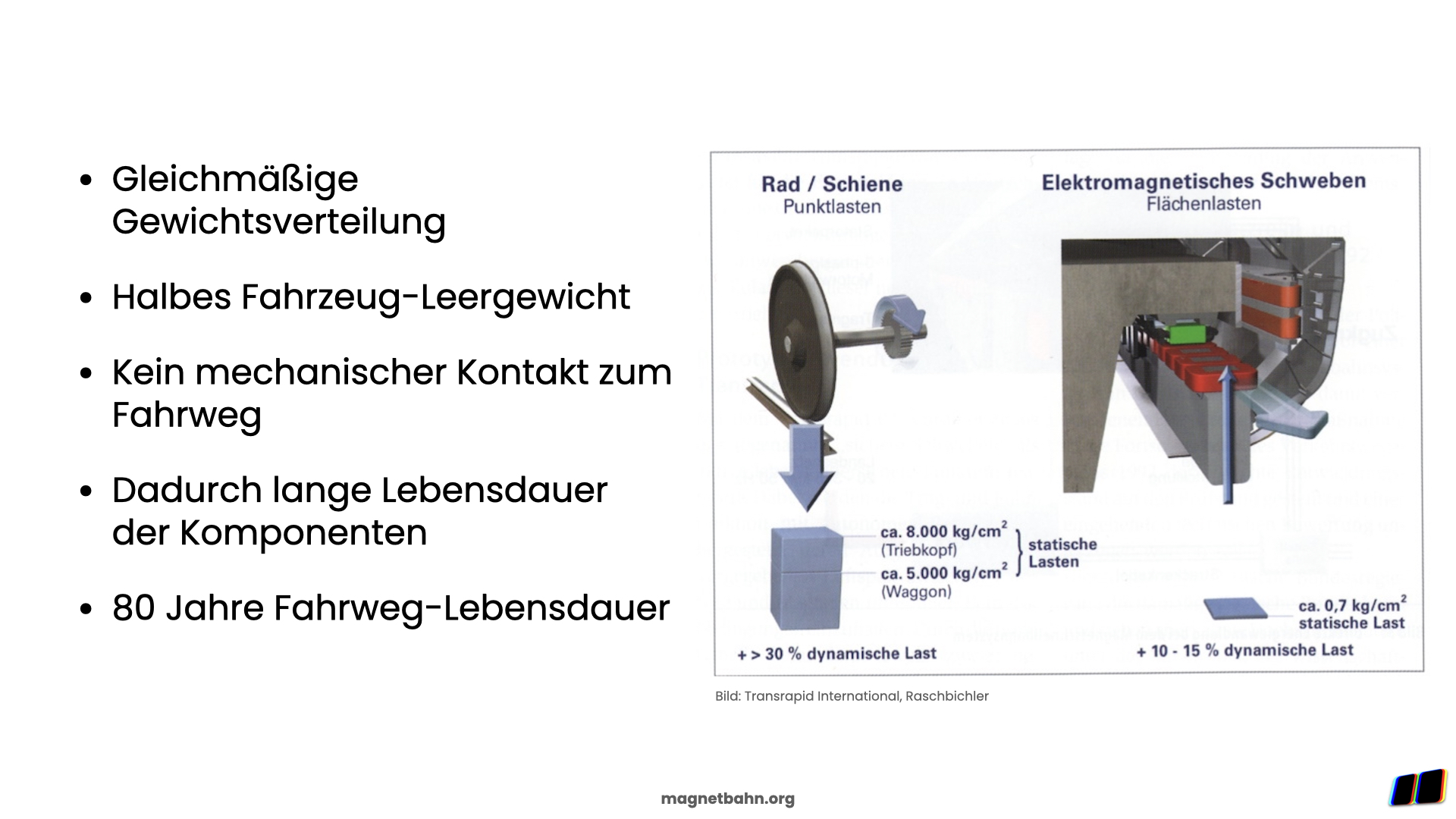
The weight distribution of maglevs is also a major advantage. While on conventional trains the weight is concentrated on a few points, the wheels and axles, on a maglev the weight is spread evenly across the guideway. This distribution over a wide area significantly reduces wear on both the vehicle and the track. Contactless operation means there is no mechanical abrasion of the kind that occurs with rails and wheels. As a result, maintenance of guideways and vehicles is much less laborious and costly for maglevs.
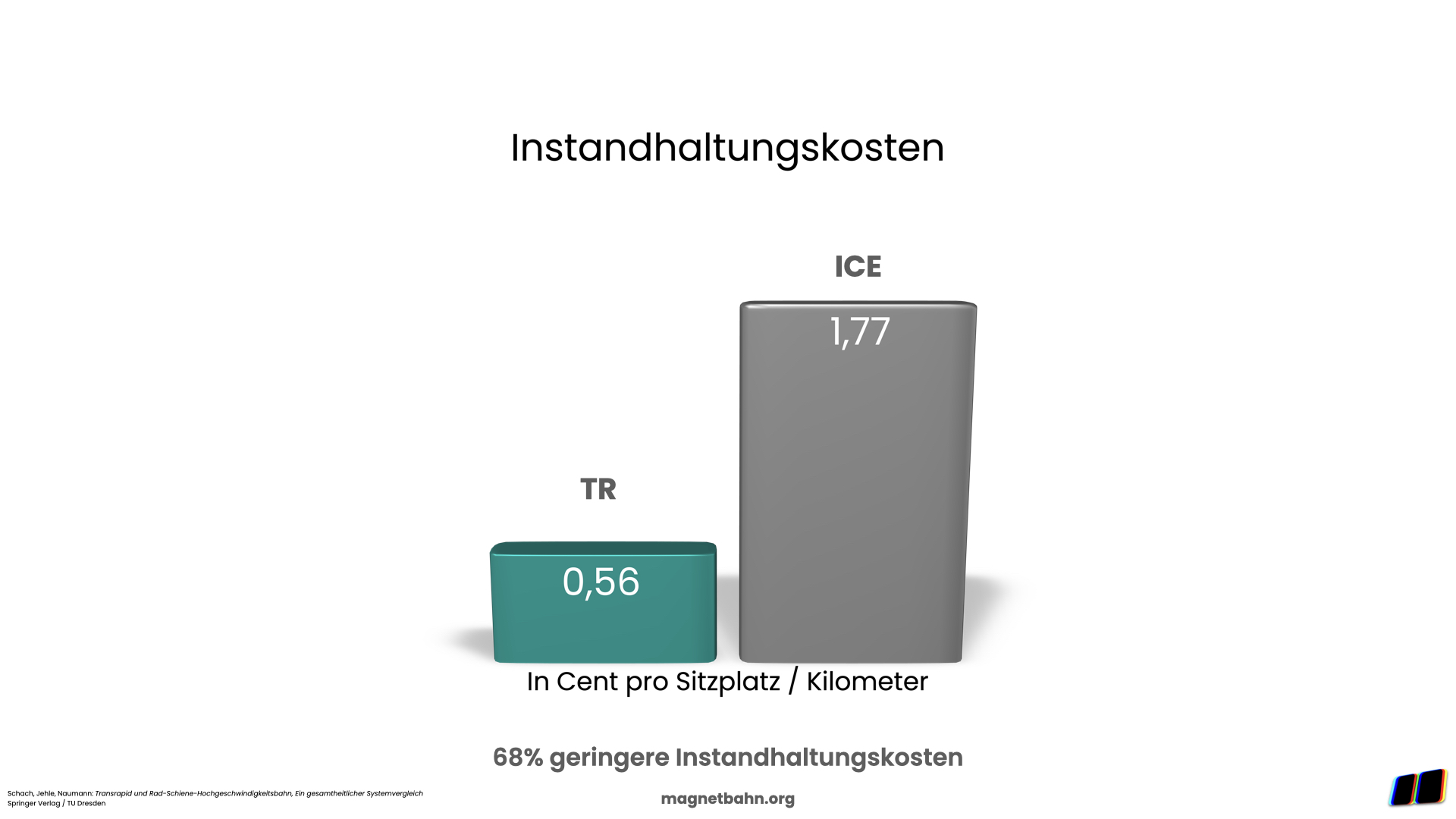
The significantly reduced empty weight of the vehicles, combined with the even weight distribution and the absence of mechanical abrasion, brings enormous maintenance cost savings that conventional trains will never achieve. For the Transrapid, maintenance effort is 68% lower than for an ICE.
Limits of the railway
Conventional trains run into technical limits when it comes to reducing their weight. Any weight saving is possible only within a limited range, because trains must always carry heavy components such as wheels, axles, bogies and overhead lines. These physical constraints make it difficult to reduce the weight of conventional rail vehicles any further.
Maglevs avoid these problems because they do not depend on wheels and axles. Instead, the vehicle is carried by a lightweight magnetic running gear controlled by modern control electronics. As a result, a maglev can accelerate faster, reach higher speeds, spare the track and infrastructure, and use less energy than conventional trains.