Maglev in Berlin Stirs Up Press and Politicians
The Berlin press is going into overdrive because Transport Senator Ute Bonde (CDU) dares to think in new ways. Just like at the end of 2023. On Monday, August 18, 2025, 12 of 16 S-Bahn (suburban rail) lines were disrupted. Deutsche Bahn is not planning a fundamental overhaul until the 2030s. For Berlin, that means another decade of permanent chaos.

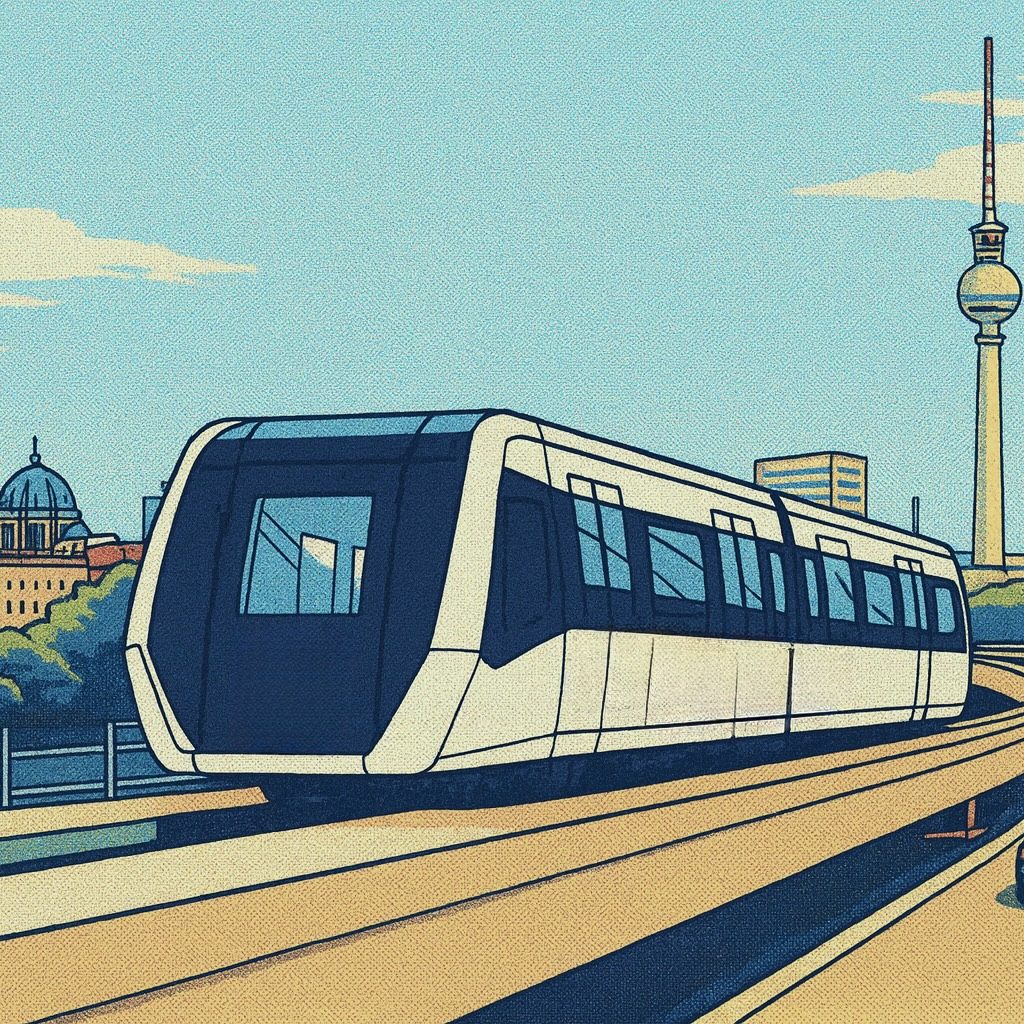
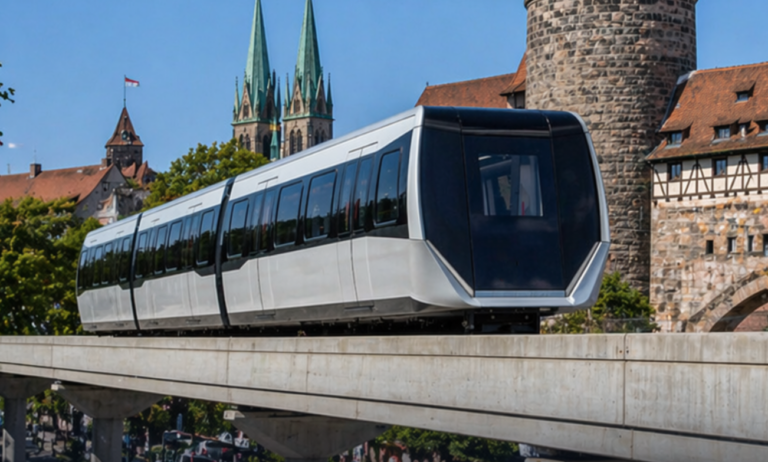
Yet the solution has long been on the table: a modern maglev such as the Transport System Bögl (TSB). It is considerably cheaper to build than a subway or S-Bahn, runs quietly, needs no drivers, has far lower maintenance costs and, with a peak capacity of 35,000 people per hour per direction, can easily keep up with the subway. In addition, the TSB can be built much faster because the guideway modules are prefabricated industrially and produced in series. While conventional infrastructure projects get bogged down for years in planning thickets, with the TSB the guideway and vehicle can be supplied from a single source. The coordination between countless companies, which regularly causes delays in railway construction, falls away. In Berlin, a functioning infrastructure that relieves the rail network could thus be built within a few years, instead of waiting another decades for renovations that do not even solve the capacity problems.
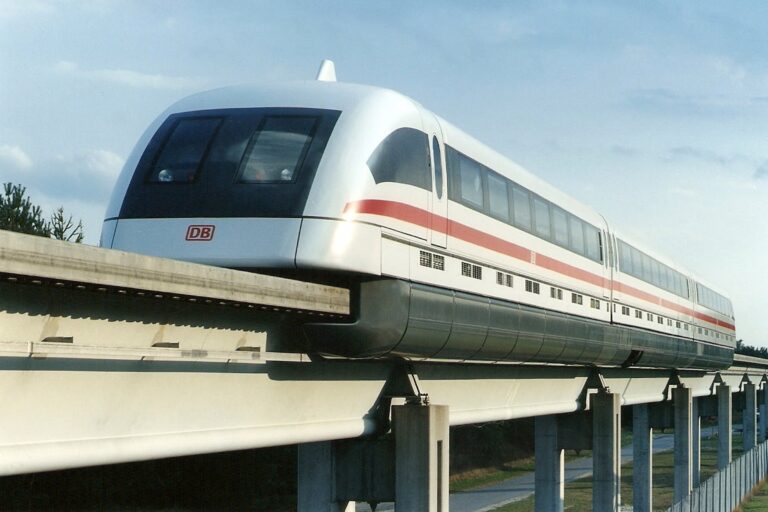
Instead of soberly examining what potential the maglev could unfold, some media outlets try to outdo one another in mockery. The Tagesspiegel reduces Bonde’s proposal to a parody and trots out the worn-out Edmund Stoiber analogy (the former Bavarian premier who in 2002 made a much-ridiculed remark about a maglev to Munich Airport), as if this were an absurd anecdote from 2002 rather than a serious response to Berlin’s traffic infarction. The Berliner Zeitung, too, quotes passenger associations who would rather keep lamenting the weaknesses of the S-Bahn and subway than consider a solution at all. “Instead of building pressure on DB InfraGo,” it says there, “Bonde philosophizes about her favorite M-Bahn.” The fact remains: pressure alone does not build a new track, and without new systems nothing about the chaos will change.
The political reaction is as predictable as it is disappointing. The AfD speaks of “cloud cuckoo land” and questions the technical feasibility, even though the TSB in particular can demonstrably be routed over streets and highways. Die Linke (The Left) prophesies a “financial disaster” and claims the maglev is more expensive and maintenance-intensive than a tram, a flat-out false claim. The Greens, in turn, distract from the real issue, talk about 30 km/h speed limits and cite Helsinki as a model, while Berlin has been failing at its own homework for years. Instead of developing solutions, the capital’s politicians indulge in mutual obstruction.
Particularly striking are the fantasy figures circulating on construction costs. Heinrich Strößenreuther, a former CDU member now active with the Greens, initiator of the illegal-parking app Wegeheld and co-founder of the Volksentscheid Fahrrad (bicycle referendum) initiative, publicly calculates €55 to €130 million per kilometer and extrapolated total costs of €32.5 billion. The reality is the opposite. According to the manufacturer, building the TSB costs €20 to €40 million per kilometer, so only about a tenth of a subway. Operating costs are also well below those of the S-Bahn, because there are no wheels, no overhead lines and no driver wear. The supposed “cost explosion” is nothing but targeted disinformation.
While Berlin chokes in traffic and the S-Bahn falls apart, the capital’s press would rather make fun of solutions fit for the future. Ute Bonde has the courage to think about a real alternative. Instead of polemics and petty politics, Berlin finally needs a factual debate. How do we create a reliable and affordable alternative to the crumbling S-Bahn? How can we expand local transport in an autonomous, silent and climate-friendly way? And why should Berliners wait more than ten years when the technology has long been available?
The truth is that a maglev could relieve the city faster than any other project. And that is precisely why many opponents talk it down by all means available.