Language
Language
Transrapid ·

Munich Airport Needs the Transrapid – Not a Half-Hearted ICE Connection

As Abendzeitung München reported, the Bavarian Chamber of Industry and Commerce (BIHK) warns that without a better rail connection, Munich Airport risks a competitive disadvantage. The airport itself is also pushing for a direct link to Deutsche Bahn's long-distance network.
As Abendzeitung München reported, the Bavarian Chamber of Industry and Commerce (BIHK) warns that without a better rail connection, Munich Airport risks a competitive disadvantage. The airport itself is also pushing for a direct link to Deutsche Bahn’s long-distance network. The demand is for a new ICE (high-speed train) station right at the terminal, connected to the Munich-Ingolstadt high-speed line.

At first glance this sounds sensible, but a closer look shows that an ICE connection would not solve the actual problem and would be nowhere near as attractive as a long-proven alternative that once came close to being built in Munich: the Transrapid. In 2022, €5 billion was estimated for the ICE line to the airport – pshh… the Transrapid in 2008 came to only between €1.85 and €3.4 billion…

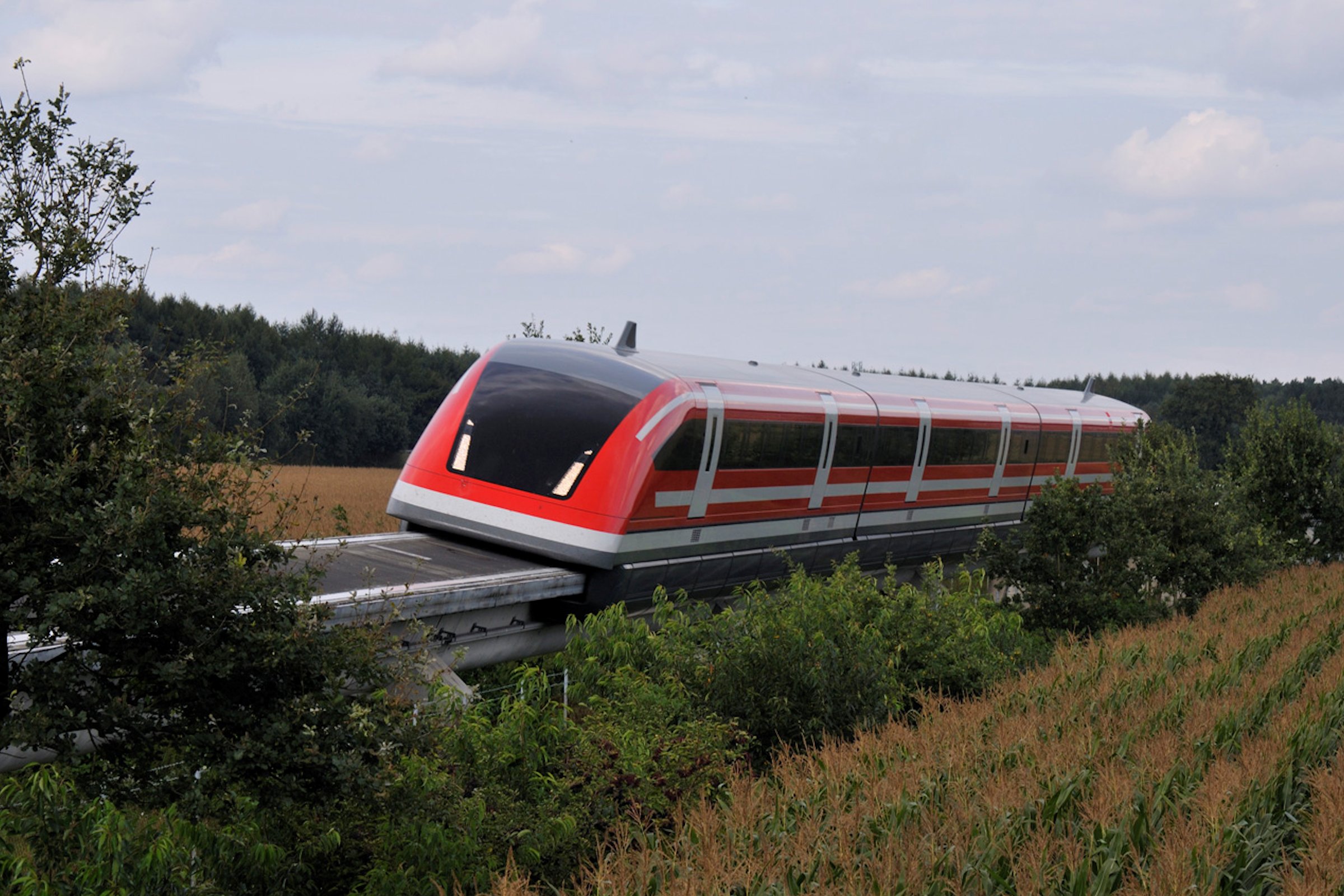
Was already planned in Munich 20 years ago: Transrapid 09 | Image: ThyssenKrupp Transrapid

The problem

According to BIHK head Manfred Gößl, the S-Bahn (suburban rail) is currently the bottleneck on the way to the airport; disruptions and canceled trains are the order of the day, and alternatives are lacking. Additional regional train connections are planned, along with more frequent S8 service, from every 20 to every 15 minutes, once the 2nd Stammstrecke (second central trunk line) is completed. A proposed express connection, of the kind that was also put forward against the Transrapid 20 years ago and never built, is supposed to take “only” 30 minutes. But even with that, the travel time from the main station to the airport would remain uncompetitive for a metropolis of this size.

What the Transrapid delivers

As early as May 2025, magnetbahn.de proposed re-examining the Transrapid in Munich; all the arguments point in its favor.

The Transrapid would cover the route in just 10 minutes, and at a dense 10-minute frequency. The airport would then be connected to the city center not only quickly and reliably, but also effectively linked to the entire ICE network. Travelers could transfer seamlessly to trains in all directions at Munich Hauptbahnhof (main station).

Unlike in 2008, when the project was stopped for political reasons, the conditions today are fundamentally different. Through the expansion of the Gemeindeverkehrsfinanzierungsgesetz (GVFG, the federal law funding local transport projects) planned in the federal government’s 2025 coalition agreement, maglev trains will in future also be eligible for funding, with up to 75 percent federal subsidy. This means the Transrapid could now be financed under the same conditions as a subway or tram, so the cost criticism of the time is outdated.

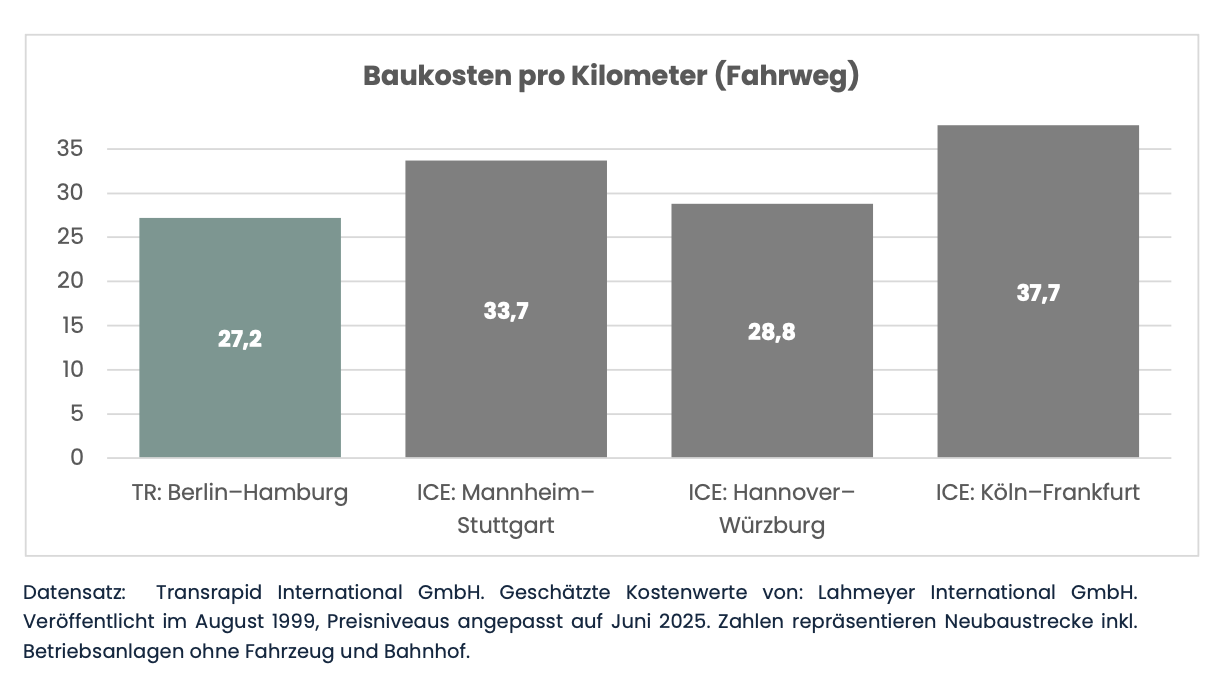
Even then, the Transrapid was calculated at around €89 million per kilometer. By comparison, current Munich subway projects cost between €342 and €400 million per kilometer, for slower, less comfortable and more maintenance-intensive systems. Even adjusted for inflation, the Transrapid remains cheaper.

The claim that the Transrapid is more expensive than conventional rail lines is false. Source: position paper, June 2025

Location factor

The Transrapid is not just a means of transport but also a technology carrier. It runs quietly, without fine particulates or exhaust emissions, is low-wear and needs less energy per seat than an ICE at comparable speed. The technology has been in use for over 20 years, for example in Shanghai with more than 28 million kilometers of total mileage.

For Bavaria it would also be a worldwide flagship project. It could show what German, and especially Bavarian, companies are technologically capable of and enhance the business location internationally.

Conclusion

The corridor cleared for the route in northern Munich is still free in many places, so the project could start much faster than many believe. Instead of investing billions in an ICE connection that is limited in frequency and speed, Bavaria should now have the courage to implement the better solution.

The Transrapid would not be a nostalgic throwback but a logical step forward, for mobility, for the economy and for the international image of Munich as a location.

Join the team

Help build maglevhub.com

maglevhub.com started in 2026 as the international offshoot of magnetbahn.de and is now growing on its own. We are looking for writers, translators, researchers, video makers and developers from all over the world.