A Second Chance for the Transrapid in Munich?
In 2008, the planned Transrapid between Munich’s main station and the airport was officially canceled – with the main argument that the project was “too expensive.” But 17 years later it is clear: that decision was a fatal mistake. To this day there is no convincing solution for a fast airport connection. The promised express S-Bahn (suburban rail) was never built, and the regular S8 still takes 40 minutes (if everything runs on time) – a travel time that is neither acceptable, efficient nor future-proof for a metropolis like Munich.
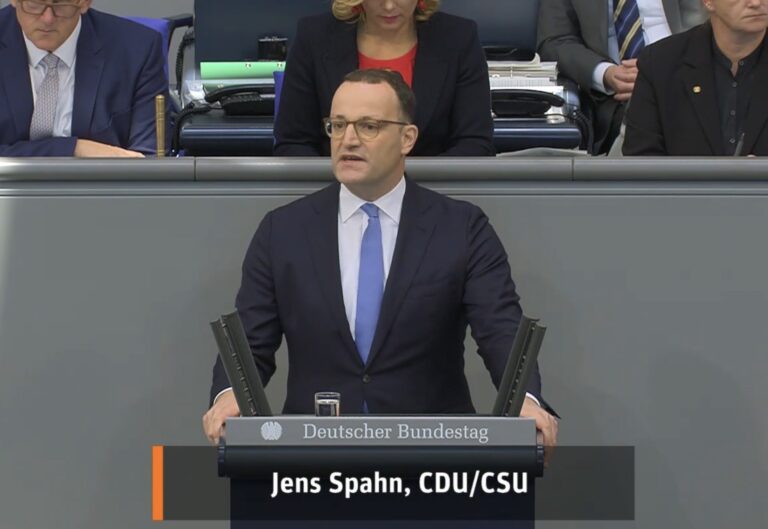
At the same time, the political and financial framework has changed: according to the new federal government’s coalition agreement, maglevs will soon be eligible for funding under the Gemeindeverkehrsfinanzierungsgesetz (GVFG, the federal law on funding municipal transport) – with a federal subsidy of up to 75%. What was considered unaffordable in 2007 could be built today – just like a subway or other public transport.
And it is precisely in direct comparison with current projects that the extent of the misjudgment back then becomes clear: the Transrapid was calculated at around €89 million per kilometer. Sounds like a lot? The U9 link currently planned in Munich comes to €380 million per kilometer (€4 billion for 10.5 km), and the U5 extension to Pasing to €342 million per kilometer (€1.3 billion for 3.8 km). For a conventional system with lower speed, less comfort and higher energy needs. The Transrapid would be faster, quieter, more efficient – and cheaper. Even if the Transrapid’s costs are adjusted for inflation, they remain well below the cost of a comparatively primitive subway without maglev technology and a technical top speed of 500 km/h. It is appalling how the Transrapid is derided as “too expensive” while many times the Transrapid’s cost is silently accepted – for a system that comes nowhere near the Transrapid’s performance.
But it is not just about money. The maglev system convinces ecologically and technically: no rolling wheels, no fine particulates, hardly any noise – instead contactless levitation at up to 500 km/h, with lower energy needs than an ICE (per seat at 350 km/h) and minimal land use. The line can run at ground level, elevated or in a tunnel, and the environment remains permeable. Even at high speed there is less vibration than with conventional trains. Even at 200 km/h the noise level is below that of a regional train at 80 km/h. And the technology is proven – among other things through continuous operation in Shanghai since 2004, where more than 28 million kilometers in total have now been covered.
And then there is something that is often overlooked: the space for the Transrapid is still there. Anyone taking the S-Bahn from the airport toward the city center can see it with their own eyes – the corridor in the terrain once reserved for the maglev has been fully preserved. Especially along the old rail line to the Olympic Stadium, unused track areas are a reminder of what could have been built. Almost like an open invitation to reassess the project today.
An often underestimated effect of the Transrapid would also be its function as a bridge between air and long-distance rail travel. With a travel time of just 10 minutes at 10-minute intervals Munich Airport would effectively be connected to Deutsche Bahn’s long-distance network – much faster, more comfortable and more reliable than any S-Bahn. Travelers from all over southern Germany could then easily reach key destinations such as Nuremberg, Stuttgart or Frankfurt by rail via Munich Hauptbahnhof – without detours via short-haul flights or intercity buses. That would not only noticeably relieve domestic air traffic but also save CO₂, take pressure off the motorways and finally link the mobility chain between rail and air in a sensible way – a real gain for the environment, efficiency and travel comfort.
The Transrapid in Munich was not a dead end – it was ahead of its time. And time has since moved on. New technologies, new funding, new mobility requirements: everything argues for reassessing the 2008 decision.
The Transrapid deserves a second chance.
Not out of nostalgia. But because Munich is still waiting for what others long have: a fast, direct, modern connection between the airport and the city center. Because the old arguments no longer hold up. And because the gap in the system – like the gap in the terrain – is still visible today.
The technology is ready. It is time to seriously rethink the project.
➡️ No real alternative emerged – The express S-Bahn was never built, and the S8 still takes 45 minutes from the main station to the airport.
➡️ Strengthening long-distance rail – With 10 minutes of travel time at 10-minute intervals the airport is connected directly to the ICE network – short-haul flights and intercity buses would become unnecessary.
➡️ Significantly cheaper than current subway projects – Only €89 million/km compared with €342–400 million/km for current Munich subway projects.
➡️ Eligible for funding like a subway – Thanks to the GVFG, a maglev can soon receive federal subsidies of up to 75%.
➡️ Technologically superior – No wheel-on-rail contact, so quieter, less prone to wear and more comfortable.
➡️ Highly energy-efficient – Lower power consumption thanks to less air resistance, plus braking energy recovery.
➡️ Hardly any environmental impact – No fine particulate or exhaust emissions, minimal noise, hardly any vibration.
➡️ Land-saving – An elevated guideway needs less space and does not cut up the landscape.
➡️ The space is still there – The corridor in northern Munich is still free and visible in many places.
➡️ Proven technology – In successful service for more than 20 years (e.g., in Shanghai) with more than 28 million kilometers of total mileage.
➡️ Forward-looking – A second chance for the Transrapid is not a look back but a step forward.