Misinformation Against the Maglev in Berlin
Countless pieces of misinformation are being spread against the maglev in Berlin, and not only by journalists, climate activists and politicians but also by professors at TU Berlin. What is behind it?
Countless pieces of misinformation are being spread against the maglev in Berlin, and not only by journalists, climate activists and politicians but also by professors at TU Berlin. What is behind it?
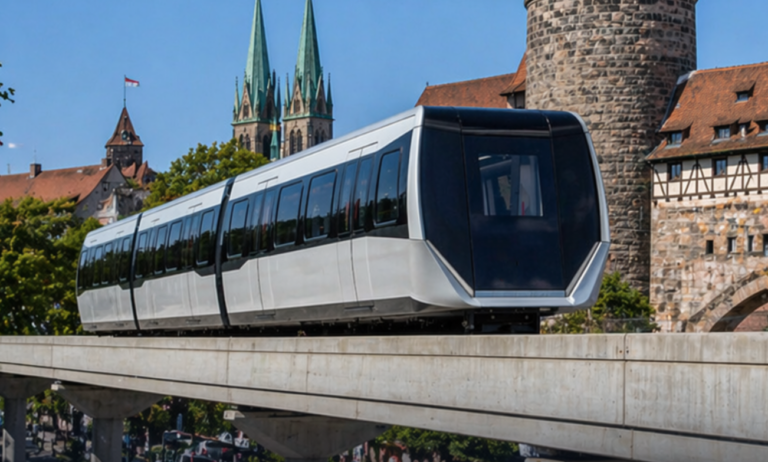
Berlin plans to build a maglev train in its city center. The Transport System Bögl (TSB) is to be used: a new type of maglev developed for local transport.
Countless media outlets are reporting on this idea. But it quickly becomes apparent that the coverage is anything but appropriate, just as with the Transrapid decades ago.
Major media houses equate the TSB with completely different technologies in order to create artificial disadvantages against it.
Environmental organizations also position themselves against the maglev, making up counterarguments and spreading misinformation.
Even professors at universities take a stand against the TSB, and they do not even manage to distinguish the TSB from the Transrapid, while also spreading false information.
Lumping together
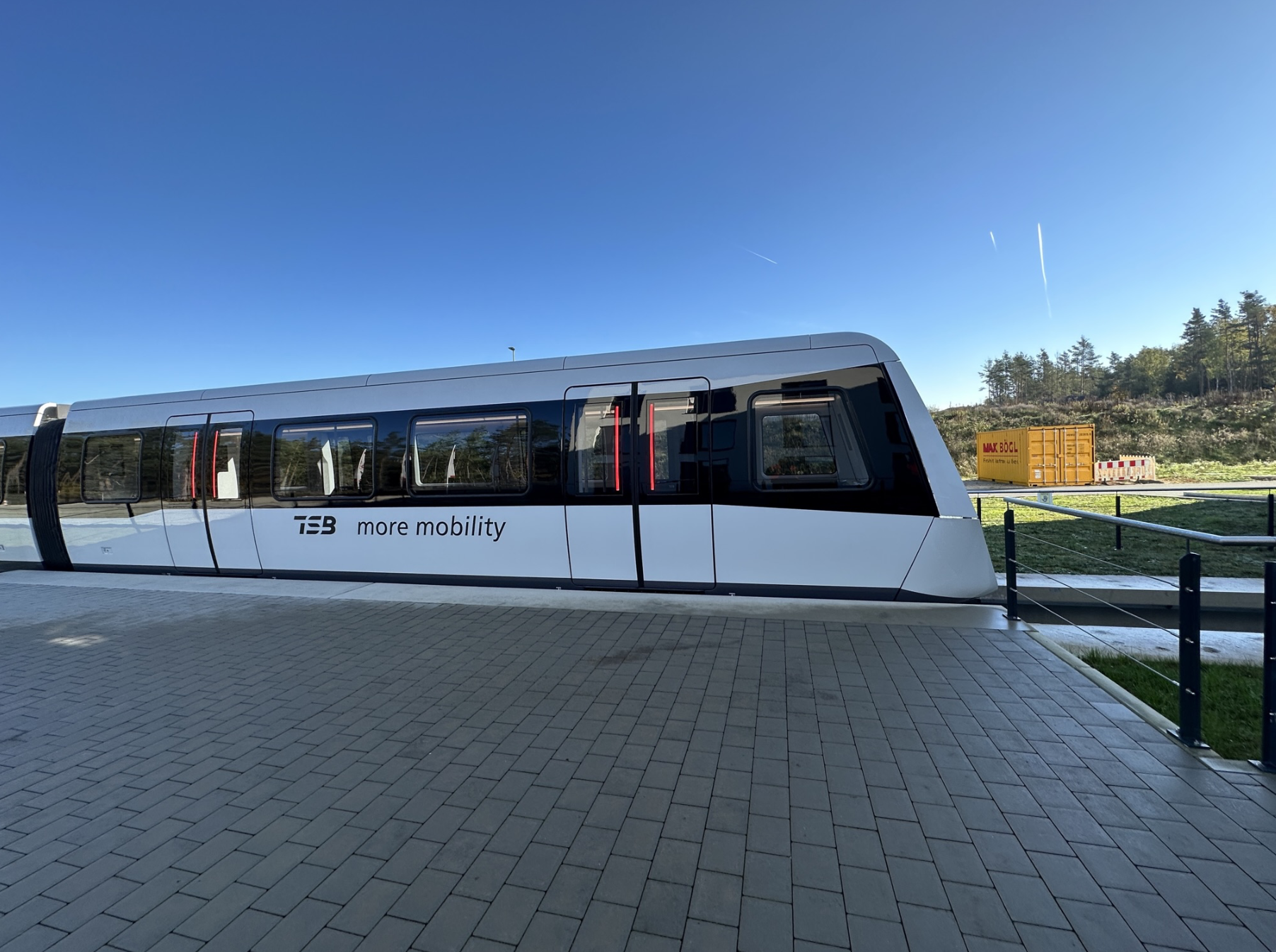
The TSB is a new technology being developed by the Max Bögl Group. Its system parameters and technical data have little in common with the Transrapid, and nothing at all with monorails.
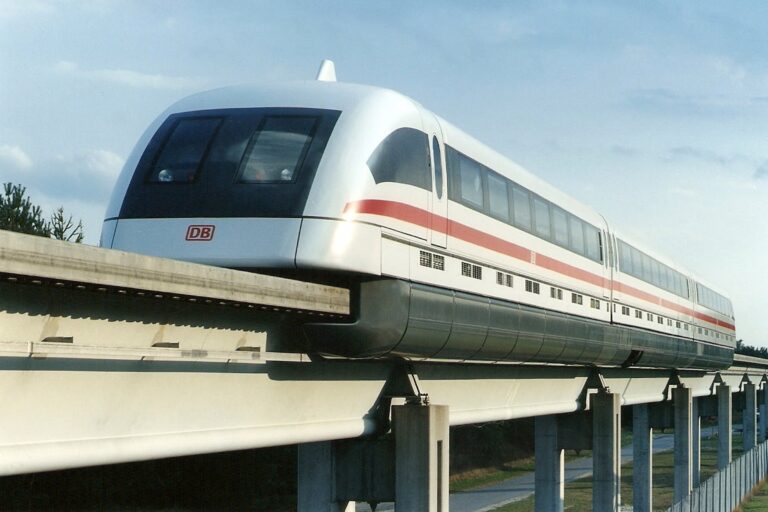
Nevertheless, many media outlets equate the TSB with other technologies such as the Transrapid, the M-Bahn, the Wuppertal Schwebebahn (suspended railway) or even monorails. The Tagesschau (a leading German TV news program) reports: “Berlin wants to test maglev”, yet uses the 500 km/h Transrapid as its lead image and not once mentions in the article that the TSB is an independent, new technology.
ZDF (a German public broadcaster) also reports on it, and uses as its lead image an old photo of a yellow M-Bahn from 1989, which was driven by a linear motor but did not even properly levitate.
The Tagesspiegel (a Berlin daily) publishes a commentary that literally appeals “against the Wuppertalization of Berlin”, and posts a picture of the Berlin M-Bahn. Wuppertal has a Schwebebahn, but it does not levitate magnetically; it merely hangs from above and is driven conventionally by wheels. On top of that, the Schwebebahn in Wuppertal has run reliably for decades, a genuine showcase project for integrating modern rail systems. So why would anyone be “against Wuppertalization”?
Particularly remarkable is an article in the Berliner Zeitung that equates the Russian monorail in Moscow with the TSB in order to project supposed disadvantages onto the German maglev. Jens Wieseke claims that Moscow has had a monorail since 2004 that is not profitable and little used, and he transfers these circumstances to the German maglev. The responsible journalist, Peter Neumann (Berliner Zeitung), even defends this “comparison of apples and oranges” on X (formerly Twitter). Opinion-making based on false information like this has little to do with journalism anymore.
Accidents of other systems
Nearly all press articles that reported on this project are based on an original report by the German Press Agency (dpa), which does not even mention the TSB by name but puts two accidents of completely different maglev systems into context. It mentions how the M-Bahn ran past a buffer stop decades ago, and how the Transrapid in the Emsland region collided with a maintenance vehicle because of human error. None of these accidents have anything to do with the TSB, precisely because it is a completely new technology that has nothing to do with mistakes of the past. When reports are written about the construction of new wheel-on-rail lines, are all accidents of conventional trains listed as well? No, and that is a good thing.
False counterarguments
The TSB is a versatile maglev technology for local transport. The vehicle is designed for operating speeds of up to 150 km/h and complements local transport. Because there are no overhead lines and the guideway can optionally be elevated, the system can be routed flexibly, which makes integration into existing infrastructure particularly easy. It can be built over roads, rivers and other infrastructure without difficulty.
The technology is environmentally friendly in every respect. Thanks to the electromagnetic levitation system, there are no wheels or mechanical brakes that wear out. As a result, the service life of components and raw materials is maximized.
The same applies to the guideway. For years, the company has relied on Bögl eco-concrete, which stands out for its ecological composition and processing.
Bögl eco-concrete takes short transport distances into account, uses regional building materials and reduces the cement content of the concrete, giving it on average a 39 percent lower CO2 footprint than conventional concrete.
The TSB can also be built far more cheaply than, for example, subways. While one kilometer of subway would cost €140 – 160 million, and €30 – 40 million for a commuter rail (S-Bahn) line, the TSB costs only €20 – 25 million. These are figures determined by the German Federal Ministry of Transport.
Maglev systems like the TSB are declared too expensive by many for no reason, even though this blanket statement is false. Oda Hassepaß, transport policy spokesperson of the Greens in Berlin, told ZDF the following: “From a professional standpoint, it is clear: while the maglev for inner cities is expensive wishful thinking, and perhaps not even that, the tram offers people affordable solutions here and now to achieve the mobility and climate goals.”
Misinformation is spread not only about costs but also about the system’s environmental footprint, which, as just described, is very positive. BUND Berlin (the Berlin branch of a German environmental group) polarizes against the maglev without naming clear counterarguments. It complains that concrete is needed for the guideway. What BUND overlooks: normal rail lines, especially subway tunnels, do not fall from the sky and likewise require raw materials such as concrete. Where is the argument against the maglev here?
Prof. Dr.-Ing. Markus Hecht, a professor at TU Berlin, also takes a stand against the TSB, but his criticism is completely baseless. He calls the TSB too expensive and not energy efficient, but fails to back up these sweeping claims with facts. So I will do that for him: while one kilometer of subway would cost €140 – 160 million, and €30 – 40 million for a commuter rail line, the TSB costs only €20 – 25 million. These are figures determined by the German Federal Ministry of Transport.
He also states that a subway cannot be compared with the TSB. He says a conventional wheel-on-rail train would be just as suitable. But that is not true: no other rail system achieves transport capacities comparable to those of the subway, except the TSB. Moreover, no other train system can be integrated into inner cities as well as the TSB.
It is also claimed that the energy demand is higher, which is not true. The TSB has no rollers or wheels, so rolling resistance is eliminated entirely. He also equates the TSB’s propulsion principle with that of the Transrapid, which is a major mistake. He describes a magnetic field that travels along the guideway on the TSB, which is completely wrong. Unlike the Transrapid, the TSB uses propulsion in the vehicle.
The safety concept is also questioned for no reason. Prof. Dr.-Ing. Markus Hecht claims he knows of no maglev with a well-thought-out escape route concept. What he overlooks: the TSB has emergency exits at both ends of each section, through which passengers can step onto the guideway. For this purpose, the TSB has a walkway grating in the middle of the guideway.
Conclusion
The TSB offers a reliable, efficient and climate-friendly means of transport that will significantly relieve local public transport, provided it is deployed.
Inexplicably, however, attempts are made to talk this solution down on the basis of misinformation. Instead of seeking out factual and correct counterarguments, misinformation is spread by people who have not even informed themselves about the system beforehand. This applies not only to journalists and climate activists but, unfortunately, also to professors at renowned universities.