While high-speed maglevs set records and are under construction in China and Japan, Germany has given up all its expertise despite once being the market leader.
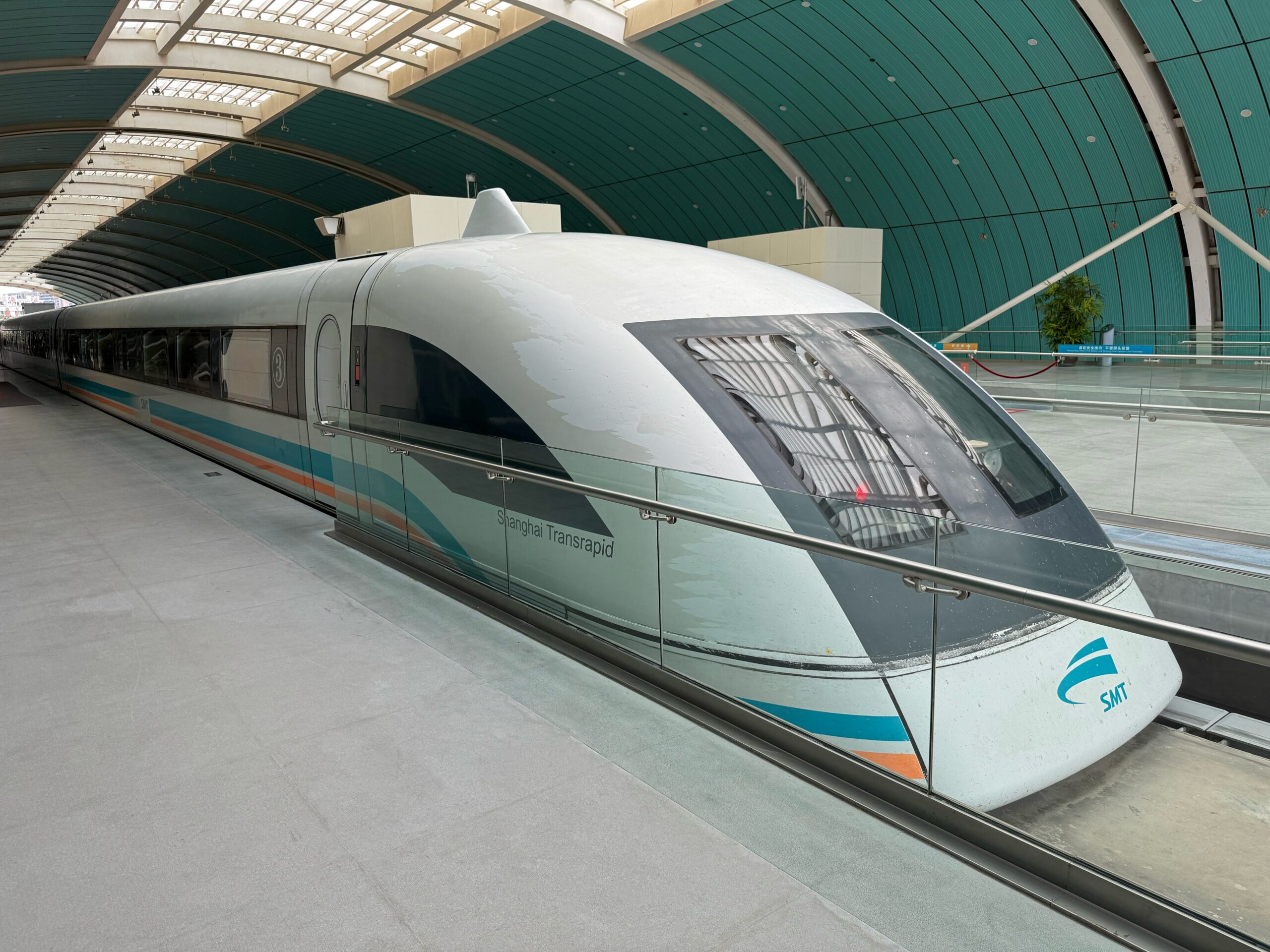
On November 11, 2003, the Transrapid reached a record speed of 501.5 km/h in Shanghai, and on a line just 30 km long.
For 21 years now, the Transrapid has been the fastest commercial train in the world. Because of the short line length, however, normal operating speeds are only 431 or 301 km/h.
The record speed was achieved without any special modifications to the vehicle or the line. A few years later, the conventional TGV express train in France did reach 574 km/h, but with a heavily modified vehicle under unrealistic conditions and on a much longer line. In Japan, the absolute world speed record of 603 km/h was broken in 2015 with the Chuo Shinkansen, but on a test track with a prototype vehicle.
To this day, no other technology fills the speed gap between rail and air travel. With operating speeds of 400 to 600 km/h, maglevs such as the Transrapid in Germany or China and the Chuo Shinkansen in Japan can make a major contribution to sustainably relieving road, rail and air traffic and to meeting population growth and ever-increasing demand for mobility.
China and Japan recognized exactly that, which is why both countries are involved in building high-speed maglev systems. China is currently working on localizing the German Transrapid technology and deploying it on several long-distance routes, while Japan is a step ahead and is already building a 438 km line for the Chuo Shinkansen across the country.
Only Germany gave up all its expertise in 2011, even though the technology has been ready for service since 1991 and has been proving its practicality in China since 2004. Over 28 million kilometers of total mileage and 99.89% punctuality attest to the Transrapid’s feasibility. Unlike in China and Japan, however, Germany lacks political competence. We see the results not only in the absence of a Transrapid network: the conventional railway already impresses with its unreliability and low average speed, because politics neglected not only the Transrapid, but the regular railway as well.
Since March 2024, a petition has been running that aims to counter exactly this. View it here.