Language
Language
Transrapid ·

It Was Politics That Failed, Not the Transrapid

The Transrapid never lost to the railway. Rather, the Transrapid and the railway together lost to politics and its preferences. Even today, the transport corridors where the Transrapid was once planned lack sensible solutions. 

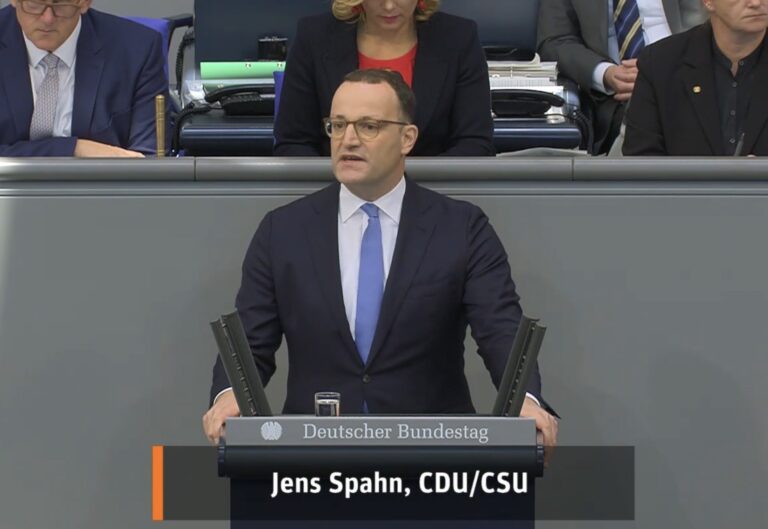
While the technology was developed to operational readiness and set 500 km/h records, too many politicians were busy torpedoing application projects and “throwing more sand into the gears.”

It was not only the Transrapid that was hit: the regular railway was also starved of funds and run into the ground, resulting in today’s unreliability and overload. In a system comparison, the Transrapid never lost to the railway. Rather, the Transrapid and the railway together lost to politics and its preferences.

Even today, the transport corridors where the Transrapid was once planned lack sensible solutions.

It is no secret that the Transrapid has never been put into commercial use in Germany. But the Transrapid’s failure in Germany is by no means due to the Transrapid and its technology. More than 20 years after the first Transrapid projects were canceled, it is clear that the expansion of the conventional railway on the formerly planned Transrapid routes has failed just as much.

First of all, it should be noted that the Transrapid never failed because it lost a head-to-head comparison with conventional technologies such as the ICE. It is often wrongly assumed that the Transrapid “lost” and the conventional railway “won.” But as the following lines make clear, that is obviously not the case. The expansion of the conventional railway on the former Transrapid project corridors has been botched at least as badly as the construction of the Transrapid lines.

AI-generated illustrative image: politicians arguing against high technology

Hamburg–Berlin: Transrapid canceled, ICE today twice as slow as 20 years ago

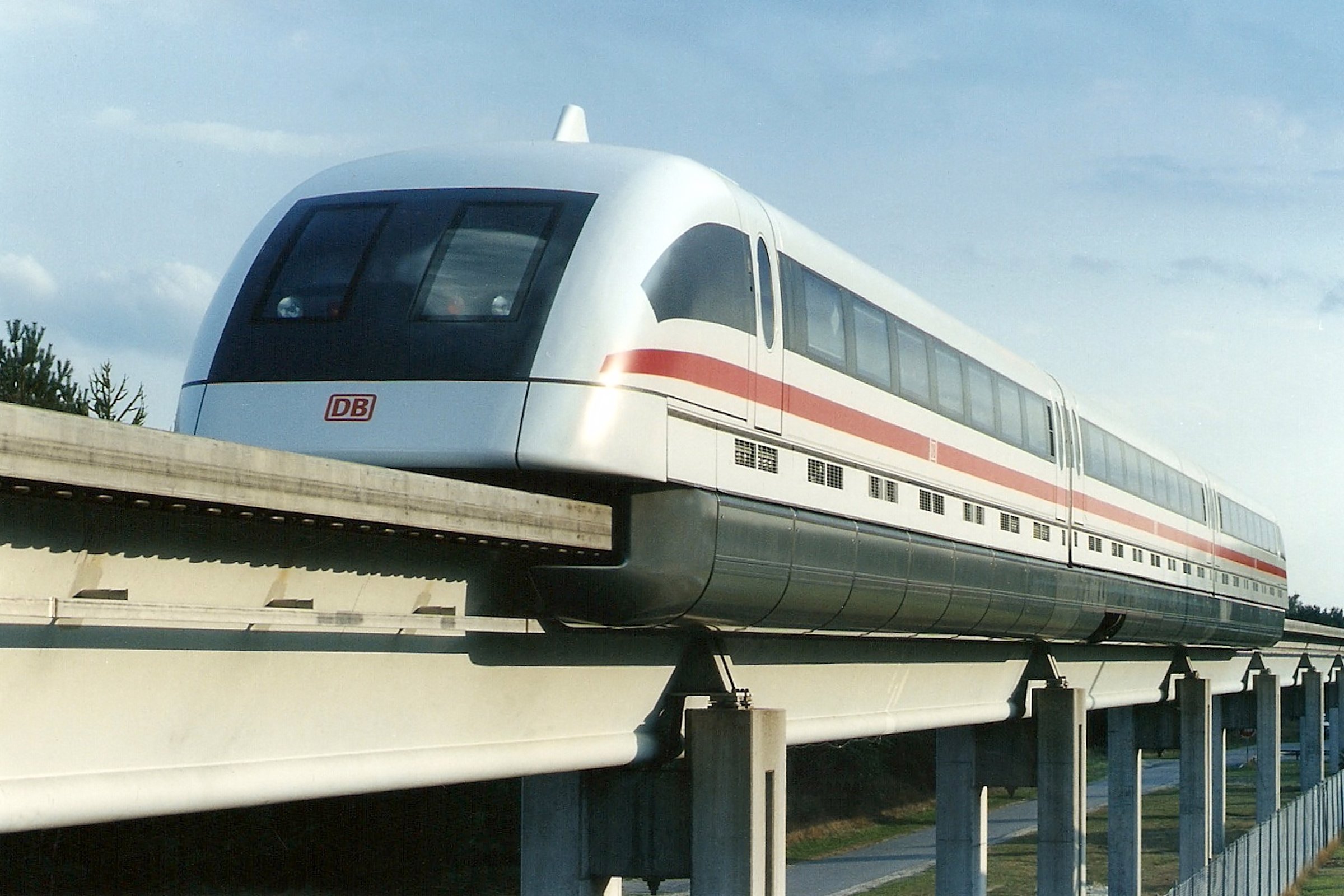
The TR08 shown here (1999) is considered the first pre-series vehicle for the Hamburg–Berlin route. Image: ThyssenKrupp Transrapid

The Transrapid would have covered the distance between Hamburg and Berlin in just 53 minutes, and that was already possible more than 20 years ago. Anyone traveling this route by ICE today needs at least 103 to 153 minutes, 2 to 3 times as long as the Transrapid.

The Transrapid was canceled in February 2000 because Mehdorn, the CEO of Deutsche Bahn (DB), saw no need for it, arguing that the time advantage was too small and that the forecast passenger numbers of 40,000 travelers a day seemed too high at the time. Almost 25 years later, it is clear that the Transrapid’s time advantage over the ICE is far greater than Mehdorn claimed, and passenger numbers are already at 30,000 travelers a day today. A Transrapid connection on this corridor would relieve the overloaded railway and road traffic. The forecast passenger numbers were therefore not as far-fetched as they were once made out to be as a pretext against the Transrapid.

Munich airport link: Transrapid canceled, promised express S-Bahn canceled too, ICE even more expensive than the Transrapid

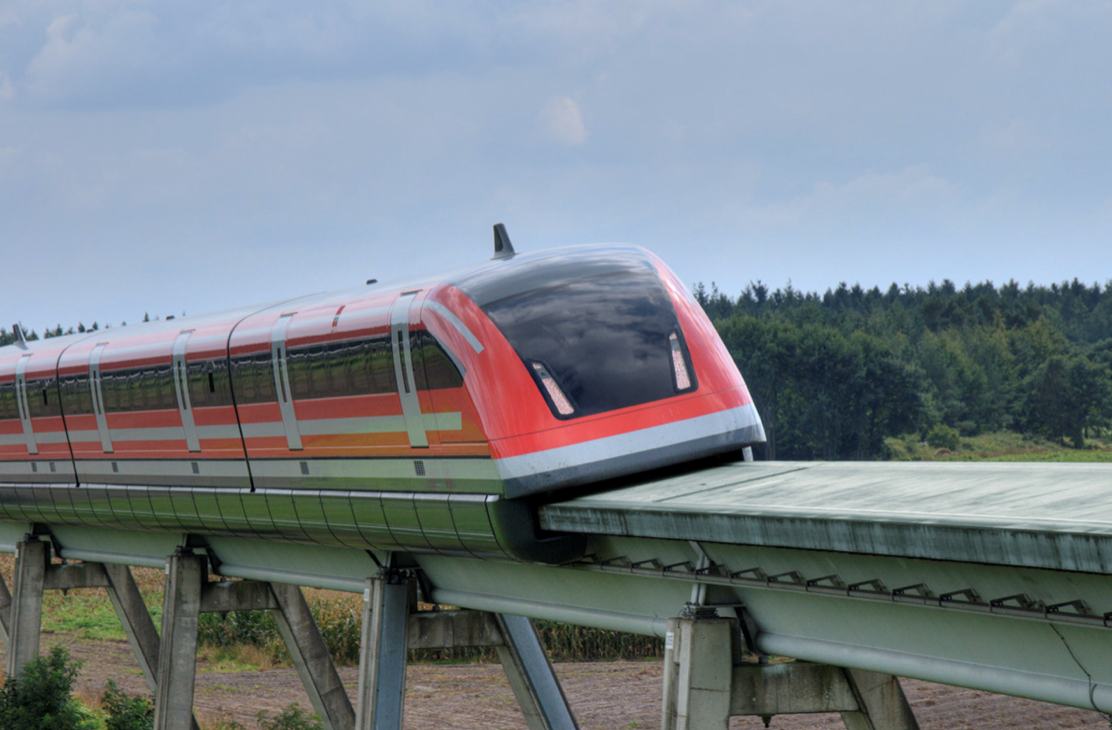
After its test phase on the Emsland test track, the TR09 shown here was supposed to go to Munich to carry passengers between the airport and the main station. Image: ThyssenKrupp Transrapid

The Transrapid would have needed only 10 minutes from Munich main station to the airport, and at a highly attractive 10-minute frequency. But it never happened: politics branded the Transrapid “too expensive,” and political opponents of the Transrapid promised an express S-Bahn (suburban rail) that would have taken about 25 minutes on the route and was allegedly cheaper than the Transrapid.

That turned out to be a lie: the express S-Bahn was never built, and it would not have been cheaper either. Quite apart from that, the Transrapid’s transport-policy benefit, with its much shorter travel time and frequency, is still far greater than that of an express S-Bahn.

In 2007, an S-Bahn ride from the main station to the airport took over 40 minutes. In 2024, it takes exactly as long, so there has been absolutely no progress. This is not a policy against the Transrapid alone; it is a policy against rail expansion as a whole, at the expense of residents and travelers.

Connecting Munich airport to the main station would create a direct link between the airport and Deutsche Bahn’s long-distance network, so fewer travelers would have to drive to the airport. It would have been sensible and convenient, but unfortunately the project was ended in 2008. Not in favor of the conventional railway, but at the expense of travelers.

Since 2022, DB has had the idea of connecting Munich airport to the long-distance network with an ICE. Costs of €5 billion are estimated for this. The Transrapid, at costs of €1.85 to 3.4 billion, would have been cheaper, even when adjusted for inflation. Unbelievable.

It was politics that failed, not the Transrapid

The advantages of the Transrapid clearly argue in favor of its use, yet nothing ever came of it in Germany. The hope of somehow strengthening the conventional railway was too strong. But it is clear that this plan has failed even harder than the Transrapid: on the two major projects, Hamburg-Berlin and Munich, the railway has deteriorated even further over the past decades (travel time and reliability), and on top of that, Germany is seeing record-low punctuality for long-distance trains: only 65.2% of long-distance trains arrived on time in 2023, and in 2022, 4,700 long-distance trains were canceled.

The Transrapid never lost to the railway. Rather, the Transrapid and the railway together lost to politics and its preferences. Even today, the transport corridors where the Transrapid was once planned lack sensible solutions. That the Transrapid would bring an enormous improvement to long-distance travel has long been clear.
Join the team

Help build maglevhub.com

maglevhub.com started in 2026 as the international offshoot of magnetbahn.de and is now growing on its own. We are looking for writers, translators, researchers, video makers and developers from all over the world.