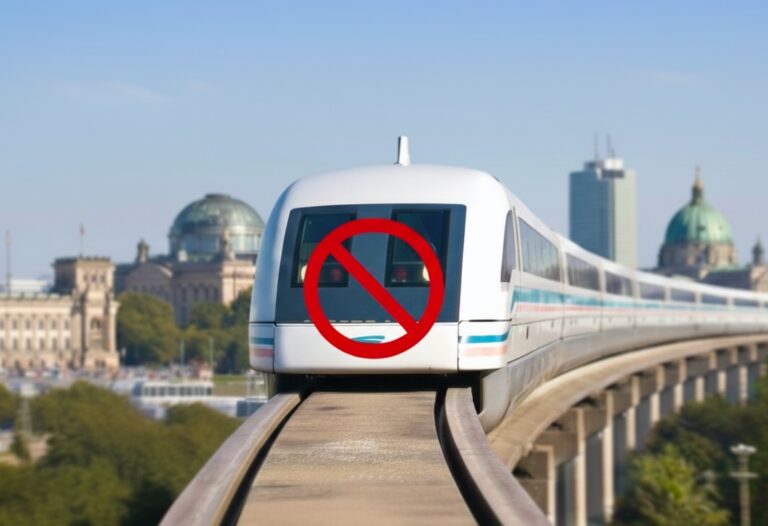
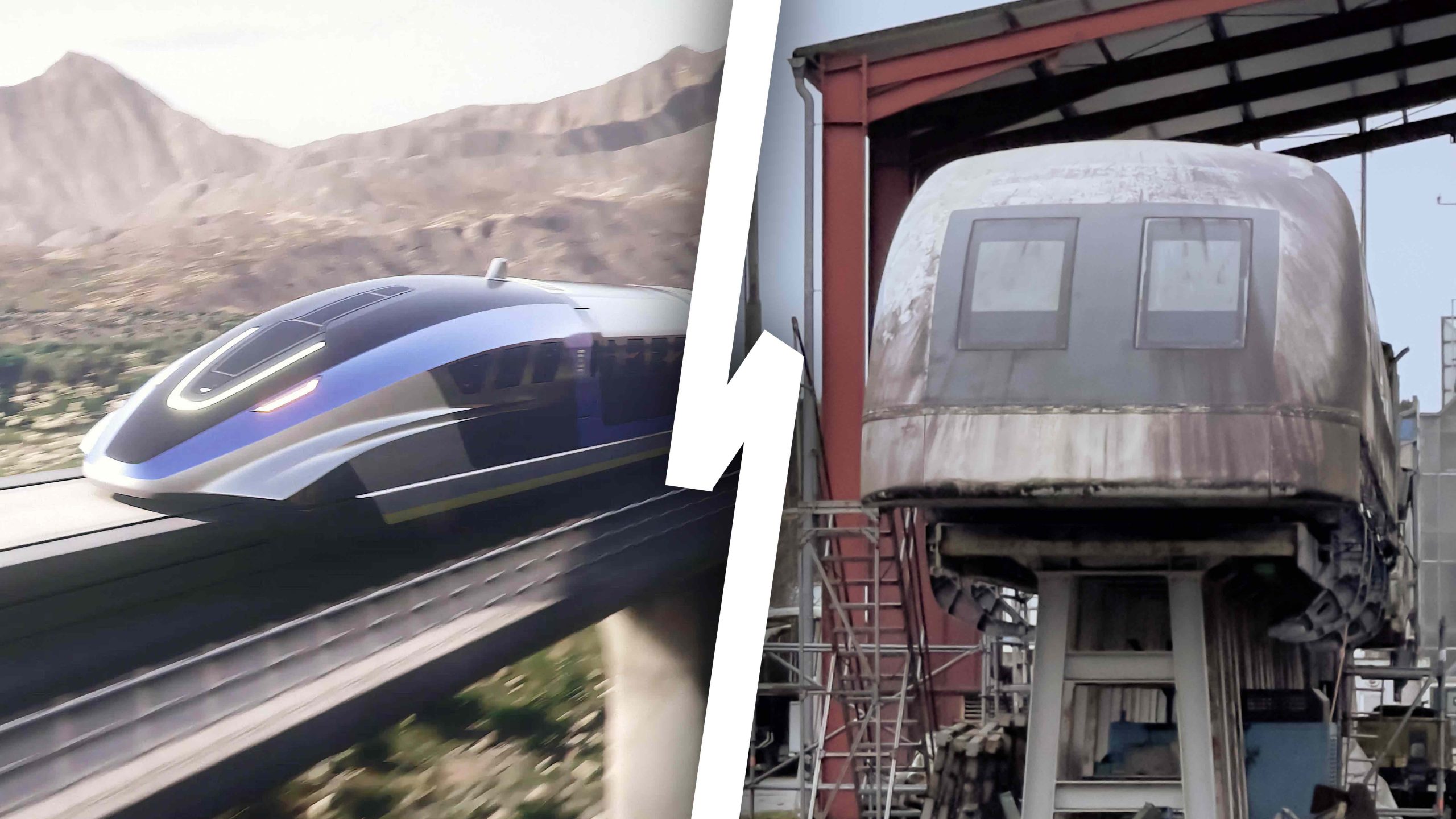
650 km/h Transrapid in China While German Vehicles Rot
While China plans Transrapid lines meant to reach up to 650 km/h, nobody in Germany seems interested in the Transrapid developed there, even though it has long been ready for service and could ease Germany's unreliable, unpunctual rail traffic.
While China plans Transrapid lines meant to reach up to 650 km/h, nobody in Germany seems interested in the Transrapid developed here, even though it has long been ready for service and has the potential to ease Germany’s unreliable and unpunctual rail traffic.
The Transrapid was developed in Germany starting in the 1960s, with hundreds of companies involved in the research. The breakthrough came in 1991, when its technical readiness for service was recognized. In 1993 the Transrapid proved what it was capable of: on the Emsland test track in northwestern Germany, just 31.5 km long, it reached 450 km/h under realistic conditions. In 2000 the Hamburg–Berlin Transrapid line was canceled, the beginning of the Transrapid’s political downfall.
Alternative routes, especially use as an airport shuttle in Munich, proved to be misplanning from the start: it is insane that anyone wanted to use a high-speed long-distance technology, developed for long distances and speeds around 500 km/h, as an airport connector on a route just 38 km long.
Transrapid researchers dreamed of using the Transrapid across Europe: that is exactly what it was created for. With speeds of 300 to 500 km/h, it fills the gap between train and plane. Depending on the alignment, a trip from Berlin to Paris would be possible in just 2 to 3 hours.
Instead, if the Transrapid was to be built at all, it was to be scaled as small as possible so that the ICE would come out the winner. The supposedly evil Transrapid was said to be too expensive, too loud, too energy-intensive: the list of made-up and false counterarguments is long.
Pseudo-scientific studies financed by political opponents even demanded that the entire Transrapid line be fenced in with bird-protection screens, because it supposedly kills too many birds. It was also demanded that the entire line be enclosed, since cars falling from bridges would pose a safety risk for the Transrapid. And the list does not end there: airport-style security checks were to screen all Transrapid passengers, because the Transrapid was supposedly an ideal target for terrorists (see here, in German). For every solution the Transrapid had, there were people ready to invent problems against it.
Long-distance travel today: it can't get much less reliable
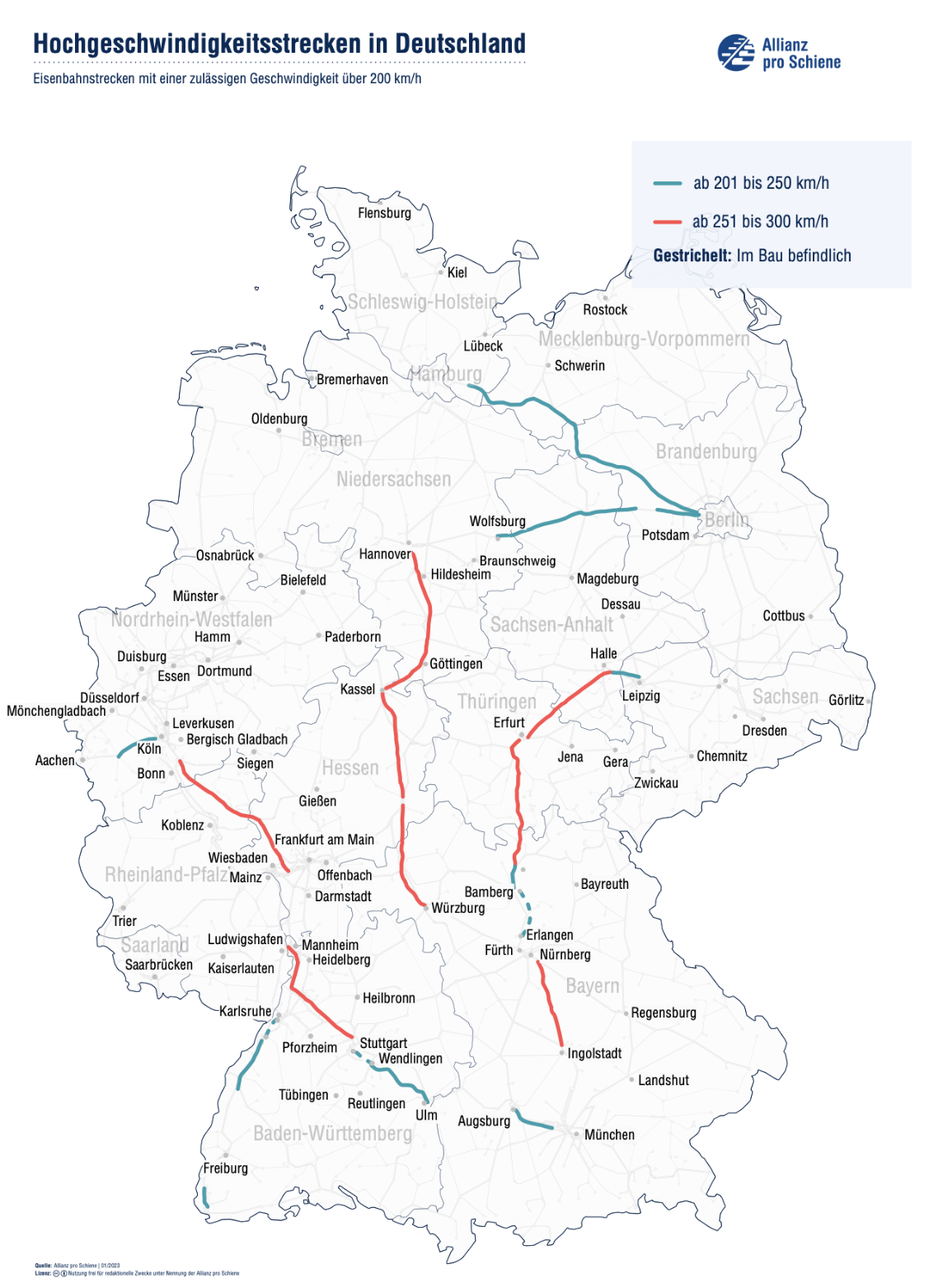
Today’s symbol of fast rail travel in Germany is the ICE. While it was still reliable and highly praised 30 years ago, little of that remains today. Only 64.1% punctuality was achieved in July 2023. It has gone so far that Swiss Federal Railways is already restricting ICE services into Switzerland.
Long-distance rail in Germany is not only unpunctual but slow. The newest ICE 4 runs at a maximum of 265 km/h. The ICE 3 promises up to 330 km/h, but these speeds are rarely reached because Germany has no high-speed network at all. The ICE has to run on overloaded infrastructure that it shares with regional and freight trains. On top of that, the German rail network is completely run down and overloaded: broadcaster NDR reports on a “rail network on the verge of collapse”, and Deutsche Bahn needs €88 billion to renovate the network. As a result, the ICE will never reach its full potential.
The potential of the Transrapid
Transport researchers and engineers in Germany were able to predict today’s scenario 50 years ago, and developed the Transrapid to relieve the infrastructure, to be operated on an independent network. This ensures that nothing slows the Transrapid down and that it can continuously reach speeds of up to 500 km/h.
Not only would rail traffic be relieved, road and air traffic would also be reduced. There would probably be no debates about domestic and short-haul flights had a Germany-wide or Europe-wide 500 km/h Transrapid network been built 20 years ago.
In today’s climate protection debate, too, the Transrapid is the ideal means of transport: at 350 km/h it uses 40% less energy than an ICE 3, runs on a guideway that lasts 80 years, produces no fine particulates or exhaust fumes and, depending on the energy source, can be operated climate-neutrally. More advantages and figures in our overview of advantages.
But given that nobody in politics or at Deutsche Bahn is really interested in the Transrapid, there is unfortunately no choice but to agree with the Transrapid researchers and put up with the current state of long-distance travel for a few more decades.