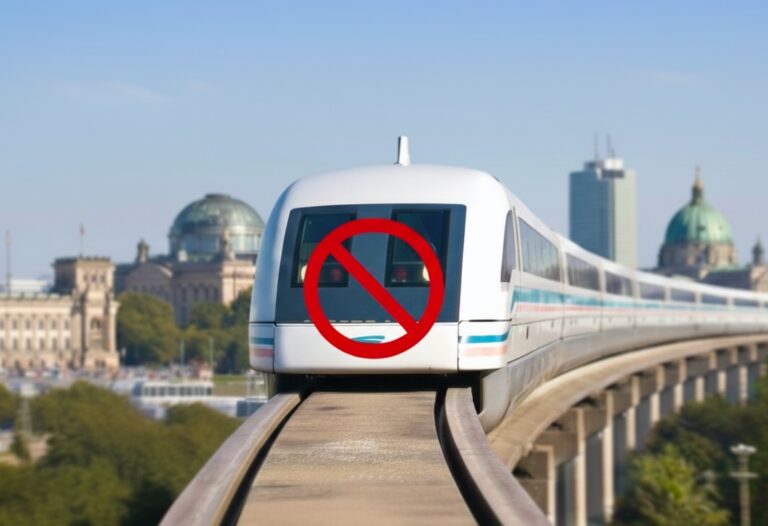
German Government Provides €26 Million to Demolish the Transrapid Test Facility Emsland
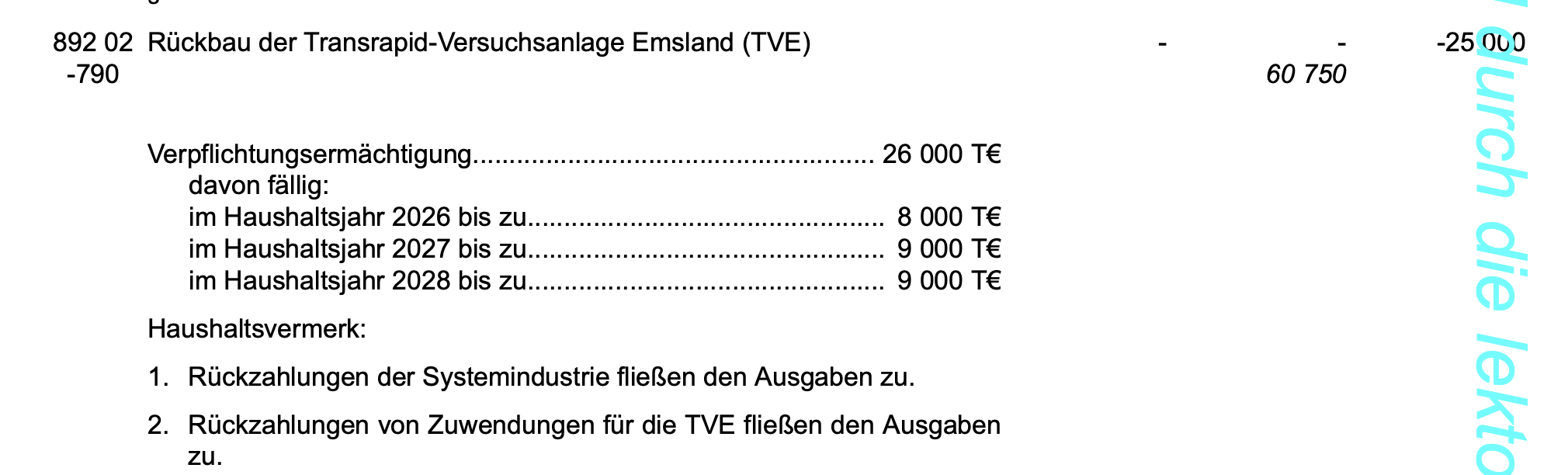
The German federal government under Friedrich Merz has earmarked €26 million through 2028 for dismantling the Transrapid Test Facility in Emsland in its draft budget for 2025. €25 million was already provided for this in the 2023 federal budget – in practice, nothing has happened since. The test track still stands almost intact in the landscape of northwestern Germany, with only minimal dismantling carried out. But now the political will seems clear: the last remnants of a high technology once admired worldwide are to be removed from Germany for good.
The decision marks more than just the demolition of a test facility. It is emblematic of a technological self-devaluation that has few equals internationally. For while China has long since adopted German Transrapid technology, developed it further and moved it into regular service, Germany is closing the chapter – not out of necessity, but out of political ignorance.
Yet the facts tell a different story: the Transrapid reaches cruising speeds of up to 500 km/h, uses up to 40% less energy at comparable speed than a steel-wheel high-speed train (ICE at 350 km/h), incurs around 70 percent lower maintenance costs – and does so at similar investment costs per kilometer of line. Since 2003 the technology has held the record of 501.5 km/h for trains built in Germany, and since 2004 it has run in Shanghai at 431 km/h in daily continuous operation with 99.9 percent punctuality, making it the fastest commercially operated train in the world – made in Germany, deployed in China.
Nevertheless, the federal government ignores not only the technological potential but also the broad will of citizens: a petition to reactivate Transrapid technology with over 62,000 signatures was largely disregarded by politicians.
It is a political signal with a fatal effect: while other nations turn ambitiously toward the future of mobility, Germany is opting for unwinding. Not for lack of knowledge, not out of technological overwhelm, but from a structural deficit of willingness to innovate.
In the view of David Harder (magnetbahn.de), the test track in Emsland should be preserved in full – as a cautionary monument to the inventive spirit and innovative power that once distinguished Germany. It could help keep the technology alive in the collective consciousness, strengthen the region through tourism and inspire younger generations with technical excellence. Instead, funding its final removal with countless tens of millions is a fatal sign for the entire nation.
Whoever dismantles the Transrapid today not only destroys a piece of technological history but also willfully shuts the door on an option that could revolutionize long-distance travel in the future. The question remains: how does Germany intend to hold its own in international mobility competition if it razes its own peak achievements to the ground?