TSB Cargo: How Quiet Freight Transport Can Be
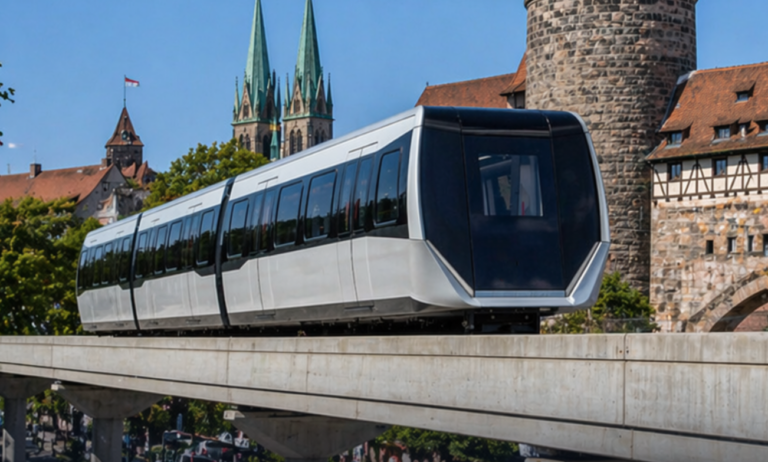
With the TSB Cargo, the Max Bögl Group succeeded in realizing a freight maglev that is particularly quiet and efficient. Not only that: an “eco-concrete” can be produced with 39% lower CO2 emissions than conventional concrete.
The video demonstrates how quietly the vehicle operates. Because all mechanical wheels are eliminated, there is no rolling resistance, so the rattling and shrill squealing familiar from freight trains disappear entirely.
Area of application
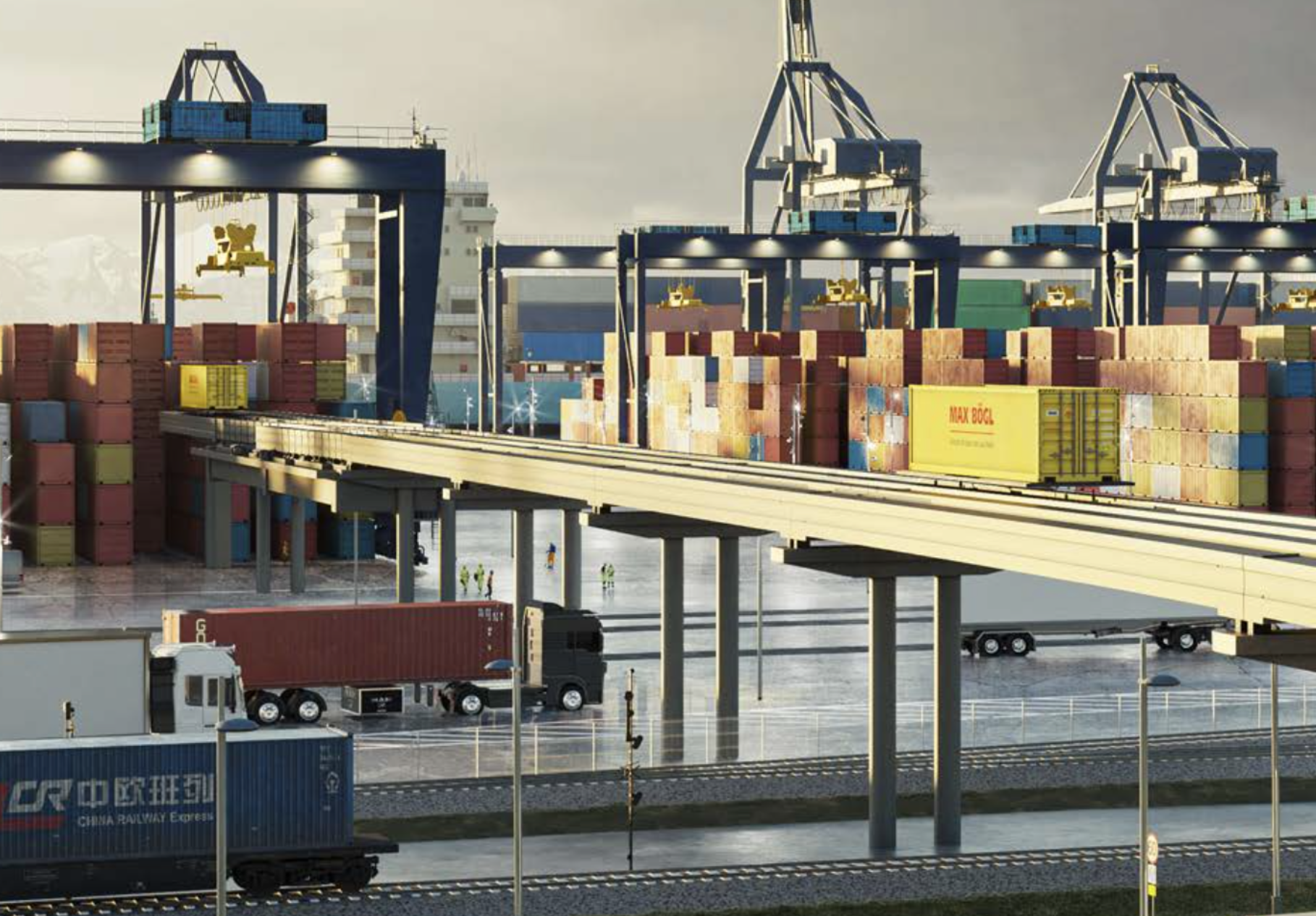
The TSB Cargo is ideally suited for routes of up to 50 kilometers. Because there are no overhead lines and the guideway can optionally be elevated, the system can be routed flexibly, which makes integration into existing infrastructure particularly easy. It can be built over roads, rivers and other infrastructure without difficulty. The TSB Cargo can reach 150 km/h, allowing up to 180 containers per hour (per direction) to be transported. The TSB Cargo can relieve overloaded infrastructure, especially in freight transport, in a sustainable, efficient and reliable way.
Eco-concrete
For years, the company has successfully relied on Bögl eco-concrete, which stands out for its ecological composition and processing.
Bögl eco-concrete takes short transport distances into account, uses regional building materials and reduces the cement content of the concrete, giving it on average a 39 percent lower CO2 footprint than conventional concrete.
Max Bögl’s eco-concrete is not only particularly durable but also allows reduced consumption of raw materials through optimized component cross-sections compared with conventional construction methods. The building products are manufactured in modern production facilities using state-of-the-art technology.
With the sustainable production of high-quality reinforced concrete components, Max Bögl sends an important signal for environmental protection and contributes to reducing CO2 emissions in the construction sector, from which maglev trains can benefit as well.
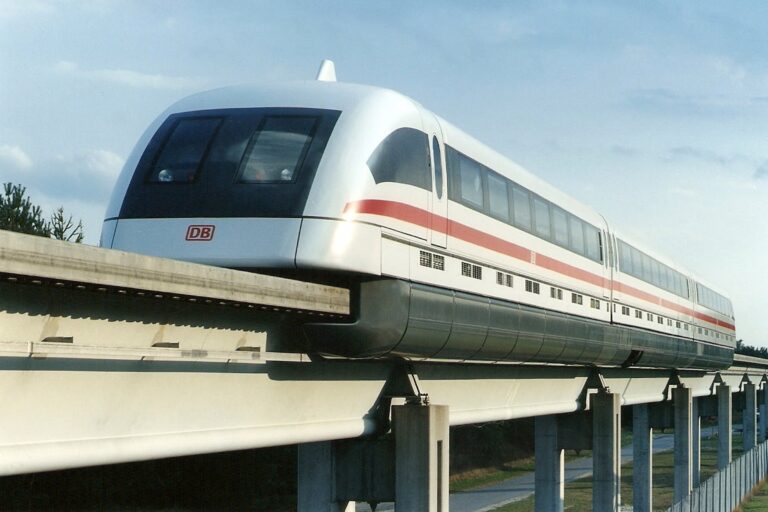
The Max Bögl Group has been known for decades for its belief in technical innovation. As early as the 1990s, the company developed a new guideway for the Transrapid that combines the properties of steel and concrete guideways, achieving optimal ride comfort with economical production (see: hybrid girder). In 2003, the entire Shanghai Transrapid line was built with these girders. As late as 2010, the company again developed a new guideway for the Transrapid, promising costs up to 30% lower. This guideway girder was even installed and tested at the Transrapid Test Facility Emsland (TVE). With the development of the TSB system and eco-concrete, the Max Bögl Group once again proves how problems can be solved with new technologies.
More information about the TSB Cargo in this brochure.