How the Hyperloop Differs From the Transrapid
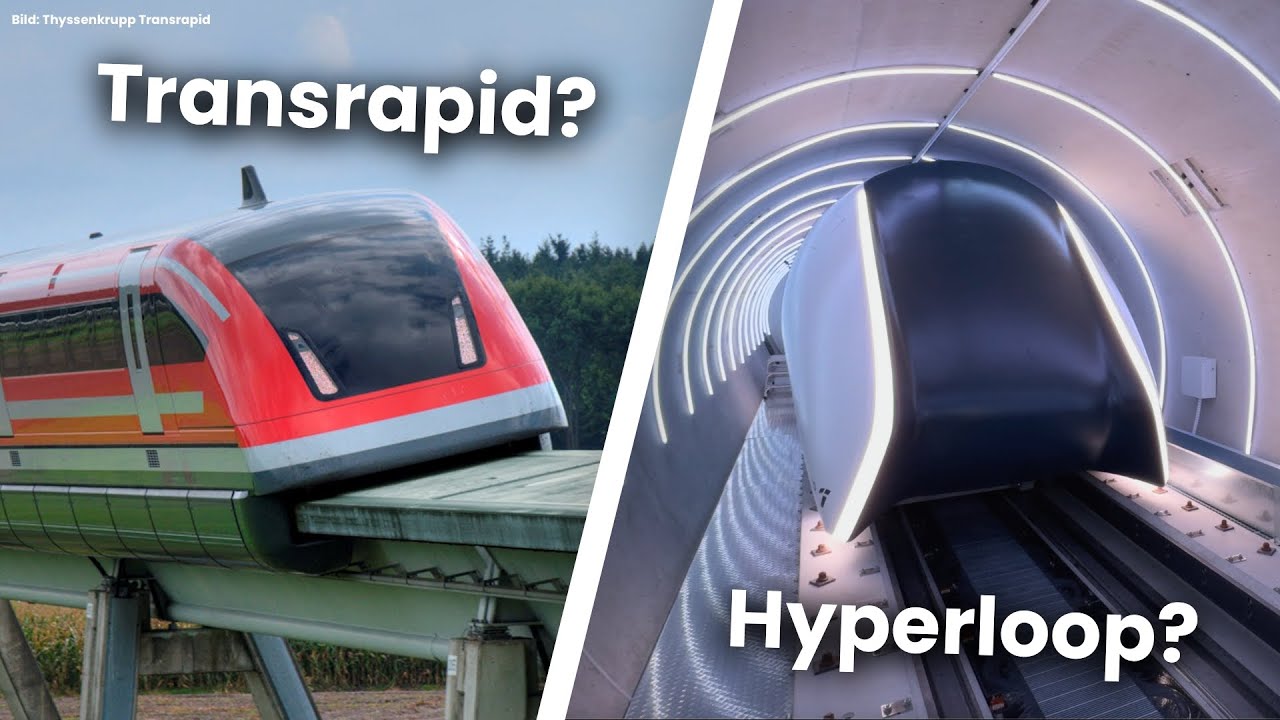
The Hyperloop and the Transrapid are "groundbreaking" modes of transport designed for high-speed long-distance travel. While the Transrapid draws on decades of research, experience, continuous operation and records, Hyperloop technology is only just getting started.
The Hyperloop and the Transrapid are “groundbreaking” modes of transport designed for high-speed long-distance travel. While the Transrapid draws on decades of research, experience, continuous operation and records, Hyperloop technology is only just getting started.
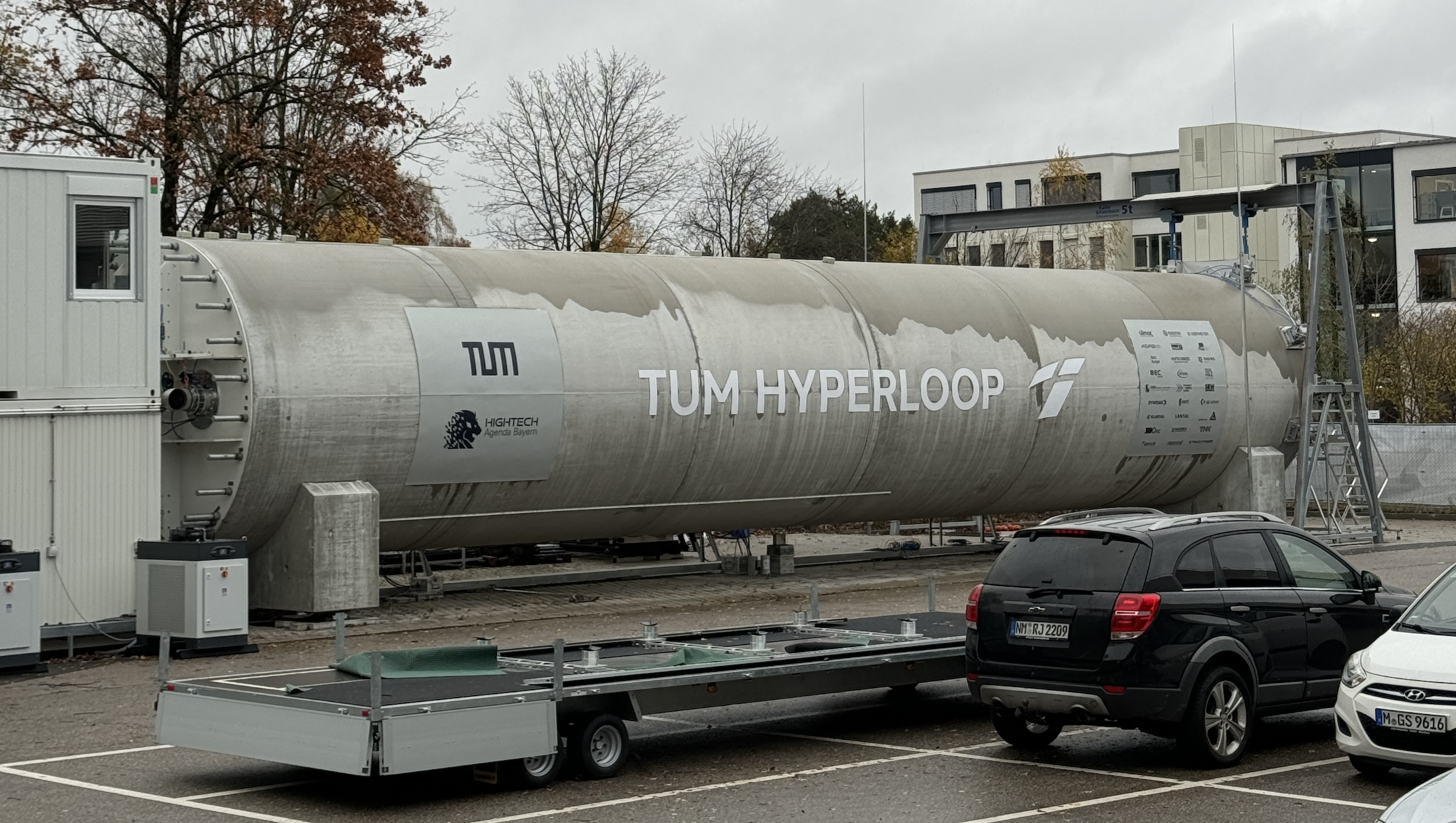
But research institutions such as TUM (the Technical University of Munich) are already far advanced in their research. In Ottobrunn, a capsule already carries people (trial operation, not public) in a 24 m concrete tube. In summer 2023 a crewed test run under partial vacuum succeeded. In the meantime further test tracks have also been built: in 2024 a 420 m test track opened in Veendam (Netherlands), and in March 2025 a 27 m test track opened at Emden/Leer University of Applied Sciences. In fact, original components from the Transrapid 09 live on in the TUM Hyperloop.
Many different Hyperloop systems are being developed worldwide, relying on different propulsion and levitation technologies. This article focuses on the TUM Hyperloop, since the greatest progress has been made there. So far no other European organization has a full-scale, vacuum-capable, passenger-carrying overall system with TÜV certification for passenger transport.
Guideway
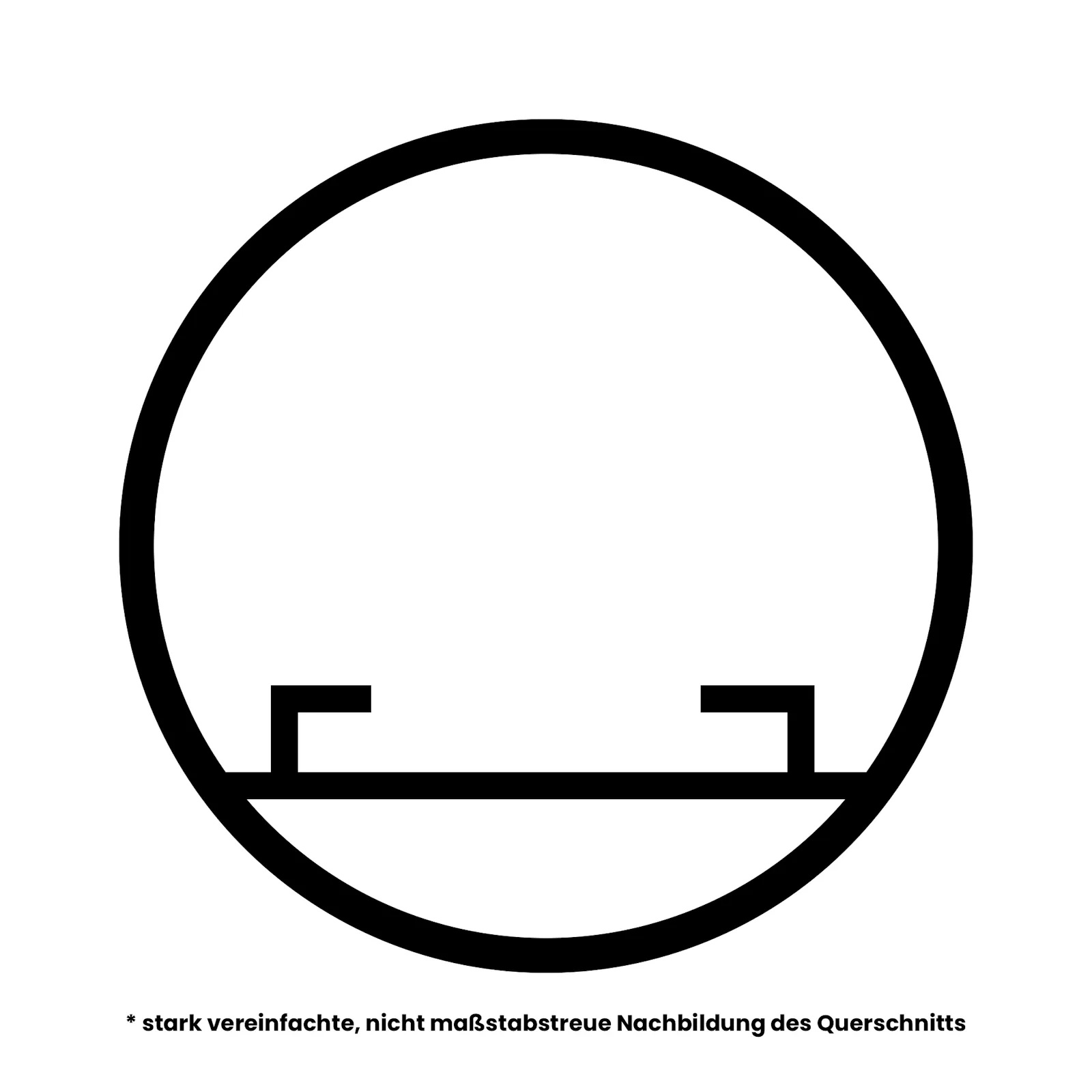
The Hyperloop needs tubes with a diameter of just under 4 m. In addition, the Hyperloop principle relies on creating a vacuum in the tunnel, which considerably reduces air resistance and thus minimizes energy demand. Construction tolerances are close to zero, since the vacuum is destroyed by even the smallest hole. TUM opted for concrete guideway tubes because they offer the best ride comfort, do not expand or bend in heat, and generate less noise and vibration. Inside the tubes is a guideway that wraps around the vehicle, fitted with the reaction rails and the drive winding (at the bottom).
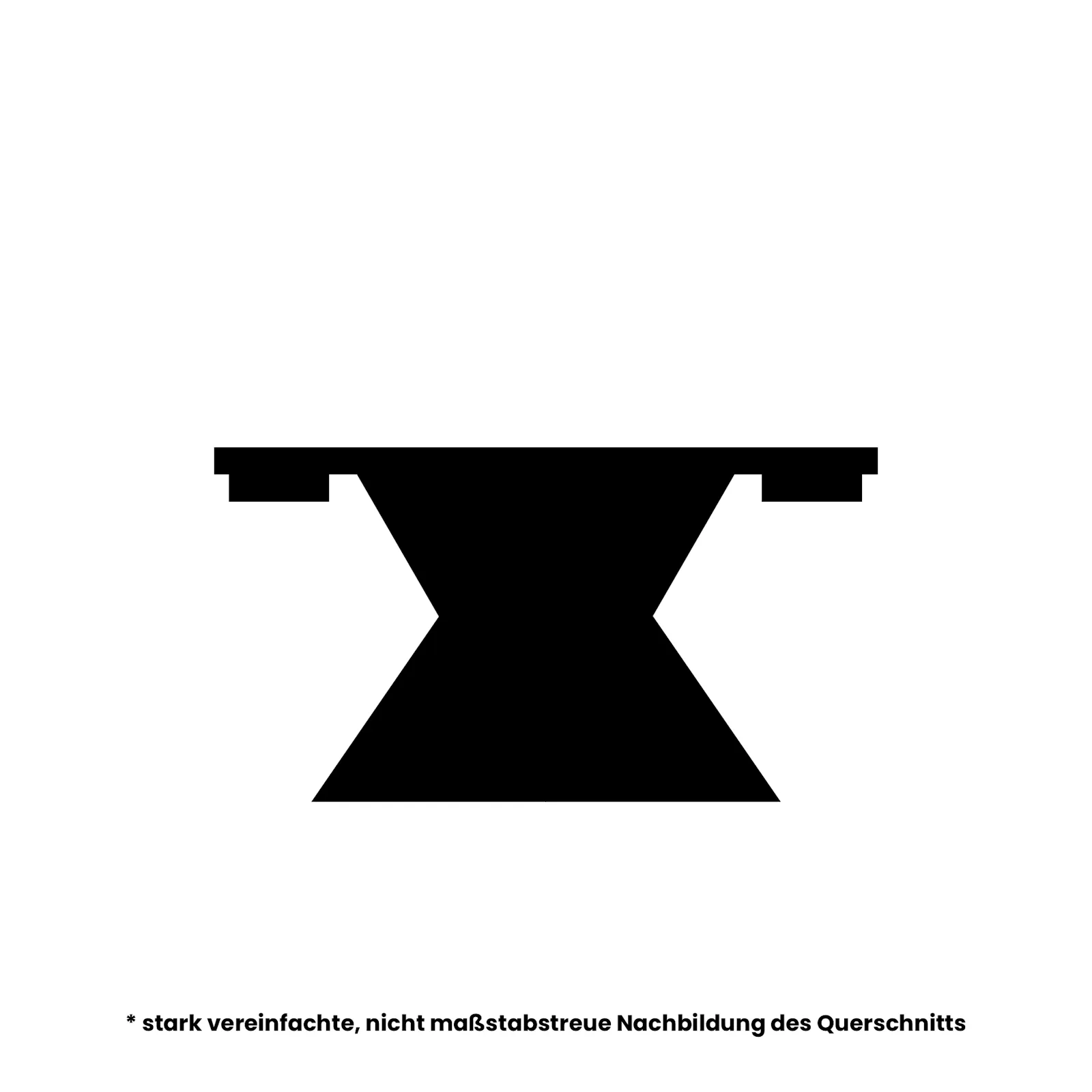
The Transrapid relies on steel, concrete or hybrid guideways, although development and pursuit of the steel girder has been discontinued. Concrete girders offer considerably better properties, with Bögl guideways being particularly advantageous. The guideway is 2.80 m wide and is built elevated or at ground level in various “types” explained in this article.
Levitation system
The TUM Hyperloop is supported electromagnetically. The vehicle lifts itself up against reaction rails mounted on both sides. The vehicle weight is distributed evenly across the chassis. Soon the principle could be tested with superconducting magnets, at least that is the plan. It is propelled by a long-stator linear motor installed in the guideway, mounted in the center of the guideway. Permanent magnets act as the vehicle-side exciter, similar to the Berlin M-Bahn almost 40 years ago: the magnetic field of the permanent magnets is pulled along by the traveling field of the guideway. These permanent magnets have nothing to do with the levitation system, however; they are separate.
The Transrapid levitates, supported and guided electromagnetically. Vehicle-side levitation magnets are drawn toward the guideway-side (long-)stator packs. This levitation process creates a magnetic field. The Transrapid is propelled by the drive winding, which is installed in the stator packs along the entire guideway. This also creates a traveling field, which pulls the vehicle’s (levitation) magnetic field along.
Overall, the Transrapid currently offers a more integrated drive, since levitation magnets, stator packs and drive winding are closely linked for the overall function. In the principle currently pursued by the TUM Hyperloop, these functions are somewhat separated: levitation by electromagnets, linear motor excitation by additional permanent magnets, and a drive winding installed freely in the floor (in the TR, in stator packs).
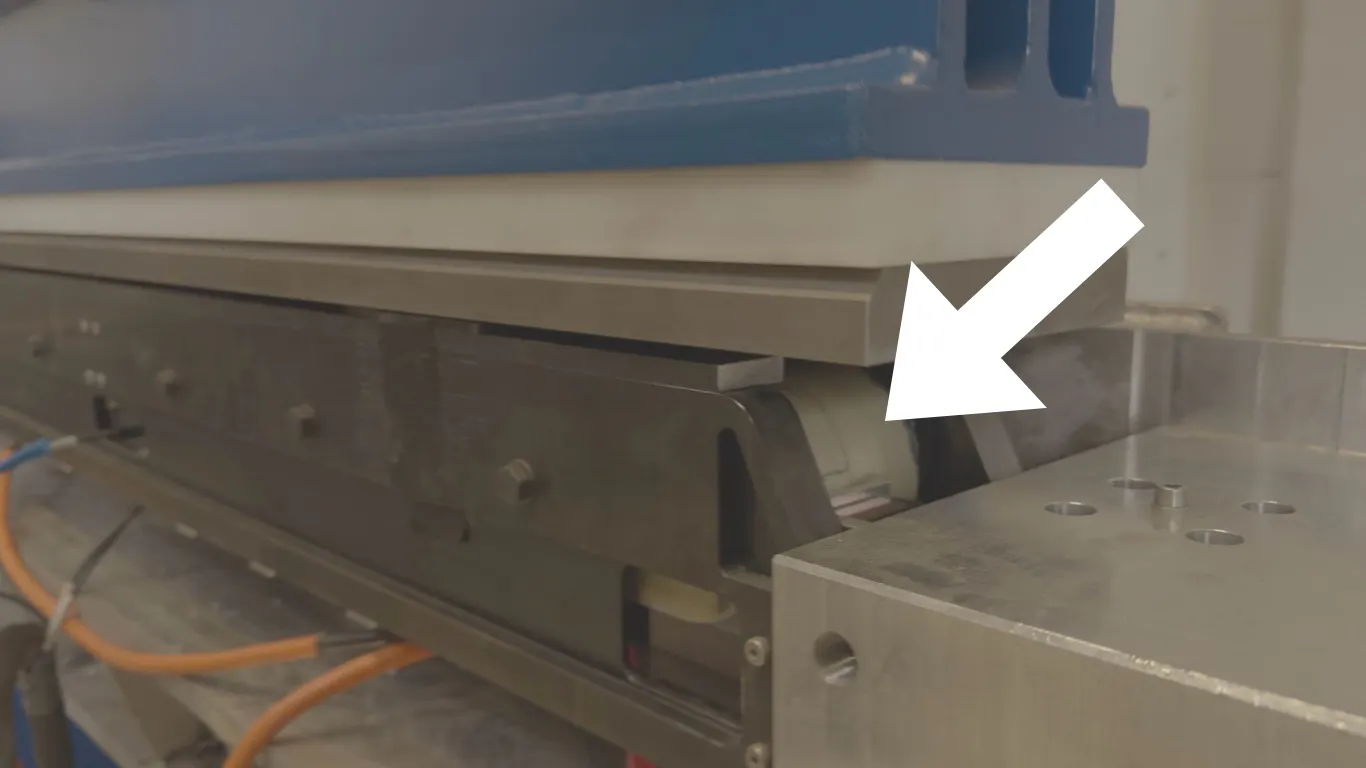
Fun fact: the current TUM prototype vehicle uses the original guidance magnets of the Transrapid 09 for the levitation function. These were made available by ThyssenKrupp Transrapid GmbH for research purposes. The guidance magnets were repurposed as levitation magnets that lift the TUM Hyperloop vehicle. The white arrow in the picture points directly at the TR09 guidance magnets: today the TUM Hyperloop’s levitation magnets.
Areas of use
The Transrapid aims to connect large and medium-sized cities. Routes would run right into city centers, slowing to 250 km/h there for noise protection reasons. On long stretches, speeds between 430 and 500 km/h are feasible. It significantly relieves long-distance rail and short-haul air traffic – on its own independent infrastructure.
The TUM Hyperloop pursues a different concept. It wants to connect large cities, with entries into cities branching off the main line and traveled at lower speeds. It reaches 850 km/h and, like the Transrapid, aims to relieve rail and air traffic. Problems could arise here from the low capsule capacity: at present only a handful of passengers fit inside. Larger crowds / congestion could therefore build up at stations, whereas the Transrapid (TR08, 10 sections, 3×3 seating) can carry up to 1,192 passengers on one trip. The TUM Hyperloop is supposed to be able to achieve shorter headways, however, which could solve the capacity problem.
Comparison only symbolic
While the Transrapid draws on decades of experience, the Hyperloop has existed for only a few years. It is still in the middle of the development process, and the system is constantly being modified and improved.
It can therefore be assumed that new systems and technologies will keep appearing in the future that differ greatly from existing concepts. The Hyperloop is still far from market maturity, and large-scale test facilities spanning several kilometers have not been built anywhere so far. Work is under way, however; among other things, a 1 km test track for the TUM Hyperloop is currently being planned.
Meanwhile, the Transrapid is a market-ready technology that has been technically ready for service since 1991, has accumulated almost 30 million kilometers of total mileage (Emsland + Shanghai) and has cleared away all technical concerns. The Hyperloop still faces major challenges, in particular maintaining a vacuum over hundreds of kilometers and ensuring passenger safety in the capsules. Research institutions such as TUM Hyperloop show, however, that previous challenges have been overcome.