Transport System Bögl: Is Anything Still Coming?
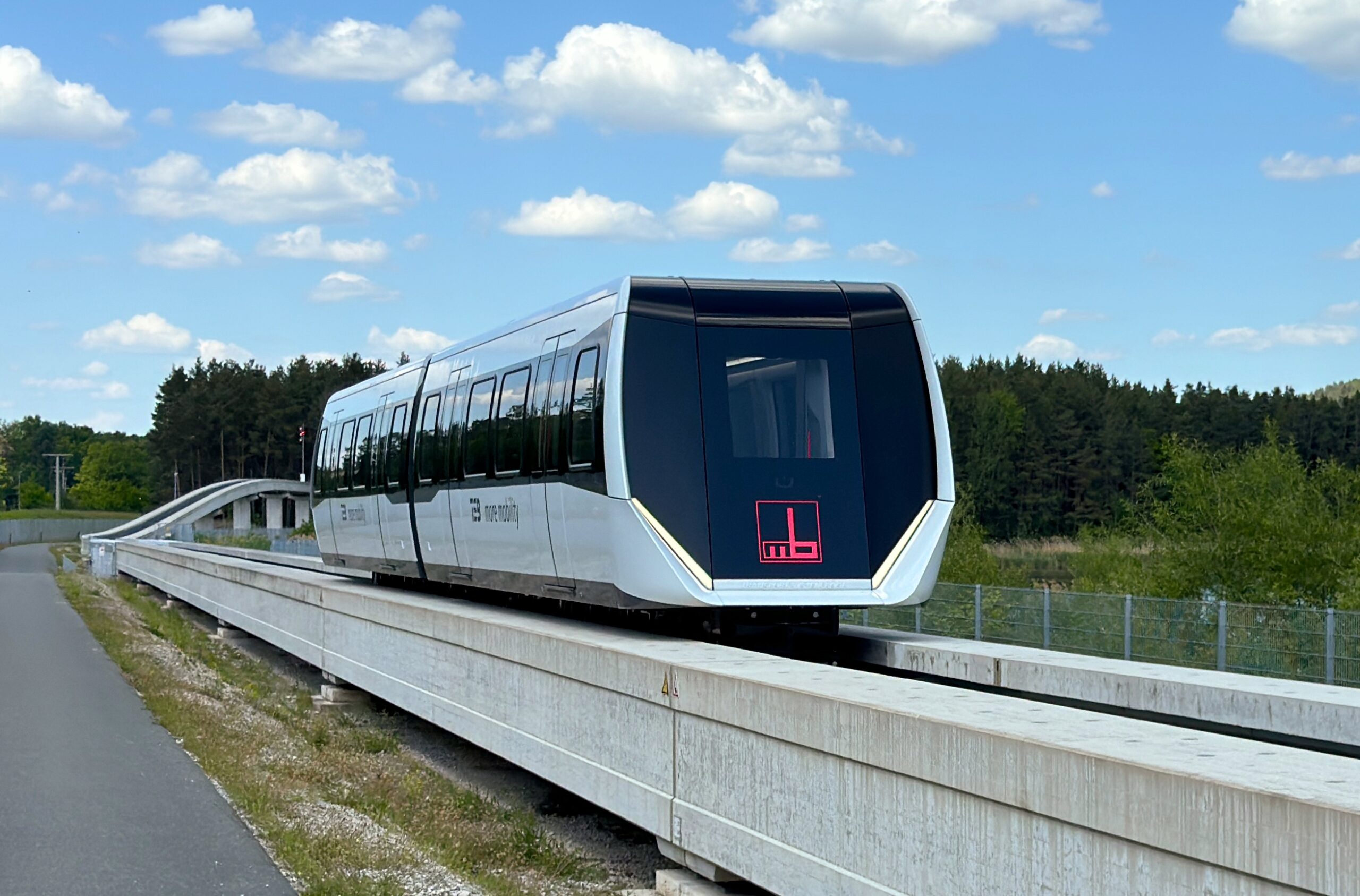
For years, the Transport System Bögl (TSB) has been under development as a promising alternative for urban public transport. It is a modern maglev train that is quiet, low-emission, low-maintenance and inexpensive to operate. It combines innovation with proven standard technology, offers capacity at metro level, and could be a viable answer to overloaded transport networks in many places. Yet instead of progress, stagnation dominates. The technology is ready, the arguments are on the table. And still, implementation keeps failing because of political, communication and planning hurdles.
Technology without a breakthrough
In recent years, the TSB system has been studied, tested and even considered in concrete project ideas several times. But one thing is lacking: realization. While studies are commissioned and feasibility analyses produced, solid steps rarely follow.
In Berlin, for example, the TSB was discussed publicly as a “Magnetbahn,” but instead of a factual discourse there was media distortion, misinformation and political ridicule. In Nuremberg, too, the project fell into disrepute because, of all things, a study-backed forced-transfer requirement on the route examined demonstrably made the streetcar’s cost-benefit ratio considerably better. The conventional technology proved economically superior in this case (since no passengers are lost to forced transfers), even though operating costs for the TSB are lower. Technological advantages are thus discredited because they are forced into unsuitable contexts.
Regardless of the specific project context, the Transport System Bögl (TSB) proves technically clearly superior to the streetcar in the feasibility study for Nuremberg: at 3.3 kWh/km it uses considerably less energy than a streetcar (4.2 kWh/km), causes lower maintenance costs (€0.27/km instead of €0.87/km) and drastically reduces accident risks thanks to its own guideway (only 20 cents/km versus 101 cents/km). It needs less space, is quieter, faster and more flexible in planning, and runs driverless and automated.
But these advantages only take effect if the system is embedded in a strategically sensible way. In Nuremberg, for instance, the forced transfer to the streetcar neutralizes many of the plus points and pushes the benefit-cost ratio below the funding threshold. Conclusion: the system is not the problem, its application is.
Silence from Sengenthal
Political signals without consequences
Yet the new federal government had given cause for hope. The coalition agreement expressly mentions the eligibility of maglev trains for funding under the Municipal Transport Financing Act (GVFG). But even five months after taking office, there is radio silence. Asked in the Bundestag’s transport committee, Transport Minister Patrick Schnieder merely said: “Maglev trains are not a priority right now, but if an operator comes forward, that is nothing we will close ourselves off to.” That sounds like benevolent passivity, not political will to shape things. The fact is, however: anyone who wants to create a serious chance for alternative systems must amend the GVFG so that there is equal opportunity in funding eligibility.” A missed chance to support a future-proof transport system with political determination, because the announcements in the coalition agreement have still not been followed by concrete action: the GVFG remains unchanged to this day, and unlike conventional railways, maglev is not eligible for funding.
False narratives, missing dialogue
What weighs especially heavily: the public debate is systematically missed. Residents always learn about planned maglev projects first from the press, often in a biased presentation, without a nuanced assessment of the advantages and without naming the concrete benefit for the residents who are supposed to have such infrastructure placed on their doorstep. No wonder reservations arise when misunderstandings are stoked rather than cleared up. The lack of citizen dialogue, in Berlin for instance, is a major deficit. Yet it would be especially necessary right now to win locally rooted citizens’ initiatives that advocate for the system out of conviction. That is precisely how it works for new bike lanes, streetcar lines and many other kinds of infrastructure, where citizens recognize the benefit themselves and demand these solutions. This avoids misunderstandings and the spread of misinformation and would probably be the best thing that could happen to the TSB in the respective cities.
A missed opportunity for public transport?
The TSB could be a sensible addition to existing transport services. It relieves bus and streetcar lines, can be deployed flexibly in terms of infrastructure, and would create new options especially in fast-growing urban areas. Maintenance costs are much lower, investment costs on par with conventional rail systems, and capacity at metro level. But all of that is of no use if no effort is made to win the support of the residents and commuters concerned, if the press’s misinformation is left standing, and if citizens are not involved in the processes at all.
Without political support, without communication initiative and without social embedding, the technology remains a theoretical promise.
What must happen now
The idea needs to be conveyed close to citizens. Just as bike referendums and mobility initiatives are reclaiming public space, the topic of maglev must be brought into society with enthusiasm, vision and facts. Not from the top down, but from the bottom up. When people understand what the system brings them (more comfort, more reliability, less noise), political backing will follow.
For example, regular rides during dialogue events at the test track in Sengenthal could overcome resistance and convince citizens from all over Germany, but nothing like that currently exists. Because of the TSB website’s extremely poor Google ranking, residents also have no choice but to swallow the press’s misinformation, pass it on and be categorically against maglev.
With magnetbahn.de I was able to counteract this in Berlin as early as 2023, to the point that even the Berliner Zeitung reported on my debunking of misinformation.
Because one thing is clear: the problem is not the technology. It is everything around it.