The ICE Is an Insult to Passengers
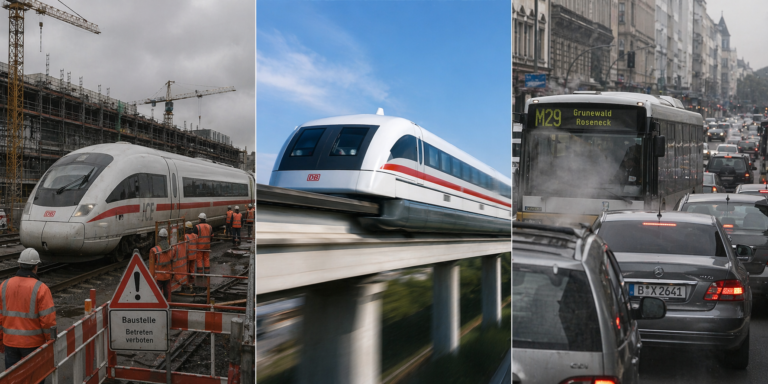
Constantly slowing to moped speeds. Delays that make connecting trains unreachable. Stopping on open track to let other trains pass: Germany's ICE high-speed train is an outright imposition on passengers. And the kicker: damage to the overhead line has just paralyzed Munich's entire main station, and Deutsche Bahn (DB) is advising against travel to or from Munich altogether. A whole metropolis of millions, during an international auto show (IAA), is simply shut down. With an independent Transrapid network, this would not have happened.
Constantly slowing to low speeds. Delays that make connecting trains unreachable. Stopping on open track to let other trains pass: Germany’s ICE high-speed train is an outright imposition on passengers. And the kicker: damage to the overhead line has just paralyzed Munich’s entire main station, and Deutsche Bahn (DB) is advising against travel to or from Munich altogether. A whole metropolis of millions, during an international auto show (IAA), is simply shut down. With an independent Transrapid network, this would not have happened.
Experience as an ICE passenger
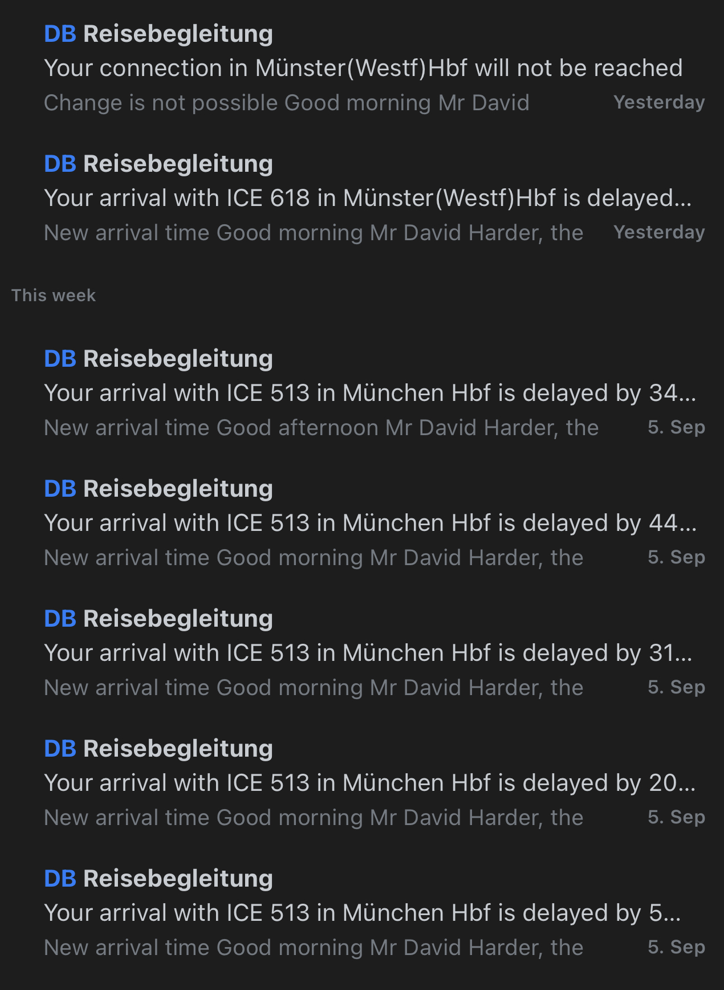
When I began the trip from Münster to Munich on ICE 513, I was actually amazed at first. The train was very clean and modern, smelled pleasant, and the Wi-Fi was very fast. I did not find the ride comfort bad either; the train was fairly quiet inside, though it shook a little.
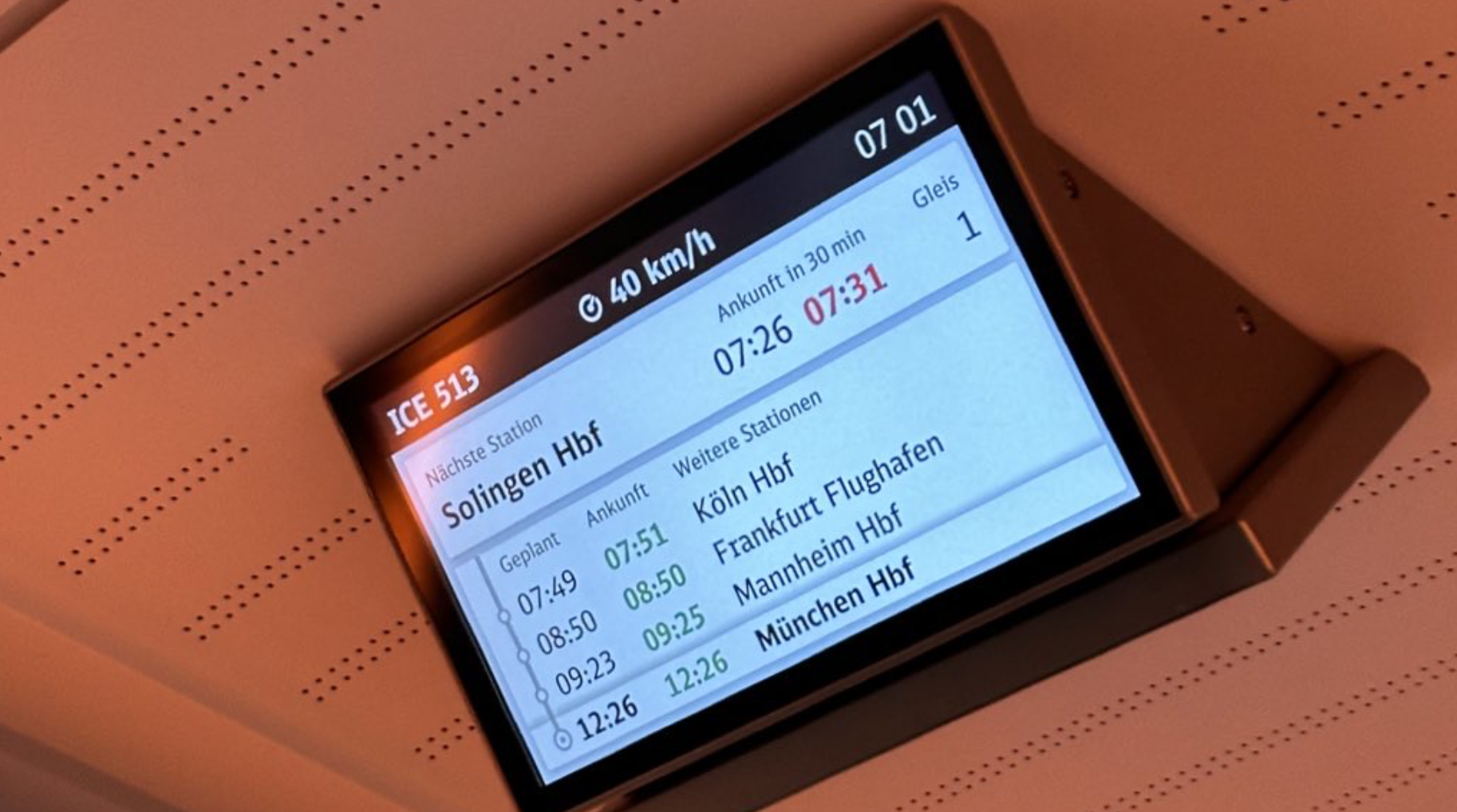
What quickly became apparent, though, was the uselessly low speed, far below 200 km/h. The train constantly braked down to double-digit speeds and often stopped in the middle of the line.
The nightmare only begins from Cologne main station: we were stuck in the station because another train had broken down ahead of us. And from here on, the delays added up.
After Cologne it actually reached 260 km/h briefly, but my journey did not benefit, because afterward it kept stopping, braking to 40-150 km/h, having to let other trains pass or give way at construction sites.
I reached my destination, Munich, around 1:14 p.m.; I had been promised 12:26 p.m. Unfortunate, but not the end of the world.
The return trip on ICE 618 went similarly badly: at Munich main station, the DB app says the train departs from platform 14. But the display at platform 14 says something entirely different. The big boards in the station say the ICE would leave from platform 18. Having arrived at platform 18, the announcement then says the ICE departs from platform 14. I went to platform 14, and there the right ICE was indeed standing. What a mess.
Here too: constant braking, almost no use of the top speed. And shortly before Münster the ICE stopped for several minutes and then arrived 15 minutes late, which made me miss my connection and wait another hour for a replacement.
In my experience, the ICE train itself is the least to blame. It is much more the completely overloaded and dilapidated railway infrastructure in Germany that makes long-distance rail travel completely unusable. The network is so full that trains constantly have to brake to let other trains pass. The ICE runs at alarmingly low speeds because the tracks cannot take any more. The trains are timed so tightly that the smallest delay of a train ahead affects all the traffic behind it.
ICE infrastructure in Germany
Germany has no separate high-speed network for the ICE. It runs on the same infrastructure that freight and local trains use. A few decades ago that may not have been a problem, but today the consequences are making themselves felt. An absurd punctuality rate of only 65.1% in 2022 and average speeds of just 160 km/h turn long-distance rail travel into a nightmare for passengers. None of this is an isolated case; it affects countless rail passengers every day.
A few decades ago, people argued against a nationwide Transrapid because the ICE can run on existing infrastructure. Is that really an advantage? No: on existing infrastructure, the ICE runs at speeds like an old steam locomotive. And by now the low speed is the smallest problem: the congested infrastructure forces the ICE to brake constantly. What a waste.
The ICE suffers from the domino effects that DB causes. If a train breaks down somewhere, the journey is spoiled by delays for all passengers on the trains behind it. If the overhead lines are defective at a station like Munich, all rail traffic in a metropolis of millions is paralyzed and travel plans are ruined.
The Transrapid as a solution
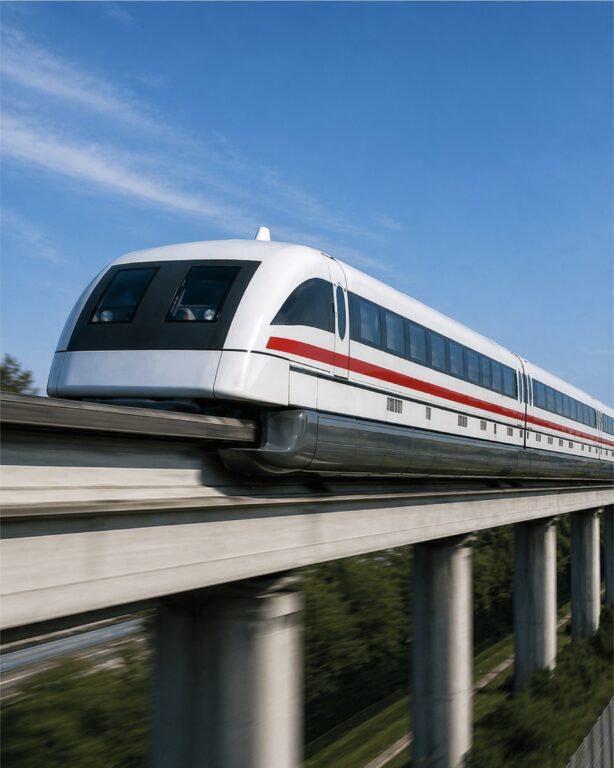
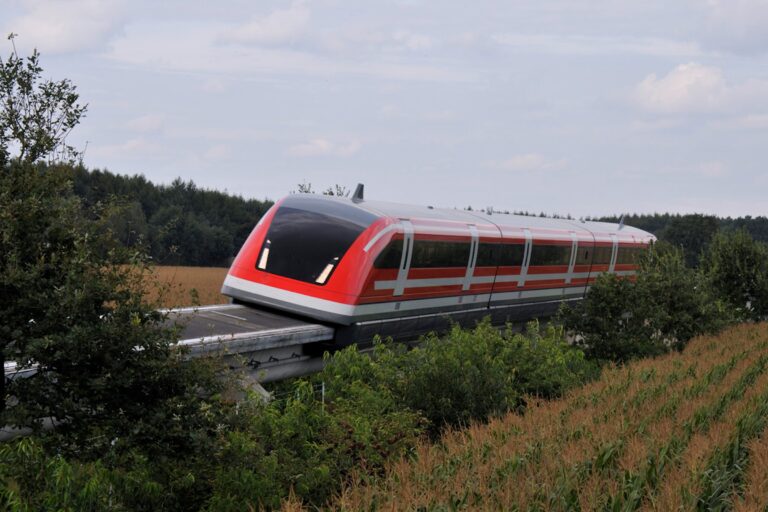
With a nationwide, independent Transrapid network, exactly this would never have happened. Instead of being slowed by other trains and running on old tracks where not even three-digit speeds are possible, a Transrapid would travel across the country at 400 to 500 km/h and connect the big cities, making a major contribution to relieving road and rail. Used properly, it would even be a replacement for domestic flights.
But nobody wants to hear any of this. The Transrapid is a “political taboo,” and nobody in the Bundestag (German parliament) dares to even utter the word.
Investment in rail certainly benefits local and freight transport. But for long-distance travel by ICE, all these billions in investment are at best a drop in the ocean. Simply extending the existing network by a few hundred kilometers or repairing the existing infrastructure will achieve nothing as long as the ICE has to share infrastructure and stations with other trains.
To bring about a truly noticeable improvement, new solutions are needed that are independent of the disastrous Deutsche Bahn. We need solutions like the Transrapid, which can easily reach up to 500 km/h on its own infrastructure without being slowed down.
But until that day comes, billions will continue to be burned on the dream of the ICE.