What China Is Doing Now, Germany Had 50 Years Ago
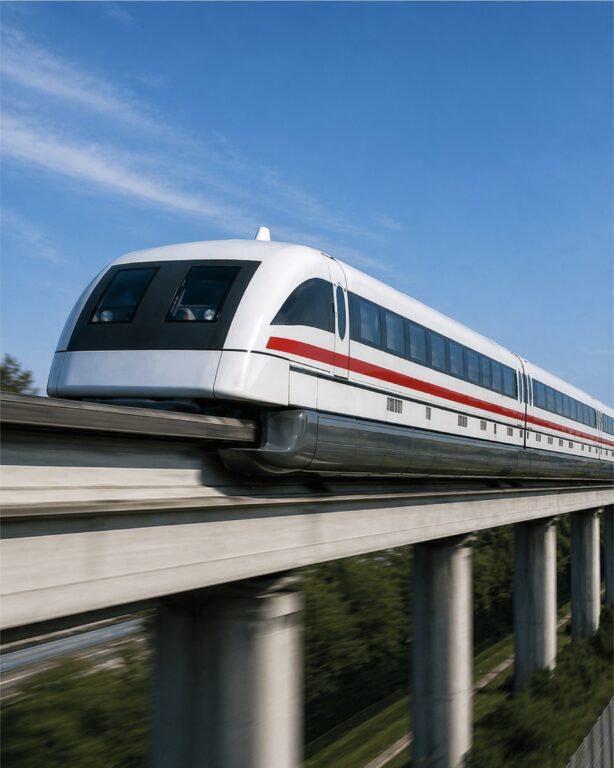
A Chinese test vehicle accelerates to 650 km/h. In just seven seconds. On barely one kilometer of track. What China is currently achieving in maglev technology is a powerful commitment to the future of mobility. But anyone who really engages with this technology realizes that the foundations on which Chinese progress rests today come from Germany. And they are not young: they are more than a century old.
The story begins in 1922, when Hermann Kemper, then a student in Nortrup, developed the vision of letting trains no longer roll but levitate, for reasons of noise, efficiency and the future. In 1932 he filed the decisive patent, and in 1938 he extended it to include lateral guidance. Even then he dreamed of 1,000 km/h in evacuated tubes. What is now on everyone’s lips as the Hyperloop had already been formulated, thought through and technically prepared in Germany.
But the war, the course of events and distrust of anything visionary set the idea back. It was not until the 1960s that Ludwig Bölkow met Kemper and brought his idea back to life. From 1969, the HSB study began a phase of intensive development. In Ottobrunn, Munich-Allach, Kassel, Erlangen, engineers all over Germany worked to create a new form of transport.
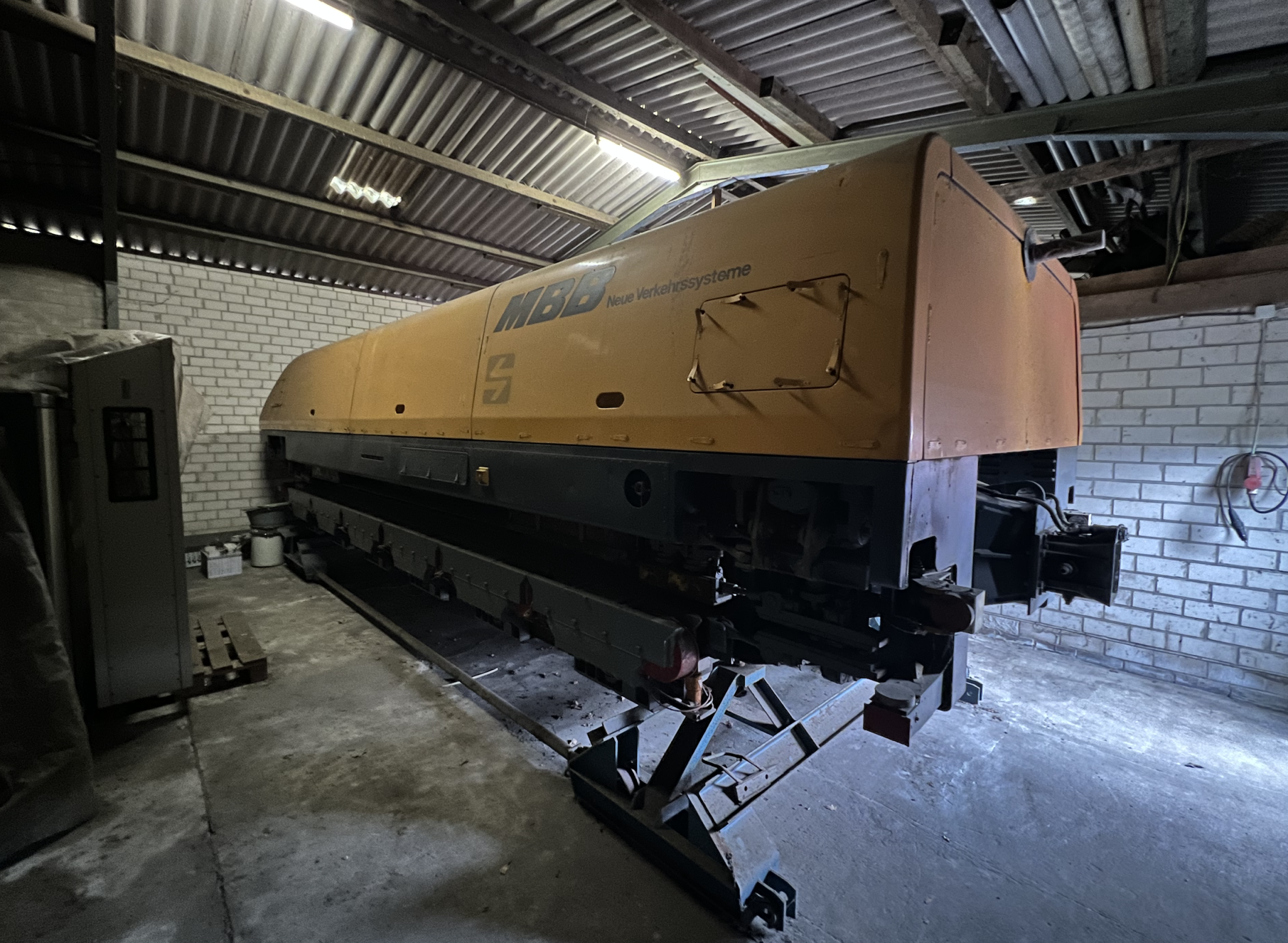
And then came Manching. 1974. The place where maglev technology was pushed to the limits of the feasible. Messerschmitt-Bölkow-Blohm (MBB) built a 1.3 km test track on a military airfield. The goal was not show but knowledge: how does electromagnetic levitation behave at extreme speeds? The KOMET test vehicle was accelerated by rocket sled to over 400 km/h, 401.3 km/h to be exact. A world record in the context of electromagnetic levitation technology. And that was 50 years before today’s Chinese test.
It did not stop there: when the system hit its limits, for example through vibrations from rigidly mounted magnets, the response was smart and decisive. With the conversion to the KOMET M, a fully sprung, individually controllable magnetic running gear with redundancy was introduced for the first time. It was the direct precursor of what later reached series maturity in the Transrapid.
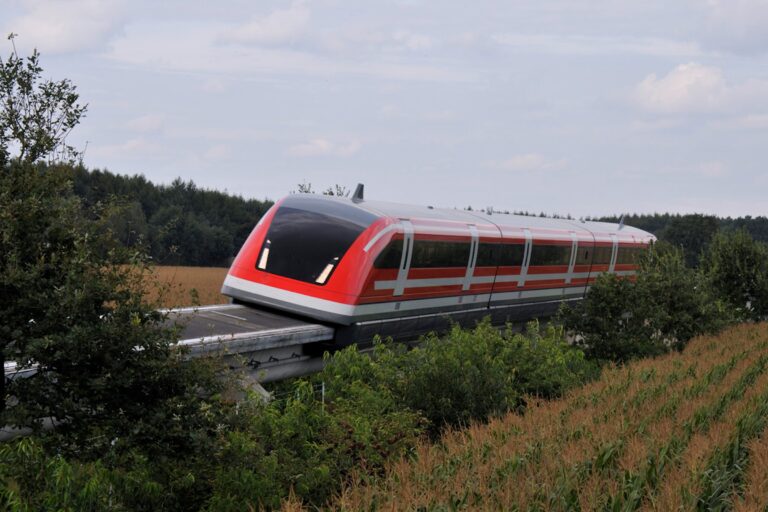
The path was not straight, but it was always pioneering. In Munich-Allach, the Transrapid 04 was brought to over 250 km/h. In Hamburg, the TR05 ran publicly. And in Emsland, the TR07 finally reached the legendary 450 km/h in 1993, with passengers on board, under real conditions, safe, quiet, emission-free. More was technically possible, but the track was too short. It was not the technology that was at its limit but the political will. In Shanghai, the Transrapid built in Kassel reached 501.5 km/h in 2003.
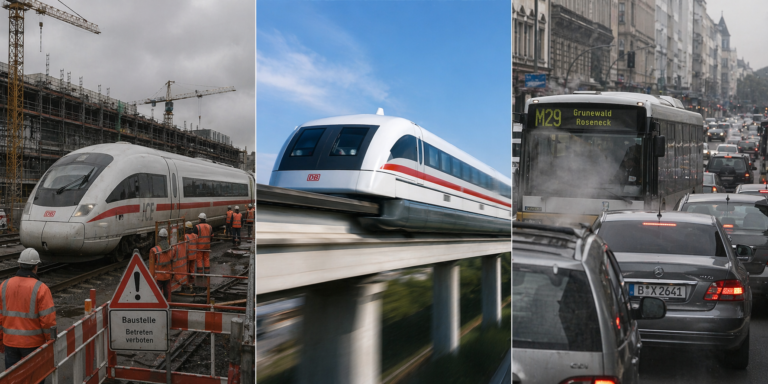
China has absorbed this know-how, integrated it and developed it further. It now shows what is possible when a nation is determined to make a technological lead a strategic goal. That deserves recognition, but it must not lead us to forget our own achievements.
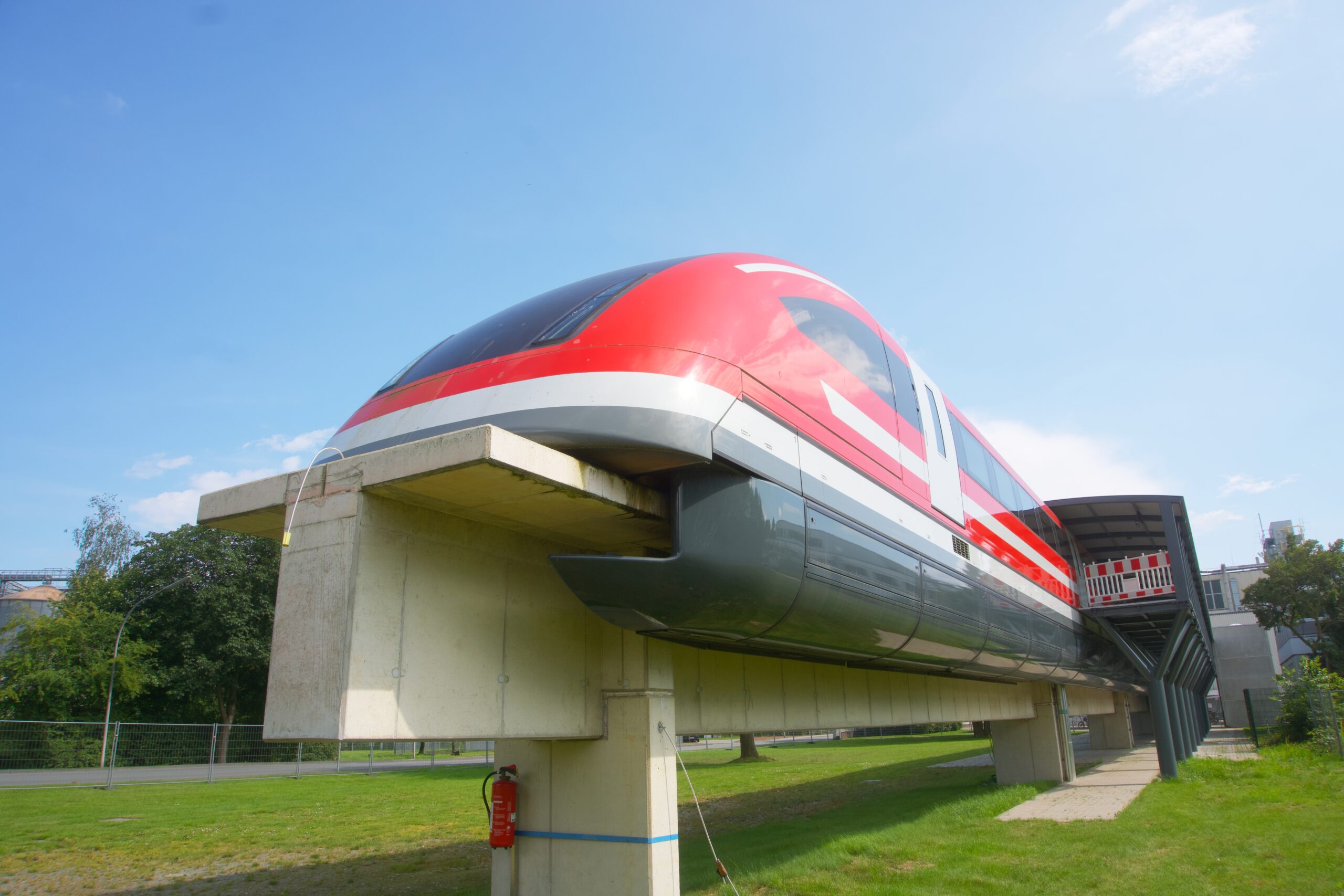
Germany was the country of origin of the maglev. We did not copy; we invented. We researched, tested and brought it to maturity. The Transrapid is not just one product among many; it is the result of a hundred-year-old idea that matured from Kemper to the TR09. Today it stands still. In Nortrup. Symbolic, and at the same time politically shameful.
What we need is not a nostalgic look back but a courageous look ahead. The technology is there. The competence is there. The experience is there. What is missing is the political and societal will to go back to where we once were: at the top.
We were the origin. Now it is time for the return.