Language
Language
Transrapid ·

Maglev Guideway Bögl for the Transrapid: Better and Cheaper
Anyone thinking of the Max Bögl company today will surely think straight away of the Transport System Bögl (TSB). But the Max Bögl group has had experience developing the Transrapid guideway since 1996. From the hybrid guideway to the concrete flexible switch: this article tells you about the various Bögl guideway girders.

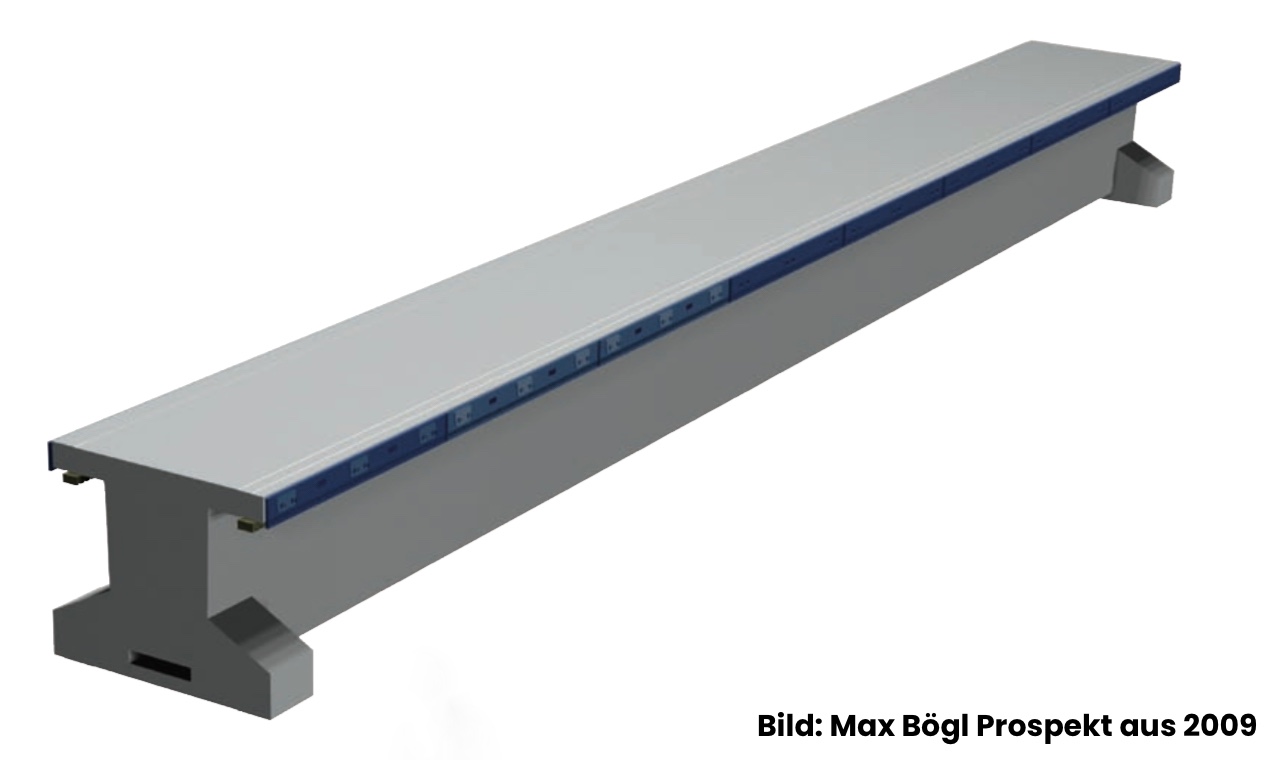
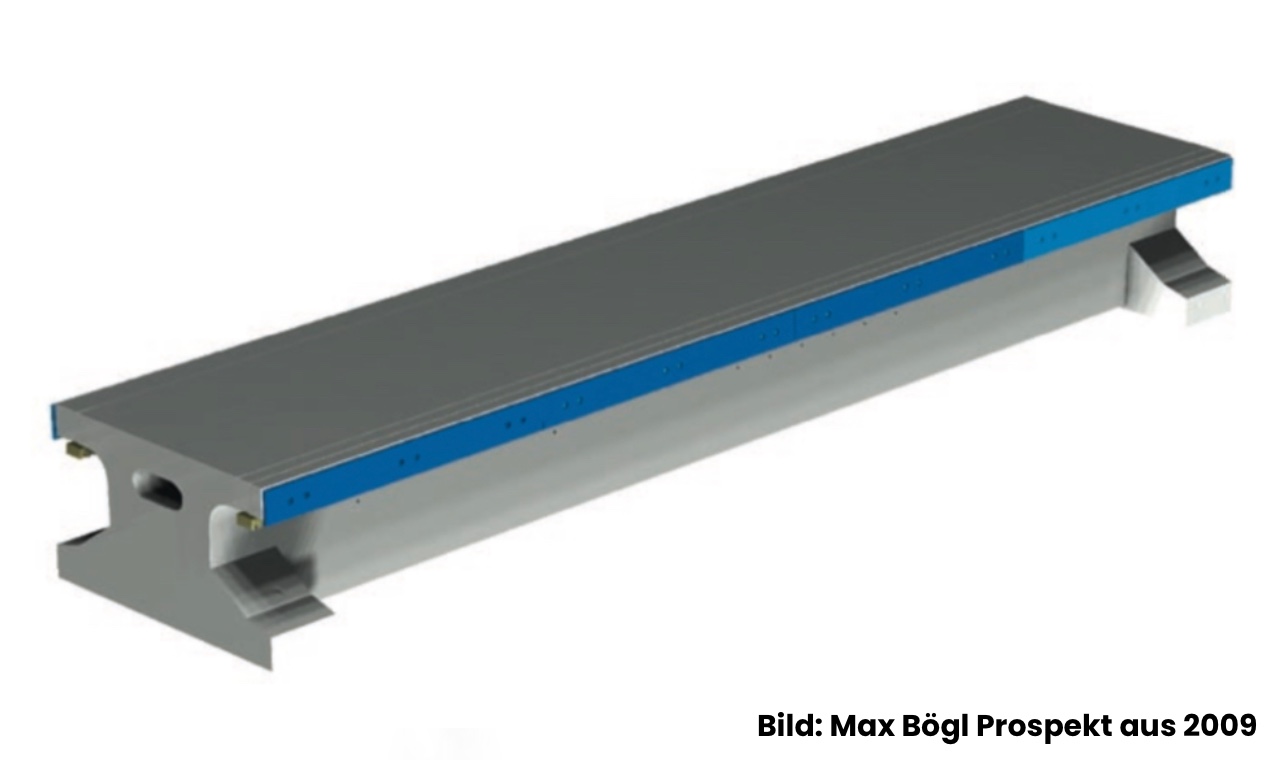
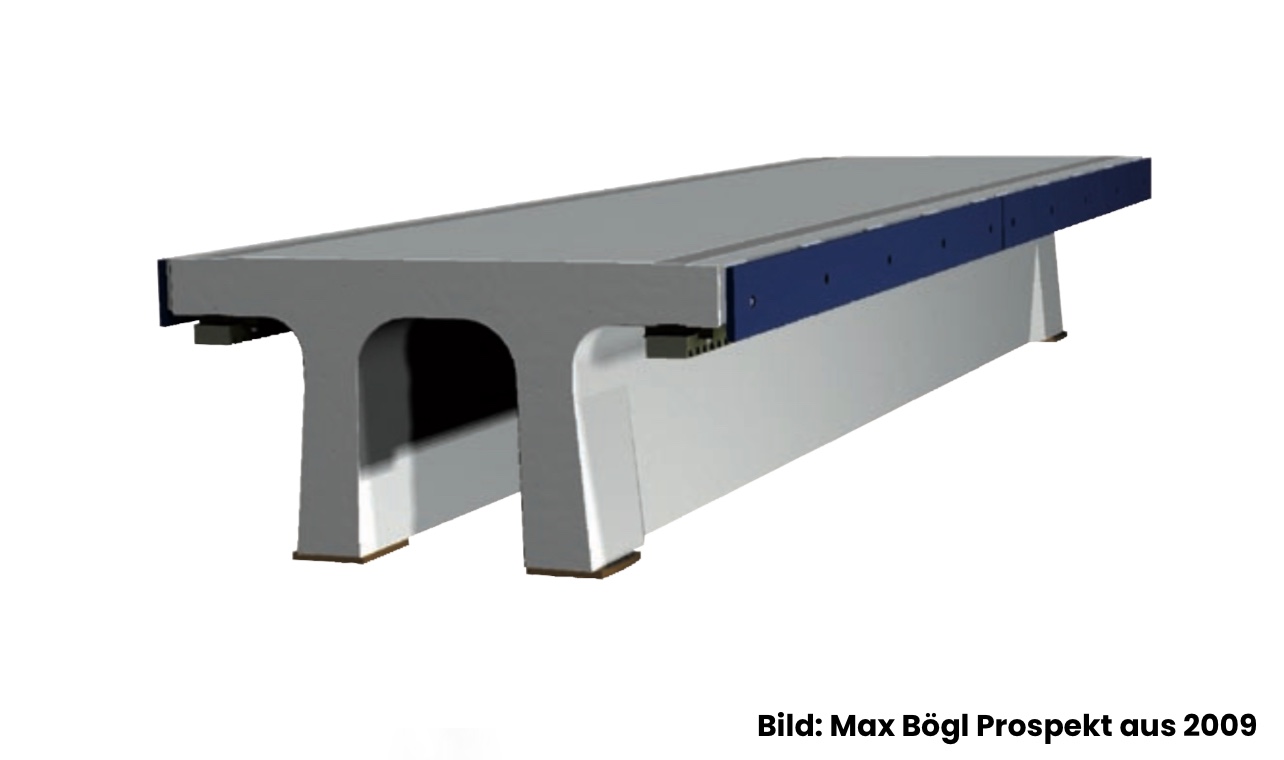
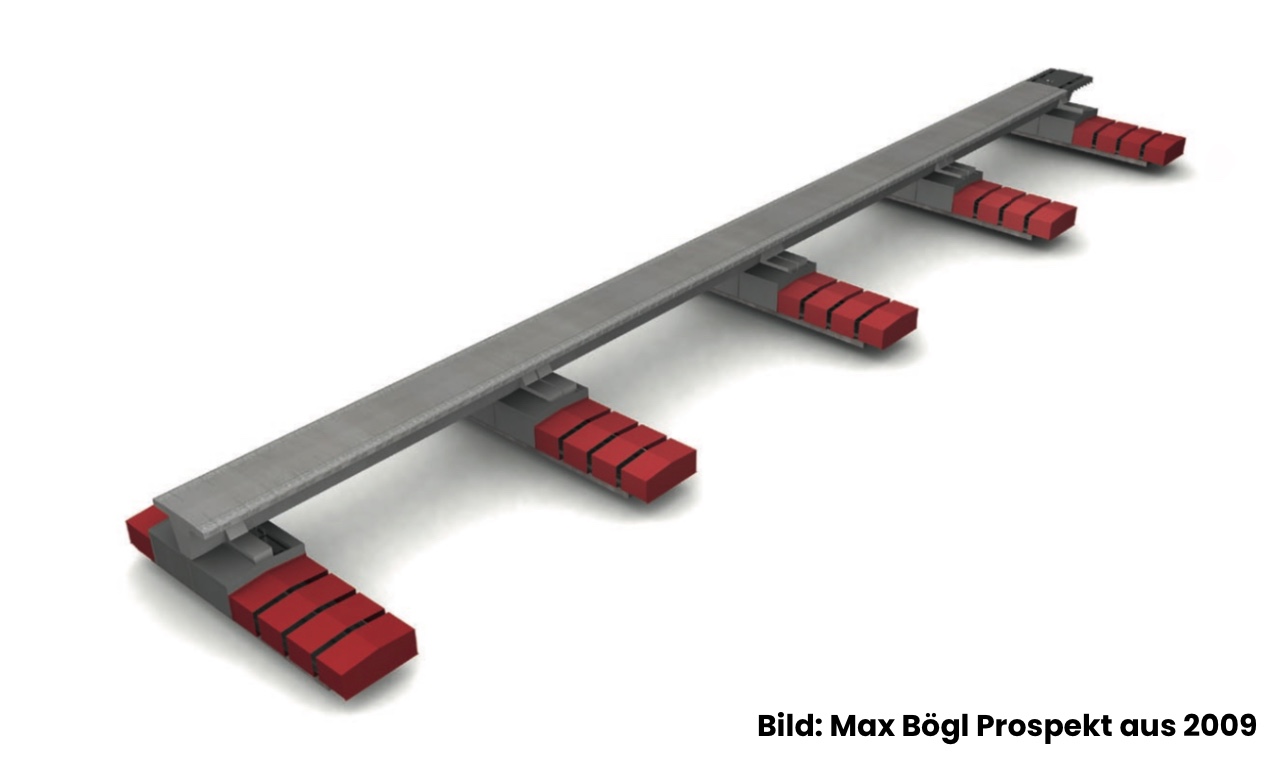
Image: Max Bögl brochure from 2009

Hybrid girder

In 1996, Bögl came up with the idea of combining steel and concrete guideways. This led to the first prototype of the hybrid girder in 1999, which was first installed at the TVE (Transrapid Test Facility Emsland) that same year.

The hybrid girder offers first-class ride comfort. It combines the damping properties of the steel guideway with the long service life and low corrosion of the concrete guideway, creating an excellent girder. Hybrid girders also have the advantage of staying free of deformation and true to shape at all temperatures.

In the hybrid girder, the individual components are divided into the prestressed concrete structure (main load-bearing structure) and the functional level module (a combination of slide rail, guide rail and stator packs). (See: Transrapid technology)

The hybrid girder was developed as part of the Hamburg-Berlin project. The SMT line consists entirely of further-developed, second-generation hybrid girders.

At the time, China had great interest in producing individual components domestically. The guideway was produced there, since it would have been senseless to manufacture such a large number of girders in Germany and then ship them to China. Production costs were thus saved, as Bögl licensed a Chinese concrete construction company, which produced the girders on behalf of the SMT line.

The guideway girders for the SMT line were made in China to save transport costs. The girders were built under an official license from the Max Bögl group. One difference from the first generation is that the girders were adapted to the urban environment, with the underside shaped to deflect sound.

Example Gen. 1: sound is not deflected at the bottom
Example Gen. 2: sound-deflecting slope in the prestressed concrete structure. Image: Bögl brochure 2009

MGB Type I

To cut costs further and optimize manufacturing processes, Bögl also developed conventional concrete girders. The MGB (MaglevGuidewayBögl) Type 1 is a 24.8 m long girder designed for elevated construction. According to Bögl, it “can be equipped with all maglev guideway innovations”, which means, among other things, that concrete or steel slide rails can be installed depending on customer wishes. Type I girders are intended for elevated construction. This girder was installed at the Transrapid Test Facility Emsland in 2010 and is considered a “miracle of cost savings” thanks to its reduced production costs.

MGB Type II

The MGB Type II is a modified version of the MGB Type III. Type II has a slab design at the girder ends and, at 12.4 m, is slightly longer than Type III. Type II girders can typically be installed both at ground level and elevated. This girder was manufactured but never installed on any line. When the TR07 was exhibited at Munich Airport, the vehicle stood on this girder. A section of the TR07 still stands on this guideway at Bögl today.

MGB Type III

The MGB Type III was developed for the planned line in Munich. Type III girders are ground-level girders. The graphic shows that the girder is pi-shaped (π), mainly for cost reasons. This design saves costs and raw materials. These girders were installed for testing purposes around 2005 in the southern loop of the Transrapid Test Facility Emsland.

Revolution: the concrete flexible switch

Bögl also developed switches. A novel concrete flexible switch promises better ride comfort and lower maintenance costs.

The switch guideway consists of 14.4 m long girder elements, which together form the switch guideway.

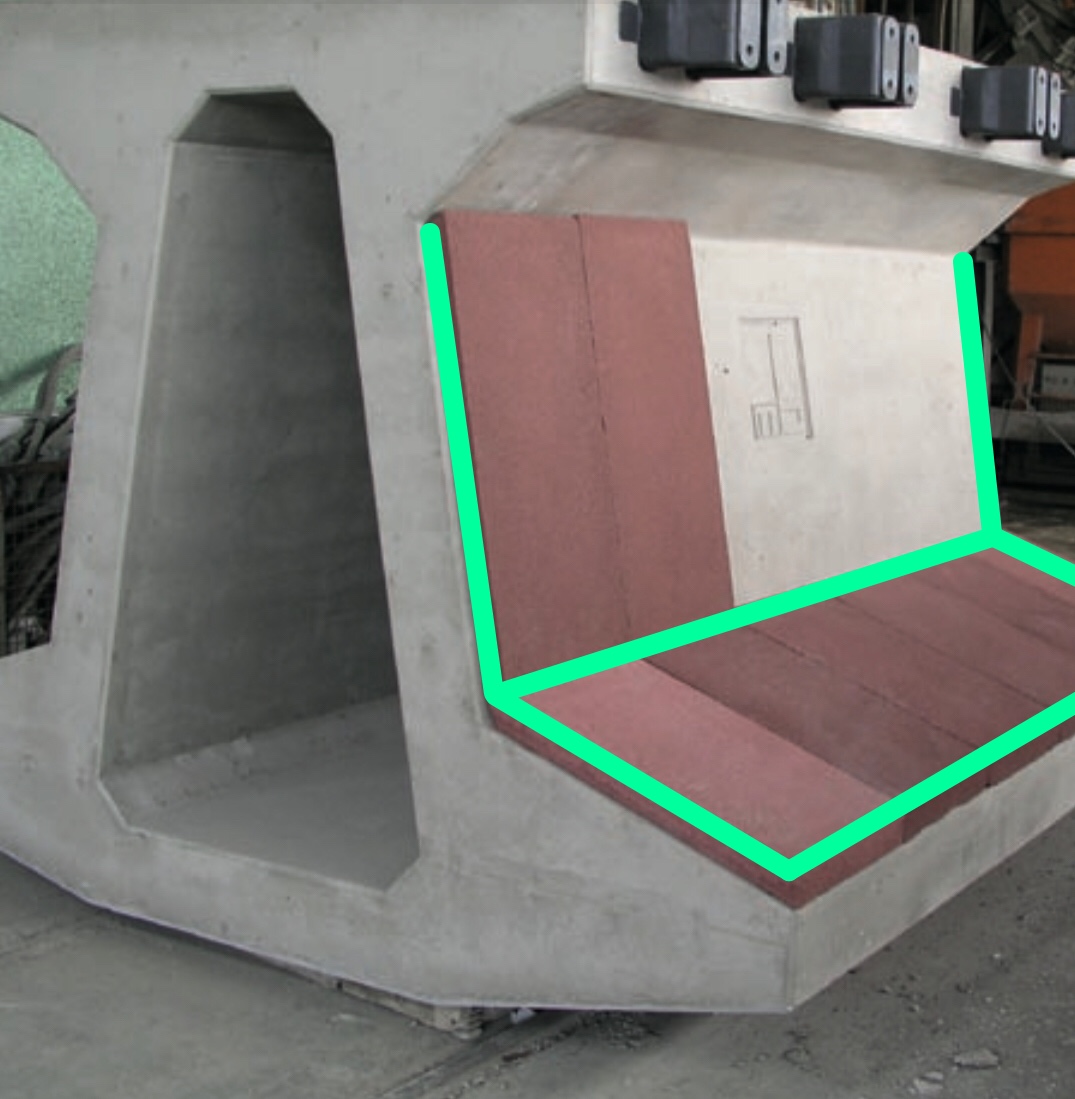
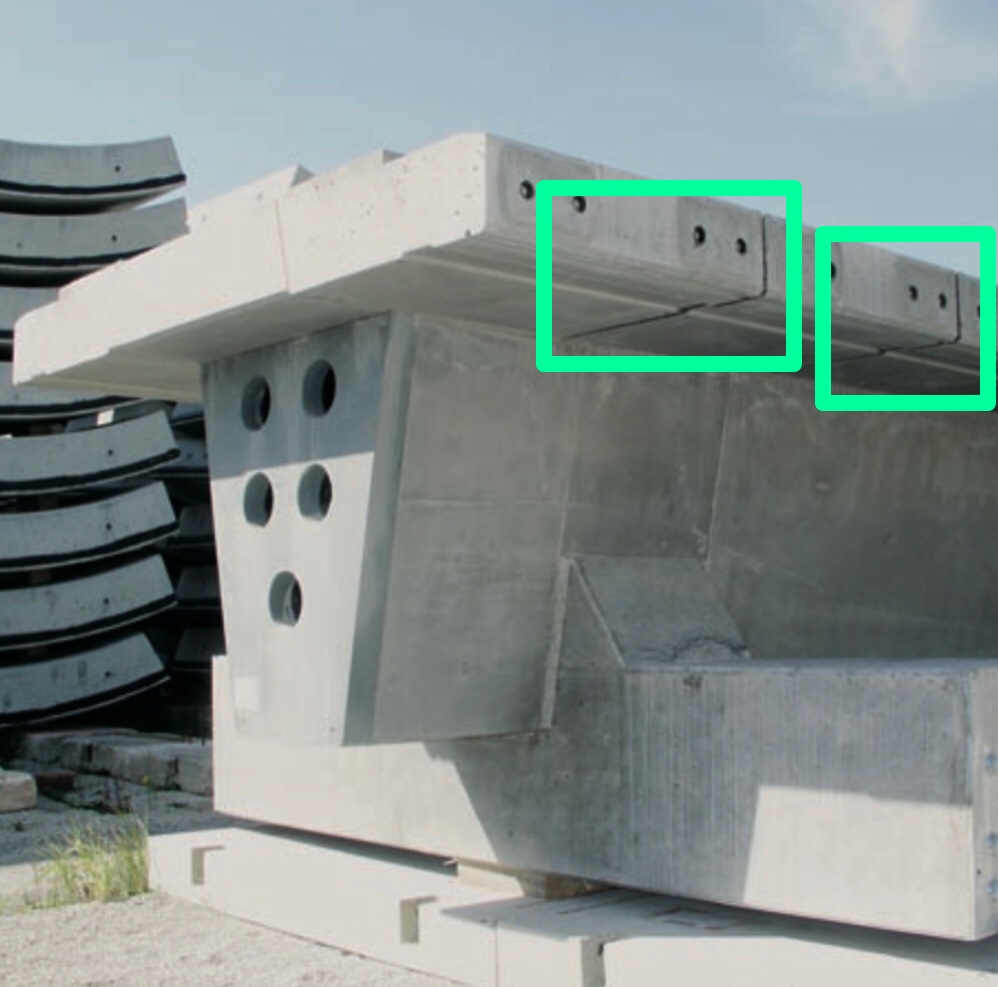
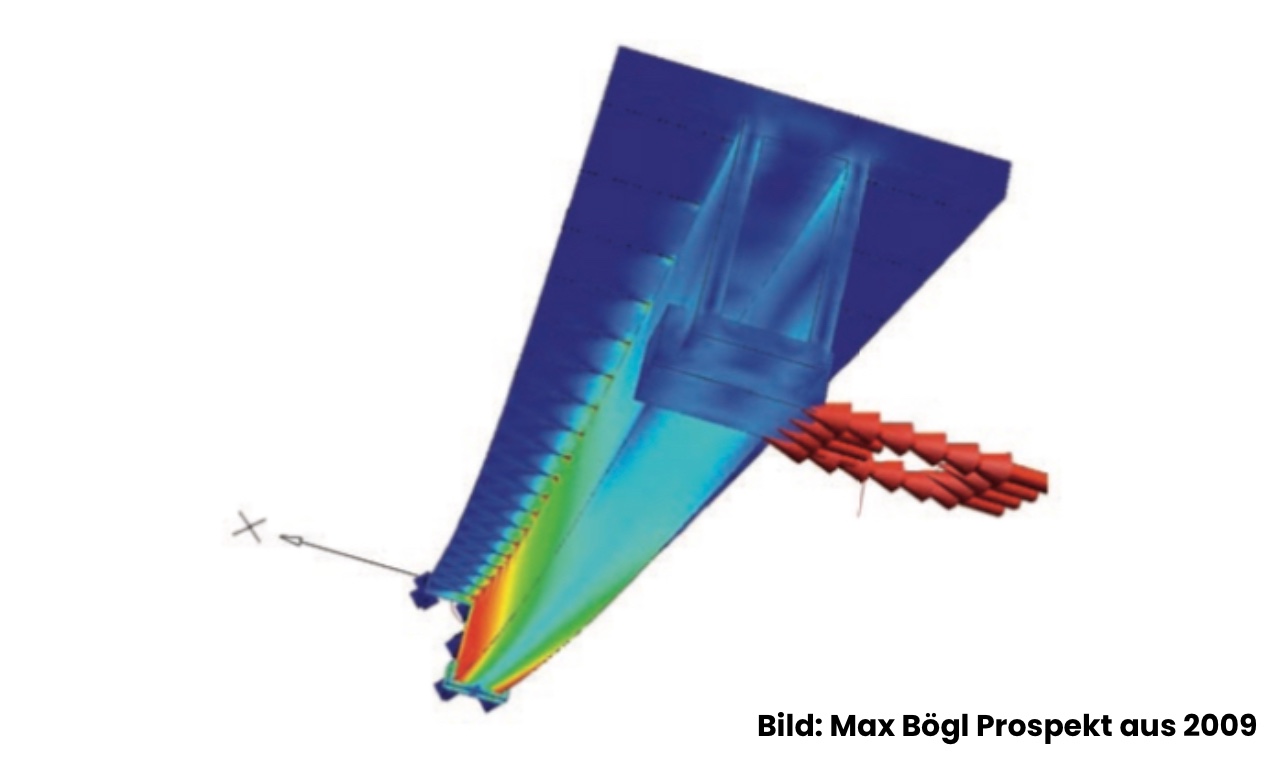
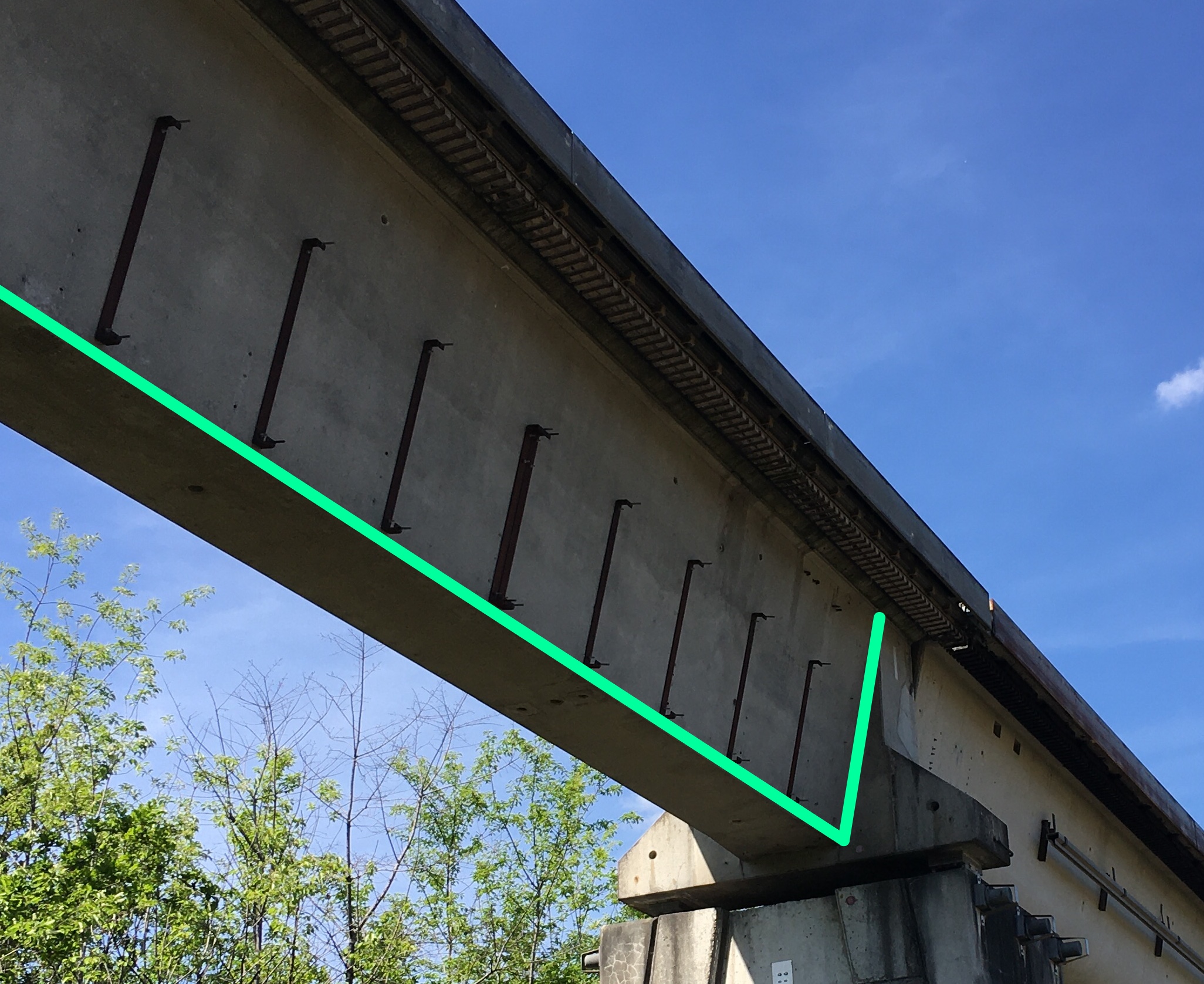
“Bending concrete” sounds like a contradiction, but that does not apply to this flexible switch. The individual girders are slotted and still retain high strength.

A prototype that proved the function was produced in spring 2009. It still stands today on the company grounds in Sengenthal.

Marked in green: slotted girder tables. Image: Max Bögl brochure from 2009

Conclusion

Since 1996, Bögl has been developing guideway girders for the Transrapid. It relies exclusively on concrete and hybrid guideways, because the advantages outweigh the drawbacks. Thanks to Bögl’s innovations, the Transrapid’s guideway costs were cut significantly several times while ride comfort increased.

Bögl concrete guideways offer:

  • – Little corrosion
  • – Lower production costs
  • – Lower maintenance costs
  • – Long service life
  • – High dimensional stability, rigid block
  • – No (underground) cable ducts along the line
  • – Longevity

It should also be noted that Bögl by no means has a monopoly on guideway production. Many different companies have developed guideways and installed them on the TVE test track. These include Dyckerhoff, Züblin and Thyssen-Klönne. However, the Bögl guideways turned out to be the quietest, most comfortable and, at the same time, cheapest girders. The more steel is saved, the less the guideway is exposed to corrosion. This is also why the concrete slide rail (instead of a steel slide rail) was developed, which is essential for the Transrapid’s set-down procedures.

Recently, Bögl has been using an eco-concrete for other concrete products that can be produced with reduced CO2 emissions. It stands to reason that the Transrapid guideway can benefit from this as well.

Join the team

Help build maglevhub.com

maglevhub.com started in 2026 as the international offshoot of magnetbahn.de and is now growing on its own. We are looking for writers, translators, researchers, video makers and developers from all over the world.