CRRC CF600 Officially Unveiled
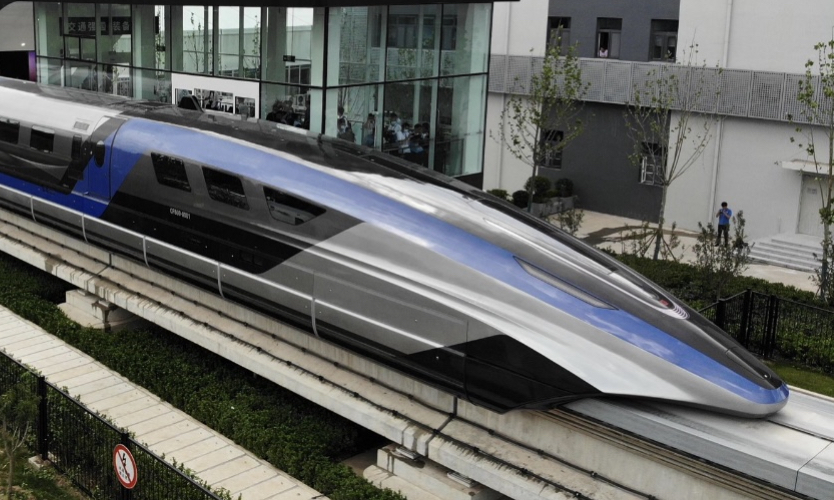
After revealing a lot of information about the CRRC CF600 in January 2021, the official presentation of the vehicle has now followed. At a Chinese event on July 20, 2021, the completed 5-section vehicle was officially unveiled.
After we were able to reveal a lot of information about the CRRC 600 in January 2021, the official presentation of the vehicle has now followed. At a Chinese event on July 20, 2021, the completed 5-section vehicle was officially unveiled.
Unlike at the original presentation in May 2019, there is significantly more information about the vehicle this time. Particularly interesting are 5G, inductive power supply and facial recognition. Thanks to exclusive contacts in China, we can also go into many technical novelties that are not mentioned in other media.
A new generation
It was announced as early as 2016 that CRRC was working on a 600 km/h maglev. The vehicle was first shown to the public in May 2019, but at that point it was only a mock-up, or prototype of the car body. Only the middle section presented at the same time, with a length of 24.768 m, appears to have been functional. The middle section was tested from January 2020 to December 2020 on the 1.5 km Tongji line in Shanghai, until CRRC was able to build its own 665 m test track in Qingdao.
In January we found that two end sections and three middle sections were already in storage at the new maglev development center (Qingdao). Since then, a 4-section vehicle has been assembled from these sections, while one middle section stands separately from the 4-section vehicle. This middle section is the unit that was operated on the Tongji line.
Many new features and technologies
- It became known that the vehicle has the IPS technology of the TR09. IPS (Inductive Power Supply) supplies the vehicles with power at speeds up to 100 km/h. IPS also performs an important function in the event of a power failure. This technology was originally not installed. Photos prove that the first middle section of the CRRC 600 did not have it. But the newly produced vehicles appear to have IPS.
- The car body is made of carbon fiber, which lastingly reduces the vehicle’s weight.
- The vehicle has a 64 kWh aluminum-air fuel cell battery, which is used exclusively for emergencies.
- The vehicle uses a lithium battery to power the onboard systems. On the TR09 (2005), the onboard systems were powered by nickel-cadmium batteries.
- The air conditioning was completely redesigned. While it was installed in the passenger compartment on the Transrapid, it is now installed in the roof of the vehicle. This frees up more space in the passenger compartment. The air conditioning is also more powerful, with cooling capacity increased by 25%.
- Based on the maglev running gear structure of the TR08 and TR09, the weight of the levitation magnet modules was reduced by 25%.
- Artificial intelligence improves the passenger experience
- The vehicle’s payload was increased by up to 40% compared with the SMT (TR08).
- The braking power of the eddy-current brake was increased by 15%. It also generates less heat and is more efficient overall.
- The CRRC 600 is equipped with 5G. The 5G network provides public Wi-Fi for passengers.
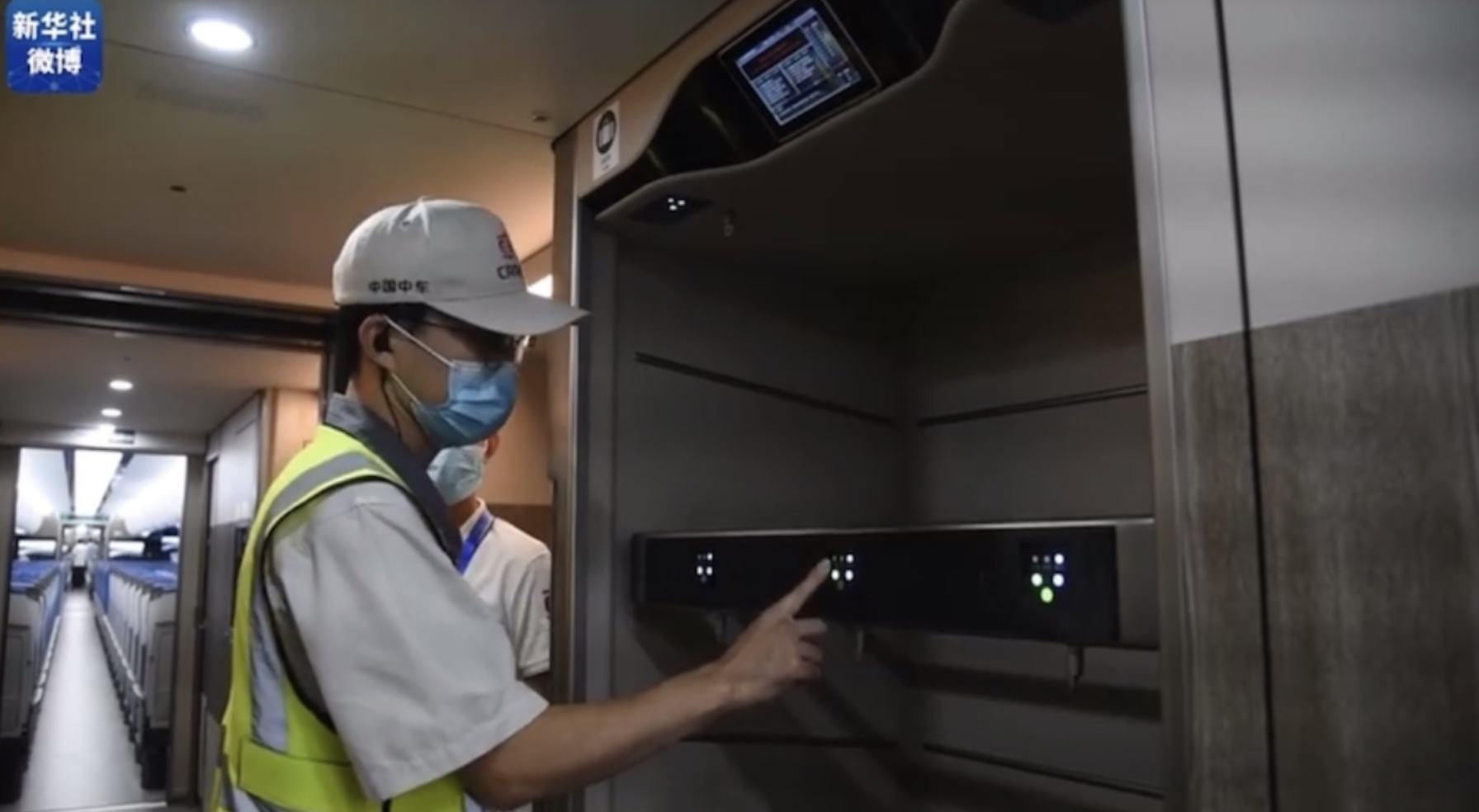
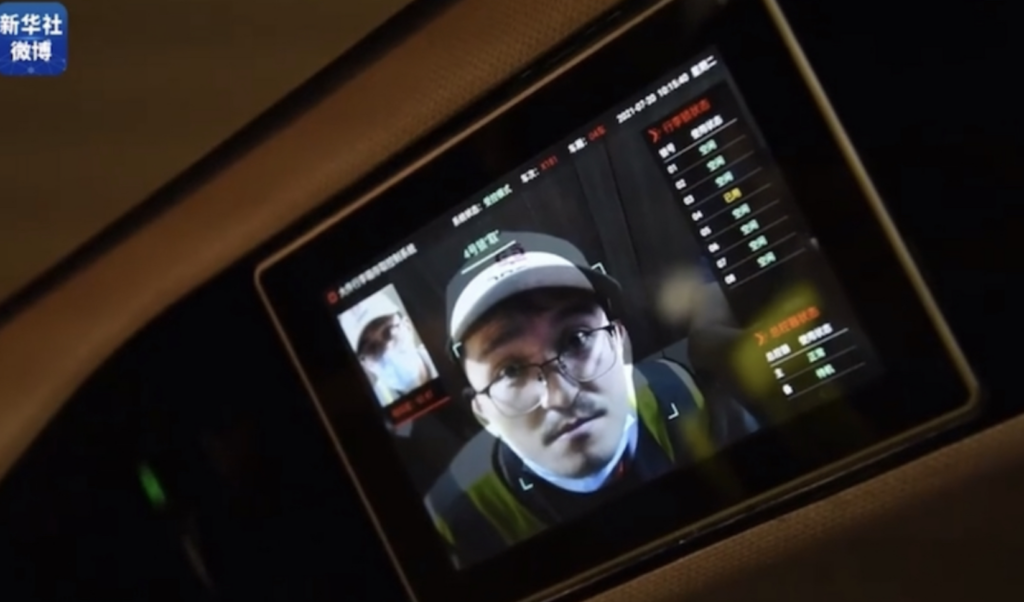
- The drinking water dispenser is equipped with facial recognition software. (Why, nobody knows.)
Interior equipment
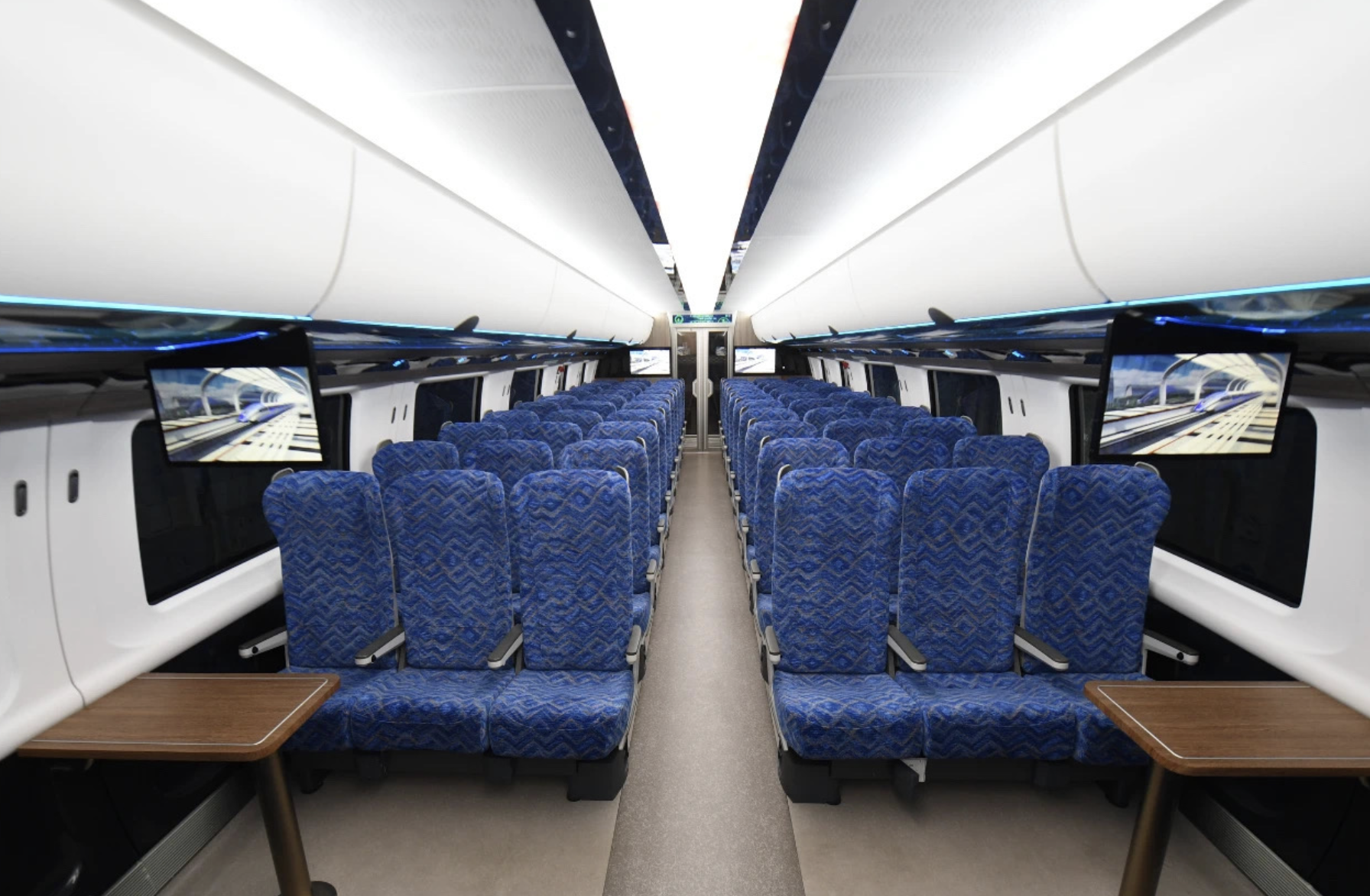
The interior of the vehicles was also shown. It is noticeable that the vehicle is divided into two classes. We were already able to get a look at the first-class equipment in 2019. But now there are finally pictures of second class:
Pictures from first class have also reached us:
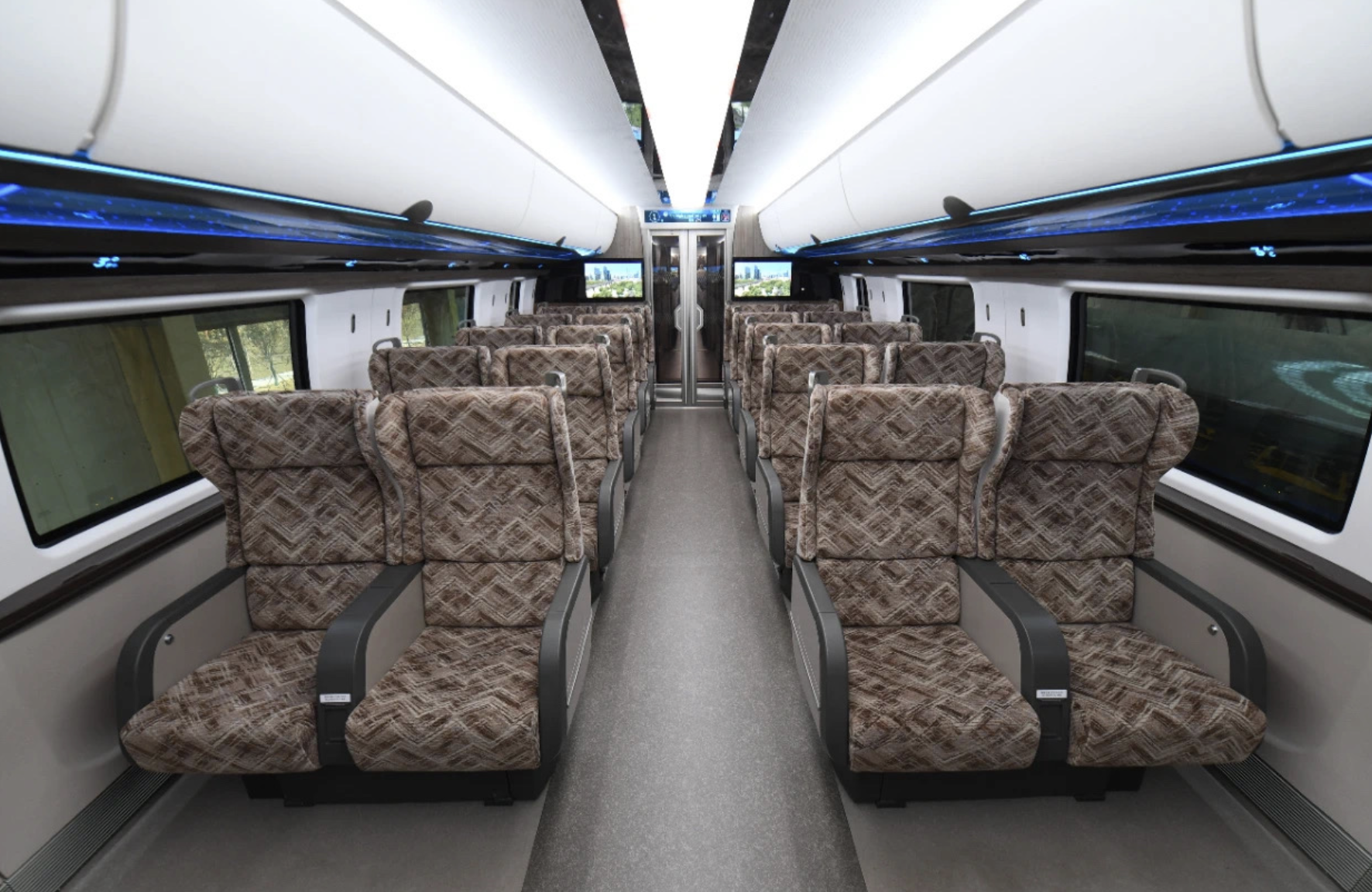
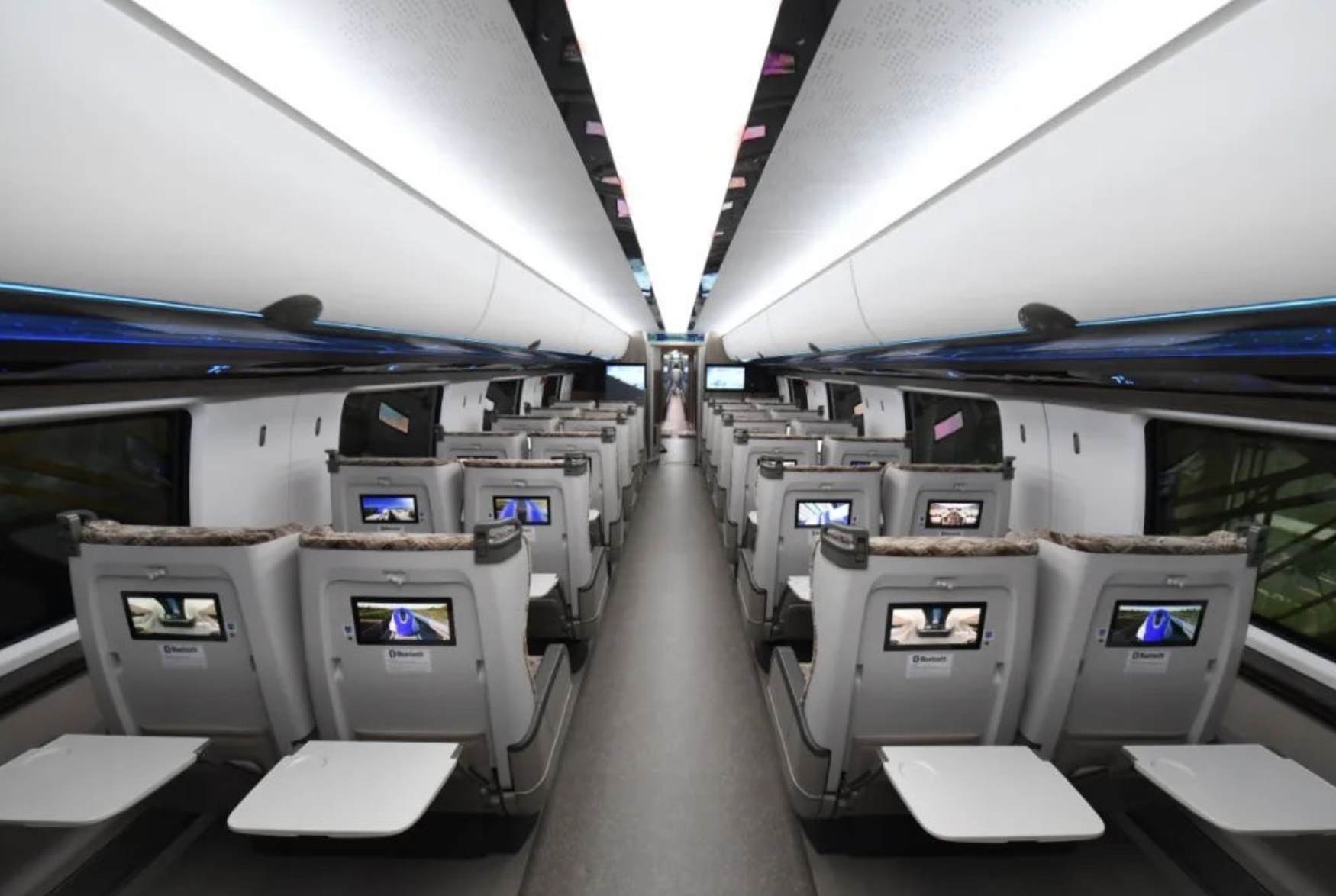
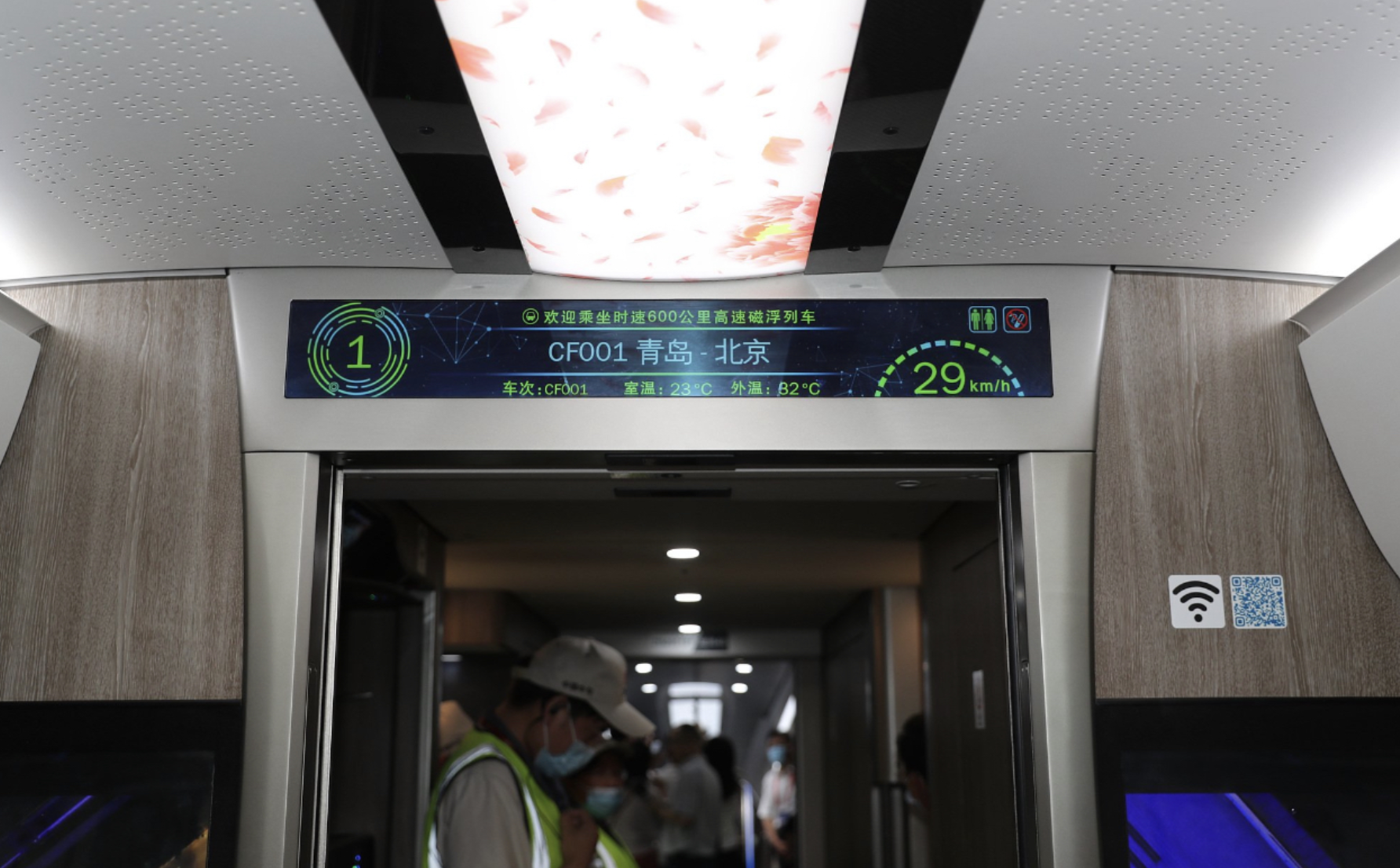
In first class, the seats are equipped with four USB Type-A ports so passengers can charge their phones (or similar devices). It is also striking that “Bluetooth” is written in large letters under the displays in the first-class seats. Passengers can apparently connect their phones to the displays to watch movies, for example.
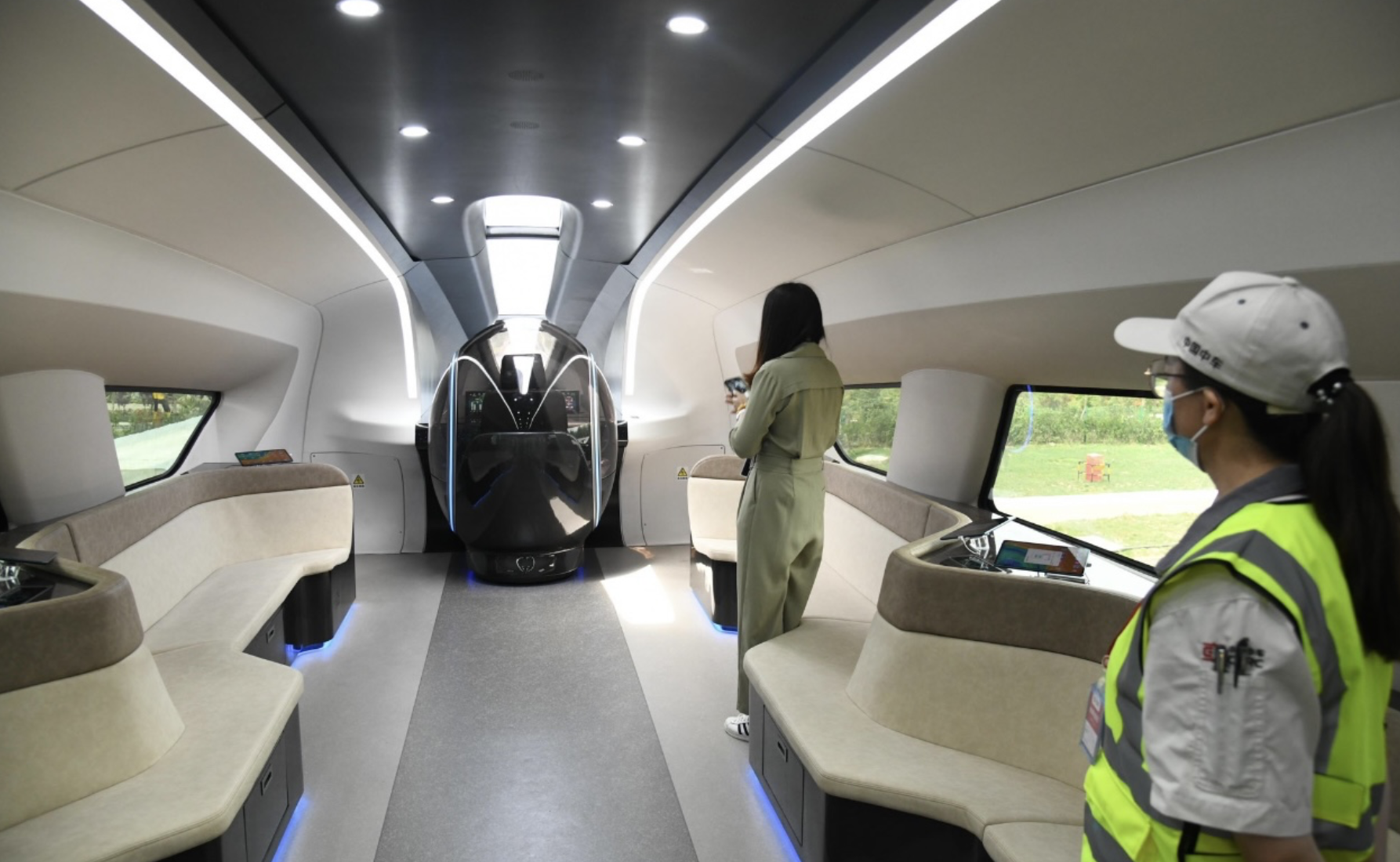
Futuristic driver's cab
Although all vehicles run autonomously or by remote control, a person is nevertheless present in the driver’s cab. This person does not perform any steering function; as a rule, they merely monitor the operation of the vehicle and the proper functioning of all components.
The first version of the driver’s cab (May 2019) already looked quite futuristic, but the new version goes a whole step further:
Acoustics
While the vehicles levitate, they produce a soft humming noise from the resulting vibrations. On the CRRC 600, this hum sounds considerably quieter and flatter compared with the TR08. This may be due mainly to the modified levitation magnet module back boxes.
Conclusion
Looking at all these developments, one might think that everything is going smoothly in China right now. Unfortunately, that is not the case, especially since no operating line exists for the 5-section vehicle. So far all efforts to use the vehicle commercially have failed, even though many large Chinese cities support the projects.
Until recently there was not even a real test track for the vehicle; it was tested on a 15-year-old Transrapid test track in China (the Tongji line). Now, however, in Qingdao there is a 665 m test track alongside a development and production center and a steel bending switch, which is at least sufficient to demonstrate the technology at low speeds. CRRC employees expect that within the next 5 to 10 years a line will exist on which 600 km/h can be reached. Originally, construction was supposed to begin in 2021, but that deadline could not be met.
Given current developments, reactivating the TVE (Transrapid Test Facility Emsland in Germany) seems rather unlikely. The 665 m test track in Qingdao is expected to be extended by several hundred kilometers, which puts the need for reactivating the TVE into perspective.