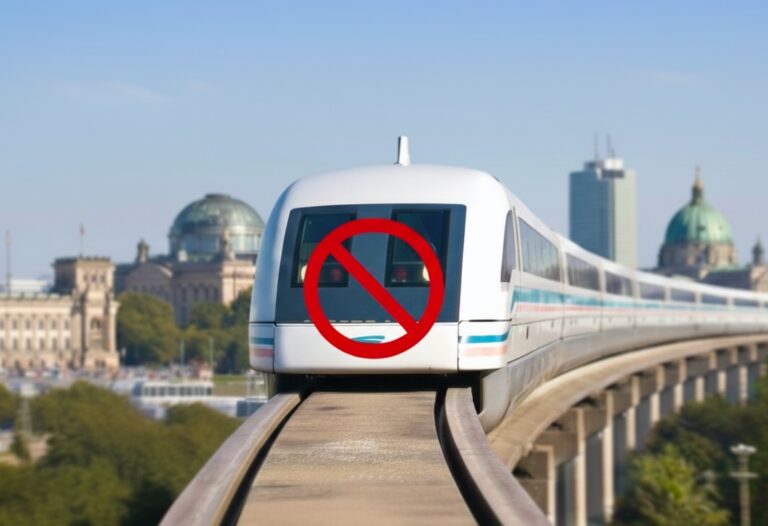
German Government Confirms Demolition of Transrapid Test Facility Emsland by 2034
A minor interpellation (Kleine Anfrage, a formal parliamentary inquiry) by Bundestag member Maximilian Kneller and the AfD parliamentary group (Drucksache 21/1301) has revealed new information on the status of the dismantling of the Transrapid Test Facility Emsland (TVE) in northwestern Germany. The government’s answer says the complete dismantling is to be finished by 2034 (Drucksache 21/1455). Preparatory and accompanying dismantling measures were already begun in 2012 and are largely complete. These included in particular the remediation of hazardous substances on the guideways and the removal of guideway equipment and long-stator windings. At this link the answer to the inquiry can be viewed.
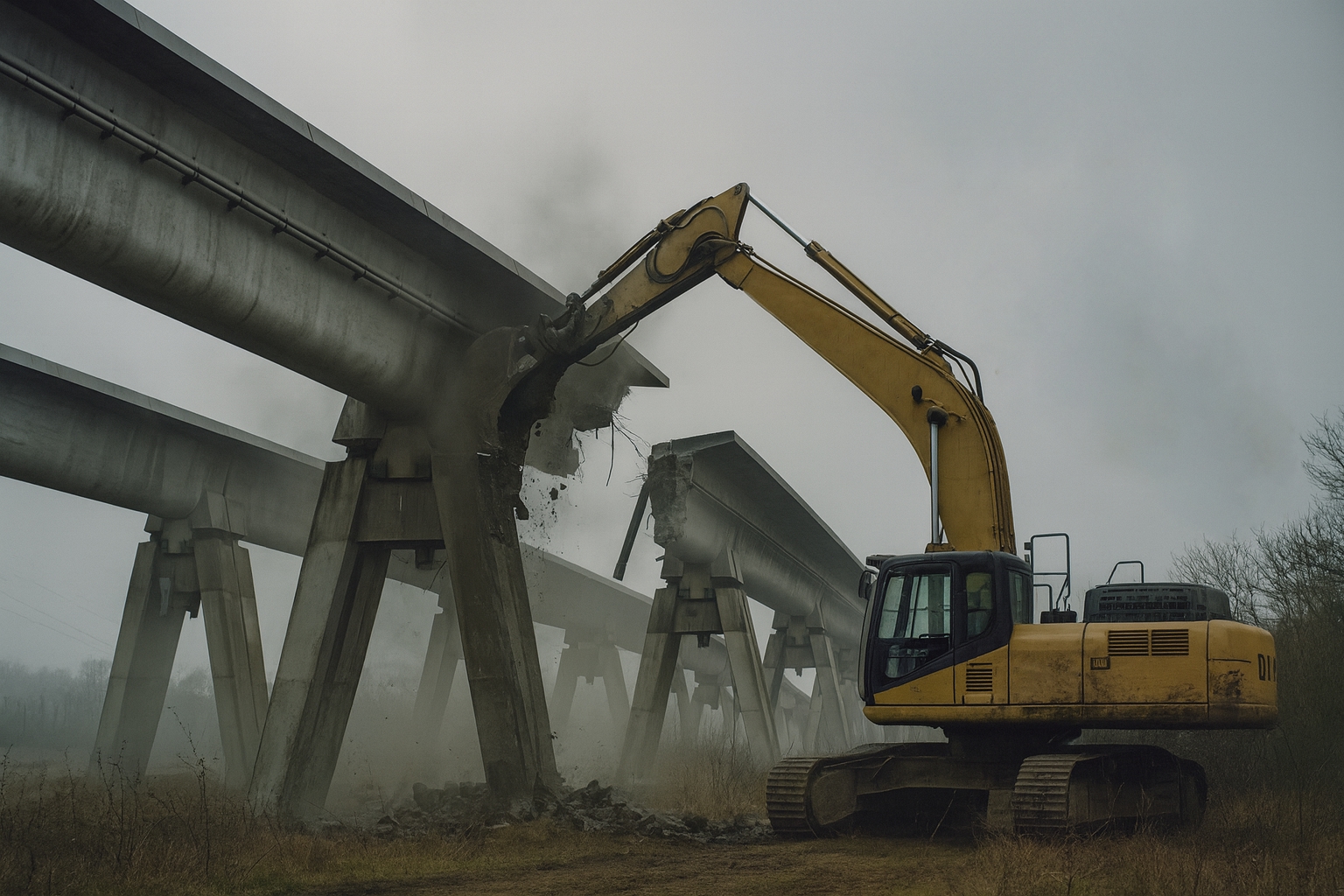
For the costs, the government continues to rely on a 2011 expert report that estimated around €39.3 million for the complete dismantling. These figures now appear outdated. In the draft 2025 budget presented by SPD parliamentary leader Lars Klingbeil on July 8, 2025 (Drucksache 21/500), €26 million is earmarked for the next three years alone. In previous years, much less had been budgeted for this. It remains unclear on what basis these appropriations come about and why, since 2024/2025, amounts more than twice as high as in previous years have been planned.
Another detail concerns consulting services: Since 2011, the federal government has spent over €408,000 on “legal consulting services.” What exactly the consulting involved and what results it produced remains open in the answers.
The political dimension extends beyond the question of costs. Demolishing the Transrapid test facility does not just mean the removal of a test track; it symbolizes the end of a technological development that drew worldwide attention. While China has adopted German maglev technology, developed it further and moved it into regular commercial operation, Germany is finally closing this chapter. The TVE, which has stood almost intact in the northwest German landscape for years, could also be preserved as a monument to the history of technology, to make the innovative power of German engineering visible and keep it alive for future generations.
The facts about the Transrapid’s performance are known: at speeds of up to 500 km/h, it uses up to 40 percent less energy than an ICE at 350 km/h at comparable speed, causes roughly 70 percent lower maintenance costs and has similar investment costs per kilometer of line. Since 2004 it has run in Shanghai in daily continuous service at 431 km/h with a punctuality of 99.9 percent. Despite this track record, a petition to reactivate the technology, signed by over 62,000 people, has so far gone largely unnoticed by politicians.
The inquiry has thus brought some clarity, particularly regarding the planned timeframe for the dismantling. At the same time, it raises new questions: about how current the cost estimates are, about the contractual basis for providing large budget funds, and about how a high technology that was once seen as a symbol of the future of mobility is being treated. Against this background, the dismantling is not just a technical or financial project but also a political signal that makes clear Germany’s attitude to its own history of innovation.