“We Should Rather Renovate the Existing Rail Network.” – No, That Won’t Be Enough.
Germany has a dilapidated rail network. The problems of Deutsche Bahn, the national railway, and especially of its long-distance trains are well known. By 2030, as laid down by the now-replaced “traffic light” coalition government, twice as
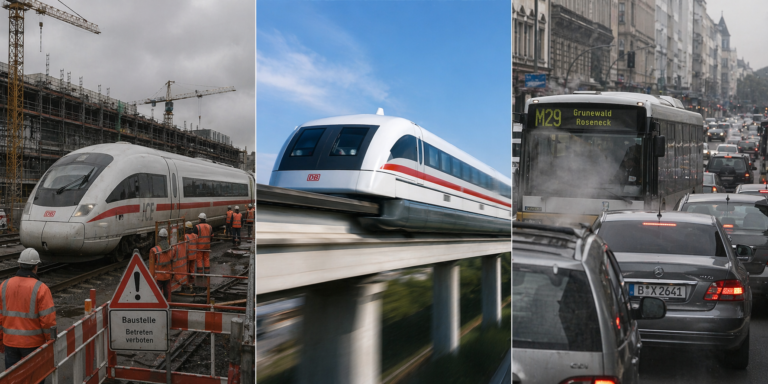
many passengers are supposed to be carried by rail. After years of sitting out the investment backlog under various coalitions, the problem is now to be tackled radically, with numerous full closures and a general overhaul of the most heavily used lines. But what is now being sold as paving the way for an efficient and environmentally friendly future of long-distance travel is in truth merely a postponement of the problems.
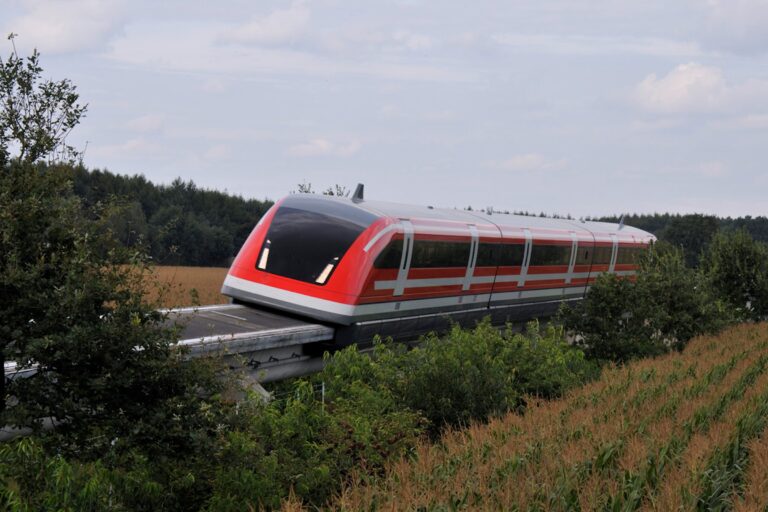
Guest author: Benedikt Kunze has been intensively studying maglev trains, and the Transrapid in particular, since 2023 and campaigns for deploying the Transrapid in Germany. In this guest article for maglevhub.com, he shows why the ongoing renovation of the rail network alone is not enough and why the Transrapid is indispensable as a high-performance, future-proof complement in long-distance travel.
Costly renovation
The Riedbahn between Mannheim and Frankfurt am Main has been freshly renovated; Deutsche Bahn spent a mere €1.5 billion on just one of Germany’s central
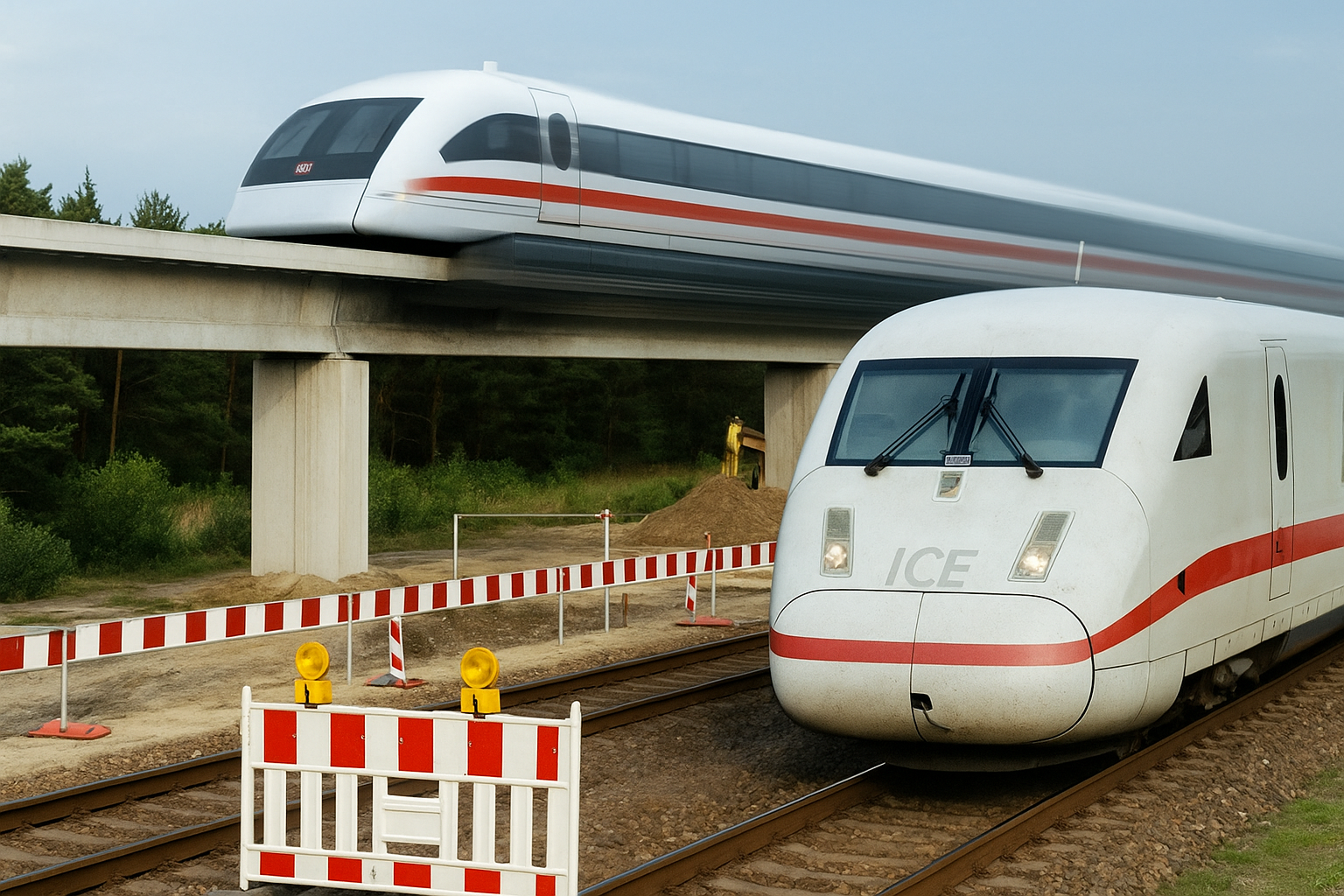
rail lines, 15 percent more than originally planned and three times the original cost estimate from September 2022. The line was fully closed from July to December 2024, and replacement bus service on an unprecedented scale, with over 1,000 trips daily, was used instead. From August 2025 to April 2026, the same will play out on the Berlin-Hamburg line; next year, Hamburg-Hannover, Bonn-Wiesbaden and Cologne-Hagen, among others, are up next, followed by 40 more lines through 2035. So it seems there is a plan to get the German rail network back in shape in a short time and with a lot of money.
But what worked for the Riedbahn does not necessarily hold for the other corridors. Not only is the travel time between Hamburg and Hannover, for example, likely to grow by an hour when passenger traffic has to run via a diversion route; these routes are often simply unable to suddenly handle passenger and freight traffic at the same time. They are not electrified or, as in the case of the Uelzen-Stendal line, are only to be expanded to double track from 2030. Instead, Deutsche Bahn, believe it or not, wants to fall back on “diesel shuttles”: a diesel locomotive is to haul the entire freight train, which could actually run on electricity, over the line until the next electrified section.
A “modern” rail network remains overloaded anyway
A few months after completion of the work on the Riedbahn, Deutsche Bahn reports slightly reduced delay rates in passenger traffic. However, staff shortages and worn-out vehicles continue to cause high unreliability on the line. According to Deutsche Bahn, the number of disruptions caused by infrastructure has fallen by 27 percent, which is far from the announced 80 percent (Deutsche Bahn) or even 100 percent (Federal Transport Minister Volker Wissing). In addition, despite half a year of full closure, important technical components such as the ETCS train control system were not completed. And Philipp Nagl of InfraGO, Deutsche Bahn’s infrastructure company, speaks of a capacity problem on the line even after the renovation, which is why long-distance traffic is to be shifted to the planned new Frankfurt-Mannheim line. The problem: plans for such new lines exist across Germany. But they are stuck in planning, have been put on hold, or, as in the case of Frankfurt-Mannheim, are only to open “after 2030”. Completion of the general overhaul program is meanwhile delayed until 2035.
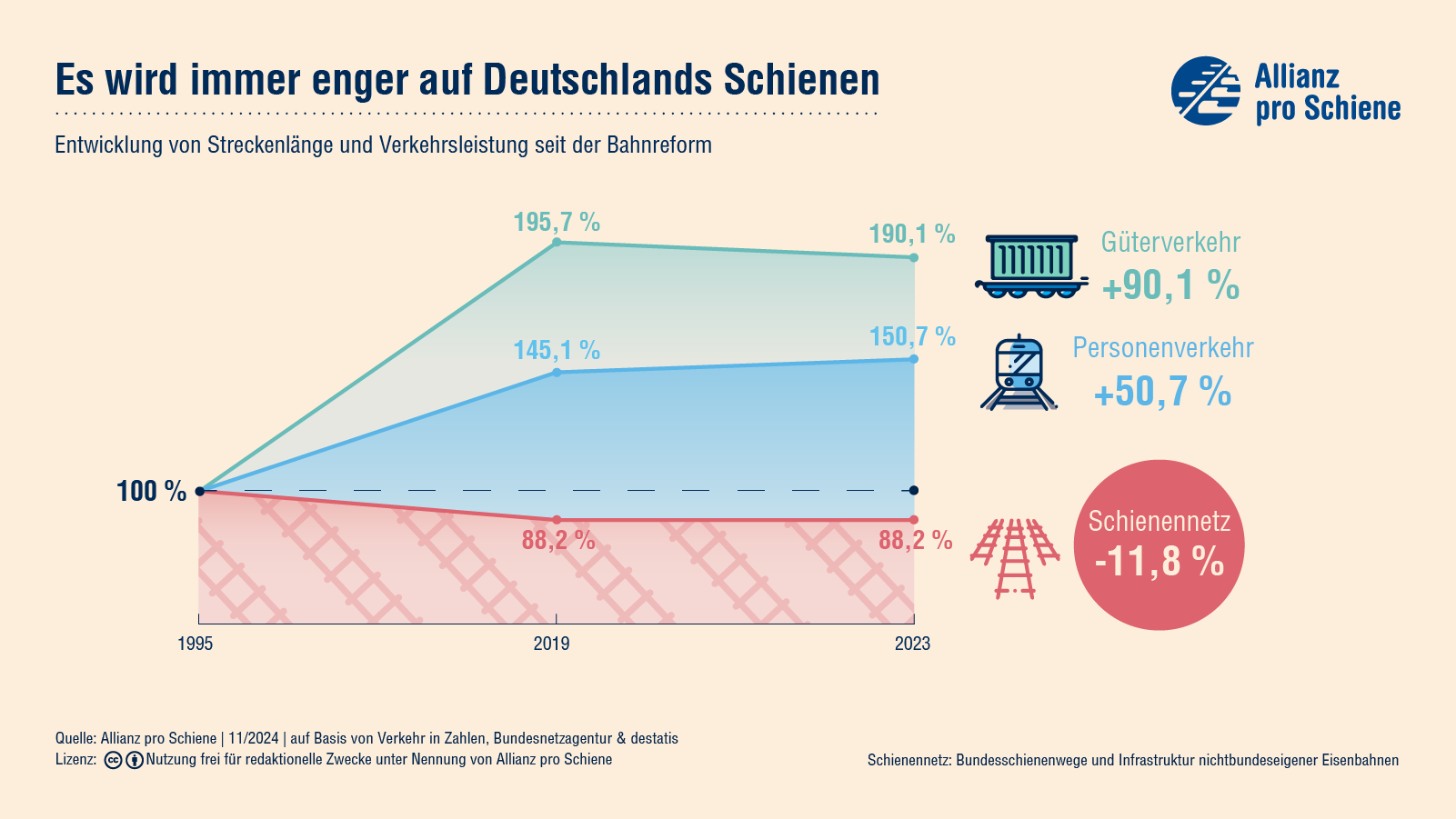
Since the mid-1990s, passenger traffic on rail has grown by 50 percent and freight traffic by as much as 90 percent. The network on which this traffic runs, however, has not only not been expanded, it has even shrunk. No wonder, then, that the number of route kilometers classified as “overloaded” rose from 187 in 2008 to 1,169 last year, more than six times as many. The overloaded rail network not only leads to more wear on the tracks, it is also a main cause of delays, as trains such as the ICE are slowed down by others. So it does not help to simply repair or expand the existing network as long as long-distance, regional and freight traffic all still have to share the same lines.
New and faster lines are needed
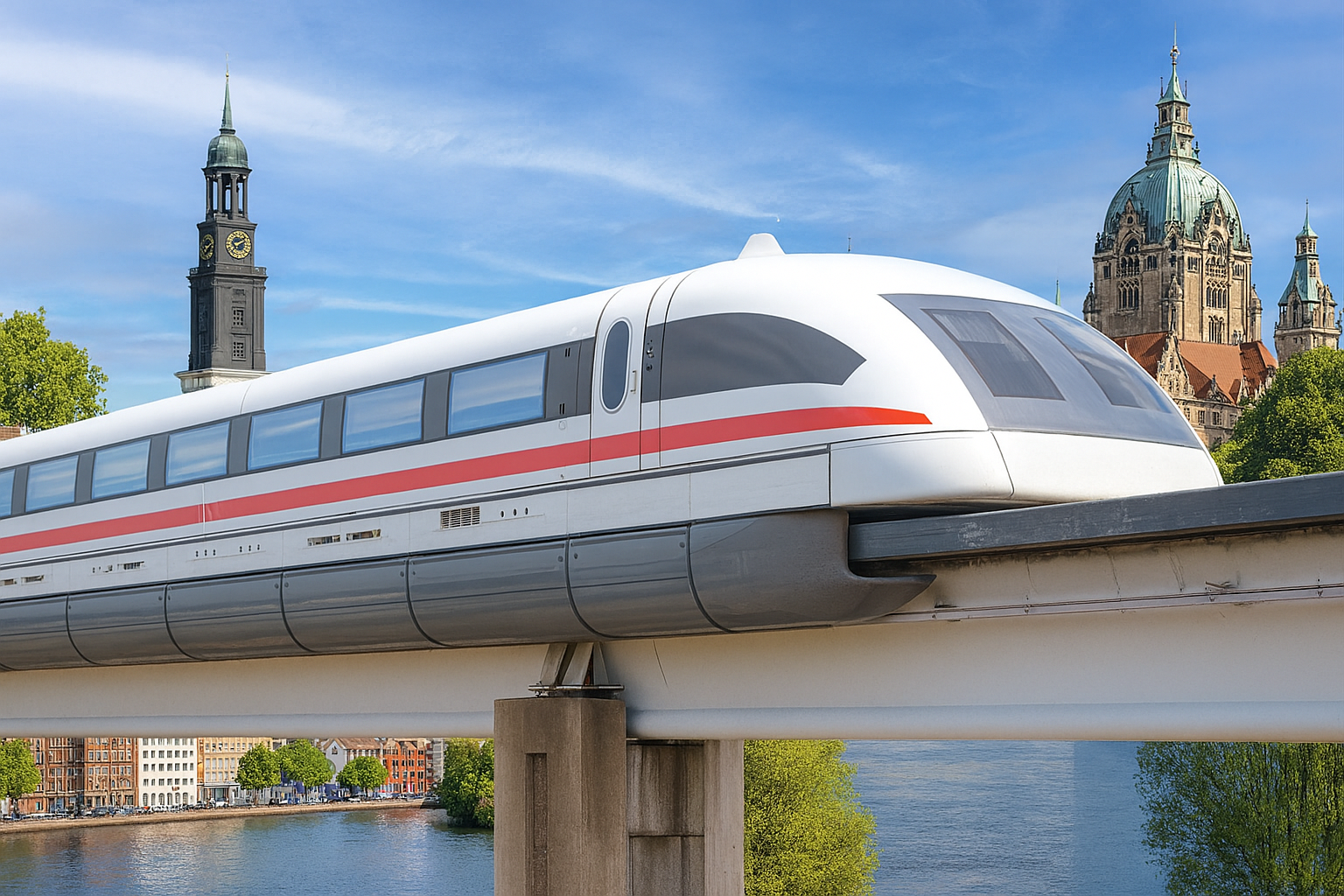
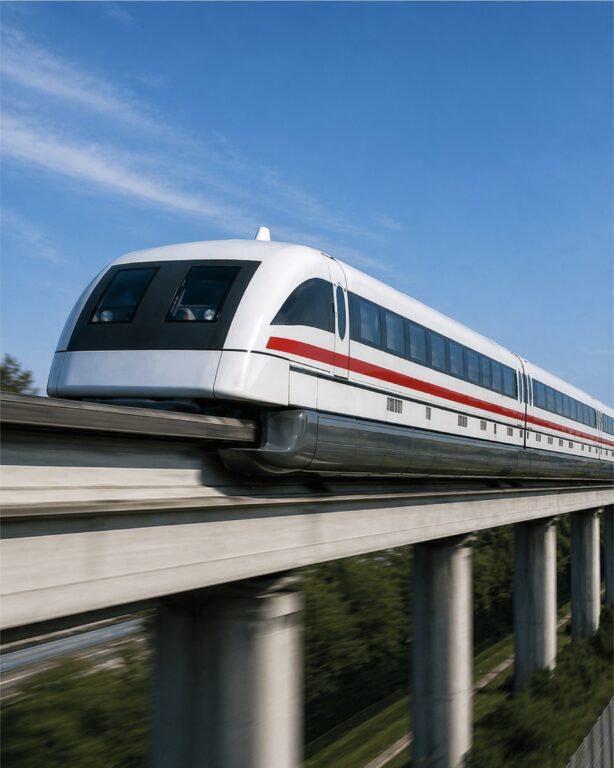
Provided it doesn’t have to crawl along at 60 km/h behind a regional train, the ICE can be classed as a high-speed train. The vast majority of ICE lines, however, cannot be run at more than 250 km/h. Leaving aside that the ICE’s energy consumption rises drastically well above 300 km/h, which makes the theoretically possible 330 km/h impractical, it simply cannot compete with aircraft. Deutsche Bahn’s new high-speed lines are meant to be designed for speeds of up to 300 km/h, but that is nothing compared with the 450 or 500 km/h a Transrapid can run. At 300 km/h, the Transrapid uses 30 percent less energy than the ICE per unit of passenger capacity, and at 350 km/h even 40 percent less, so it could be run considerably faster on the same energy consumption. The gigantic renovations therefore do not solve the real problem. Even newly built ICE lines ultimately deploy a slow train over long distances, where it therefore still cannot compete effectively with aircraft. In the end, what is being renovated is an inefficient system that, without new lines, remains overloaded and could wear out the new infrastructure just as quickly. Ideally, no new work should be needed on a given line for ten years after the renovations, but Deutsche Bahn does not even want to go that far and commits to just five construction-free years, a mockery given the 80 years that a brand-new Transrapid guideway lasts without major wear thanks to its contactless technology.
What is needed, the ICE cannot deliver
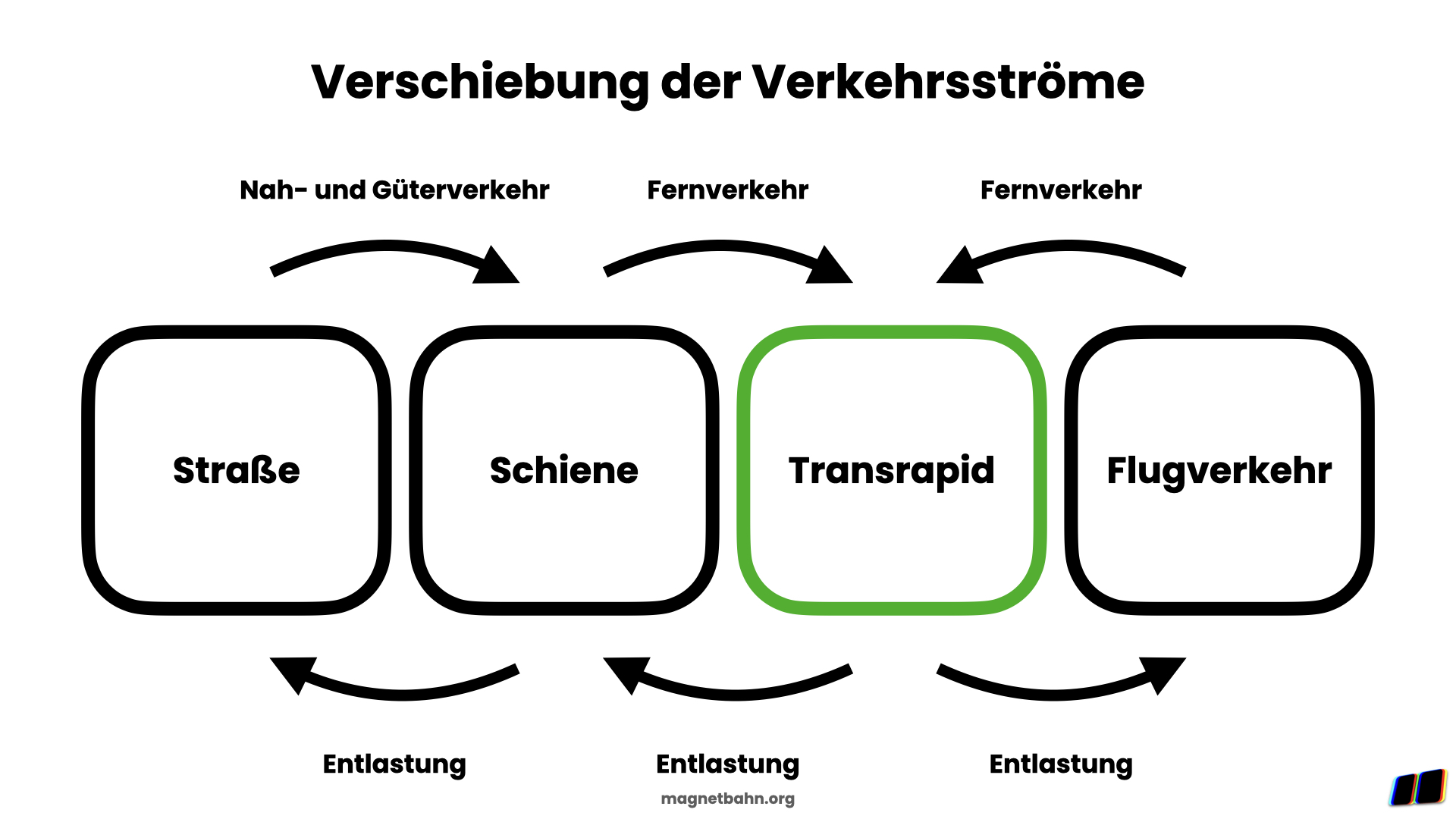
With its existing systems, Deutsche Bahn will not manage the effort of carrying twice as many people as the lines already overloaded today, or of finding enough staff when tens of thousands of jobs are instead to be cut in the coming years. Anyone who demands that we first take care of the existing wheel-on-rail infrastructure fails to recognize that this will not be enough. Of course we need more ICE lines on short distances, faster ICE lines, renovated ICE lines. But on long distances, if new routes are being built anyway, we should also deploy a system superior to the ICE right away. The Transrapid is far more here than a superfluous luxury toy that we might think about once the long-distance network works perfectly again. Because with the current strategy, if one can even speak of a solid plan, it never will: the Transrapid does not come after the working system, it is the working system. The rail network must be designed to replace the particularly climate-damaging domestic flights, shift freight traffic off the roads and distribute the loads more evenly among the various modes of transport. That requires new modes of transport and new infrastructure, and given its autonomous, low-noise and comfortable ride, its energy efficiency and flexible routing, and its high speed and reliability, the Transrapid is capable of all of it. Technically ready for service since 1991. Renovating our rail network so that it meets the demands of climate-friendly long-distance travel should not mean clinging at any cost to wheel-on-rail technology, which is inferior in a system comparison. Without question, we will have to invest some time and a lot of money, and it should be worth it to us to finally turn to the best system available to us.