Language
Language
General ·

Real Madness: Rail Renovation Between Hamburg and Berlin Costs as Much as 12 Years of Transrapid Operation
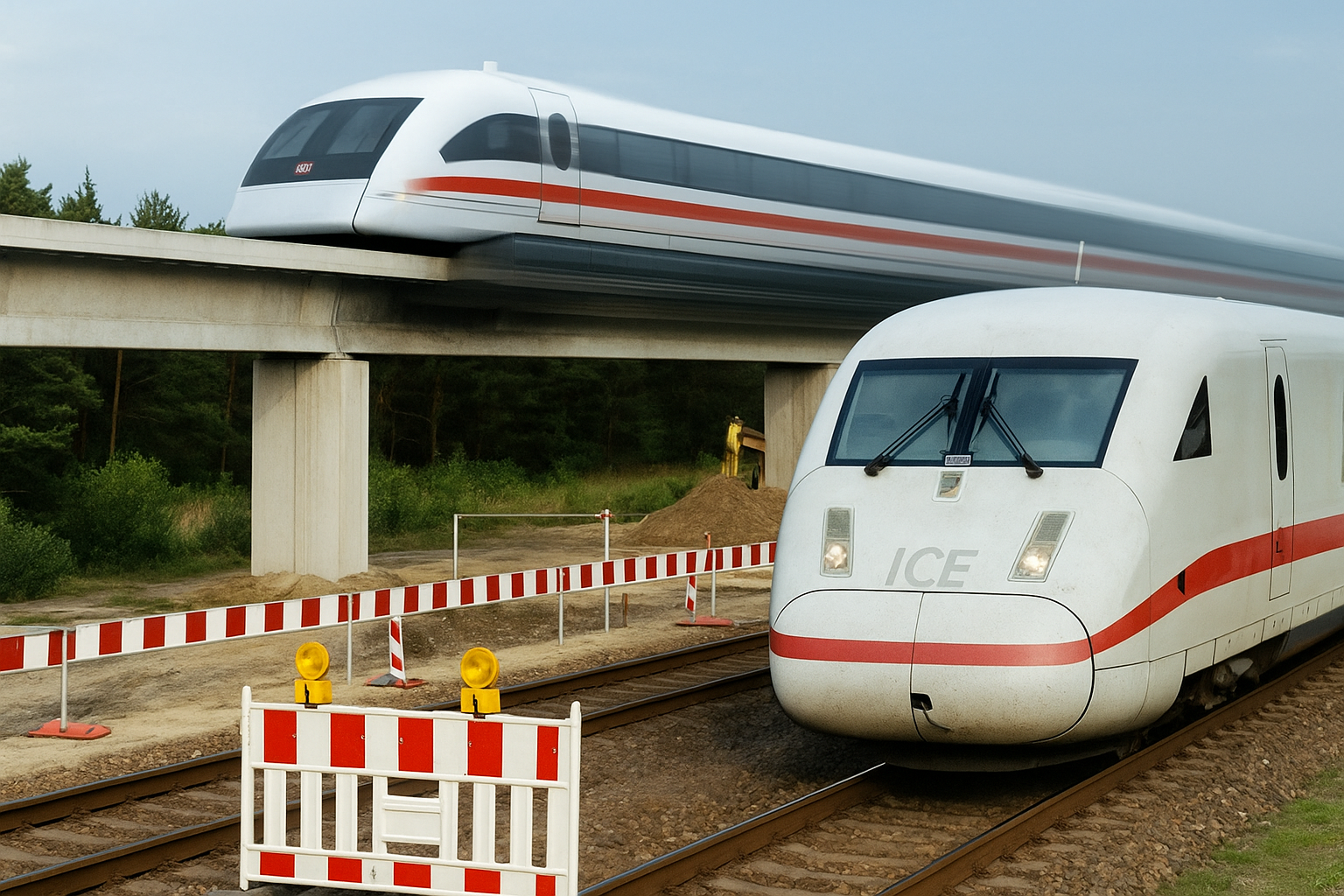
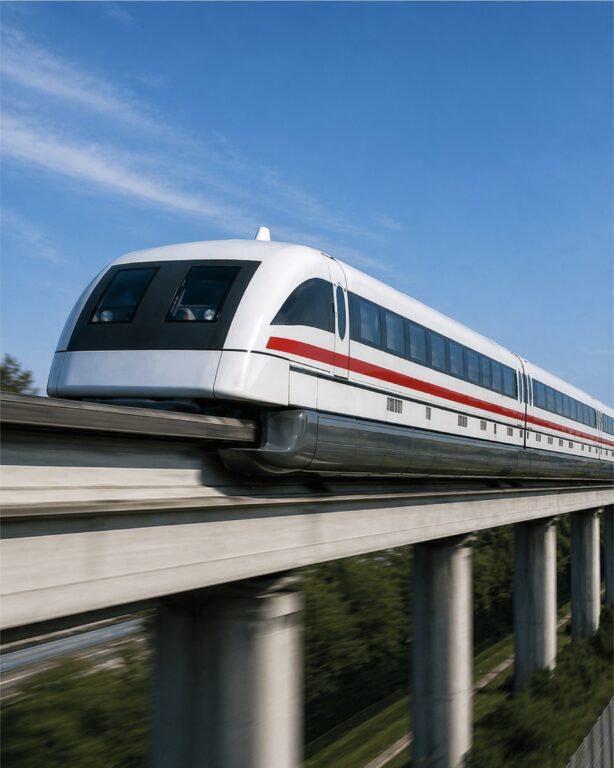
What it could have looked like if the Transrapid had been built between Hamburg and Berlin. AI-generated illustration.

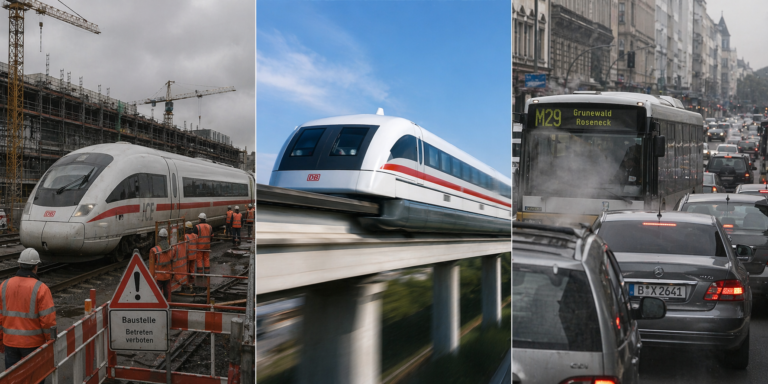
What is happening between Hamburg and Berlin from August 1, 2025, is unbelievable. Deutsche Bahn plans to close the direct connection between the two major cities completely for nine full months. Around 30,000 people a day, over 230 trains, one of Germany’s most important and most overloaded long-distance routes, and yet traffic will soon come virtually to a standstill. Regional trains are cancelled, long-distance trains are rerouted over wide detours, buses are meant to fill in, and commuters lose hours of their lives. The line was already shut for four months in 2024, and now nine more months follow. And that is only the preparation for the next chaos: key modernization steps such as the introduction of the ETCS digital train control system are not even being implemented, only “prepared,” for another rebuild sometime in the early 2030s, which will again consume time and money.

All of this costs money. A lot of money. According to Deutsche Bahn, the price of this so-called “general renovation” comes to €2.2 billion. This sum flows into maintaining a system that is already overloaded today, with no new capacity, no real speed-up, and no future-proofing.

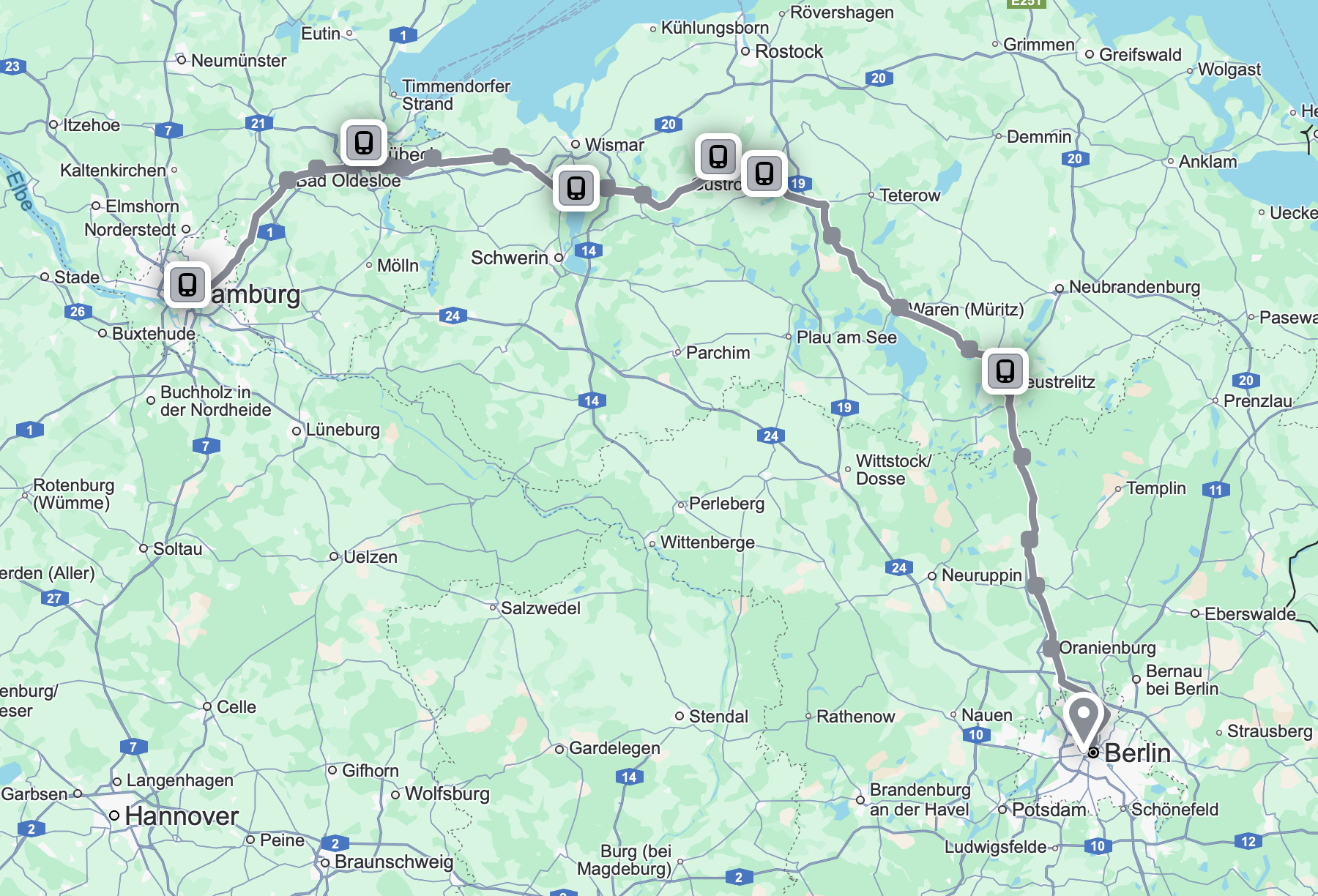
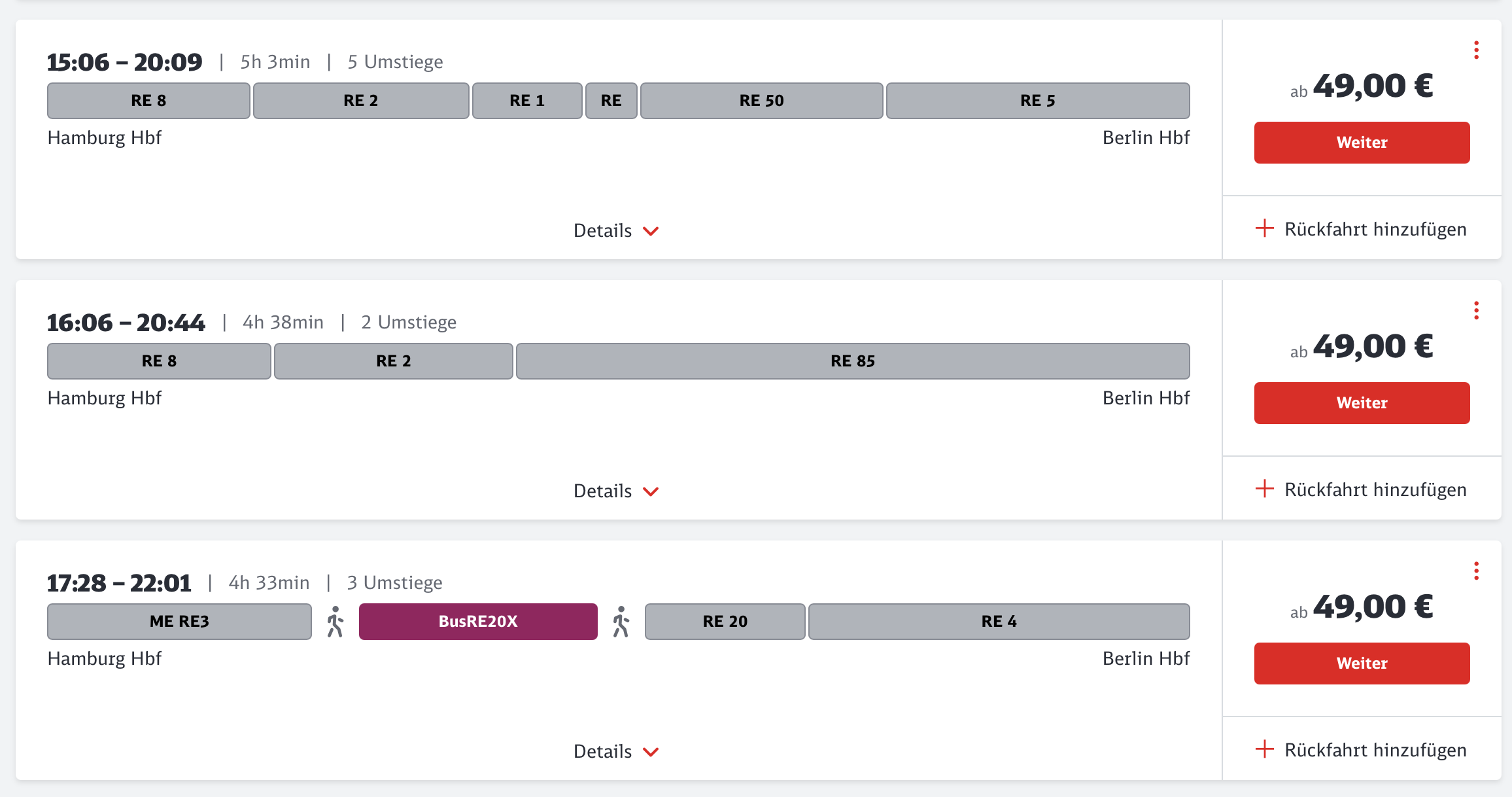
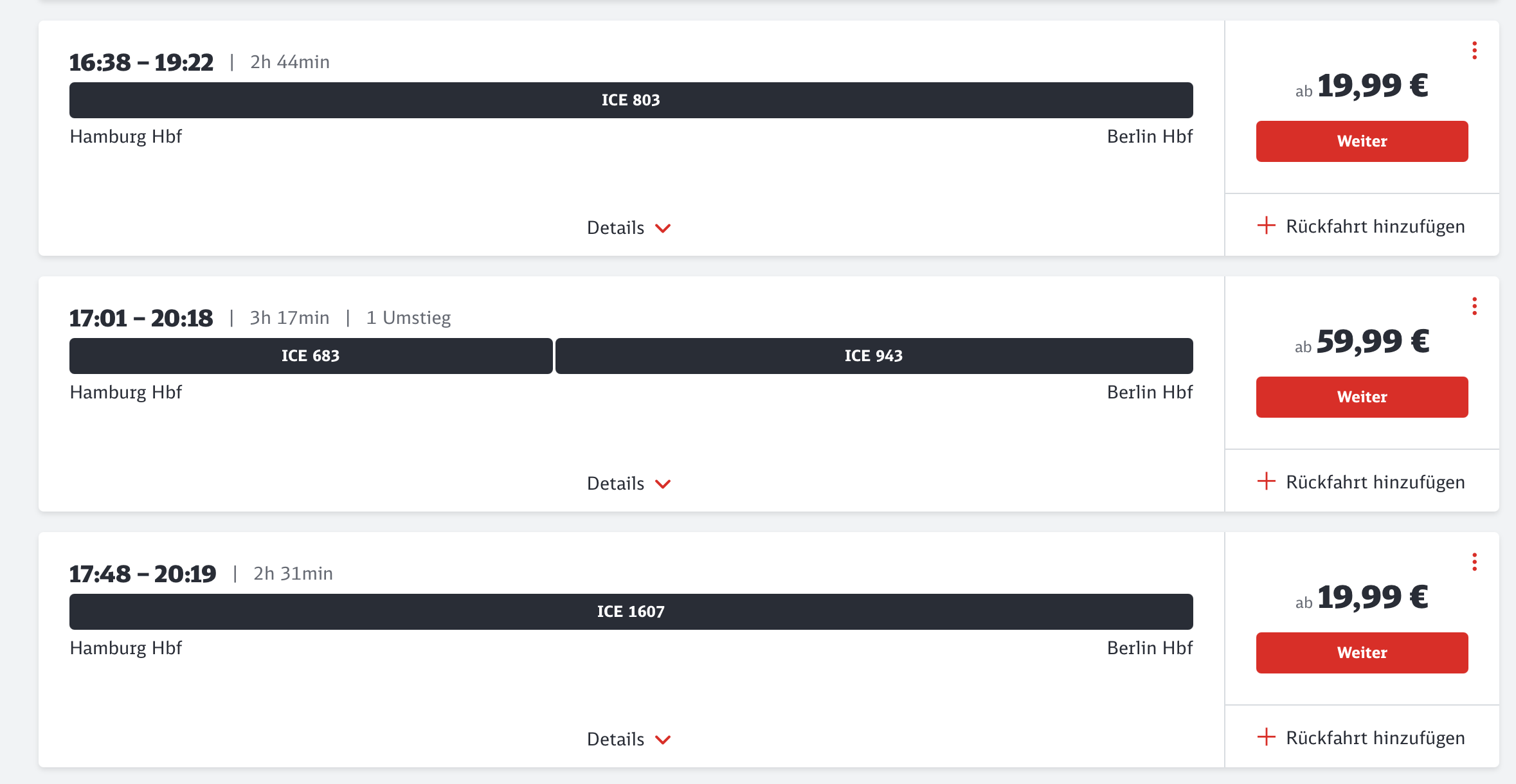
Until summer 2025, the ICE trip between Berlin and Hamburg takes about 1 hour and 45 minutes in regular service without changing trains. But for nine months that will be history. Long-distance trains are rerouted on a big detour that adds 45 minutes to the journey. Regional service is suspended, and passengers have to switch to replacement buses or accept enormous detours. For many, that means hours-long detours, multiple transfers and uncertain arrival times. Instead of arriving in under two hours as before, a long-distance trip can take up to 2:44 hours. For regional transport it is even 4.5 to 5 hours. The Transrapid would have done it in just under 50 minutes.

Image: Screenshot DB Navigator | Hamburg - Berlin, August 4, 2025: passengers have to sit on the train for 2:31 to 3:17 hours. With the Transrapid it would be just 53 minutes.
Image: Screenshot DB Navigator | Regional transport will suffer even more: immense detours are necessary.
Image: Screenshot DB Navigator | For regional transport on August 4, 2025, the DB Navigator recommends connections requiring up to 6 separate trains and over 5 hours of travel time.

And here the madness becomes obvious: a Transrapid connection was once planned for exactly this route. A 292-kilometer maglev line that would have connected Hamburg and Berlin in less than an hour, at 430 km/h, with emission-free operation and a nearly maintenance-free guideway. The project was politically stopped in 2000. The estimated investment costs for the guideway in 1998 were 8 billion Deutsche marks, or approx. €4.1 billion. Adjusted for inflation to 2025, that equals about €6.1 billion.

But the real kicker is not the construction but the operation. The annual operating and maintenance costs of the Transrapid were put at 250 million Deutsche marks back then. Adjusted for inflation, that is about €190 million per year today. With the €2.2 billion now being spent on nine months of track patching, one could have operated and maintained the Transrapid completely for a full twelve years.

Twelve years of high-speed service, twelve years of quiet, safe and more punctual mobility, twelve years of emission-free operation, thrown away. Instead, we are watching a country struggle through construction fences and replacement bus services for billions of euros.

This figure is a slap in the face for all those who warned back then. The Transrapid could have revolutionized our mobility. Instead, in 2025 we are seeing the late consequences of political timidity and technological self-denial. It is time to draw the right lessons: not every innovation was a dead end.

Join the team

Help build maglevhub.com

maglevhub.com started in 2026 as the international offshoot of magnetbahn.de and is now growing on its own. We are looking for writers, translators, researchers, video makers and developers from all over the world.