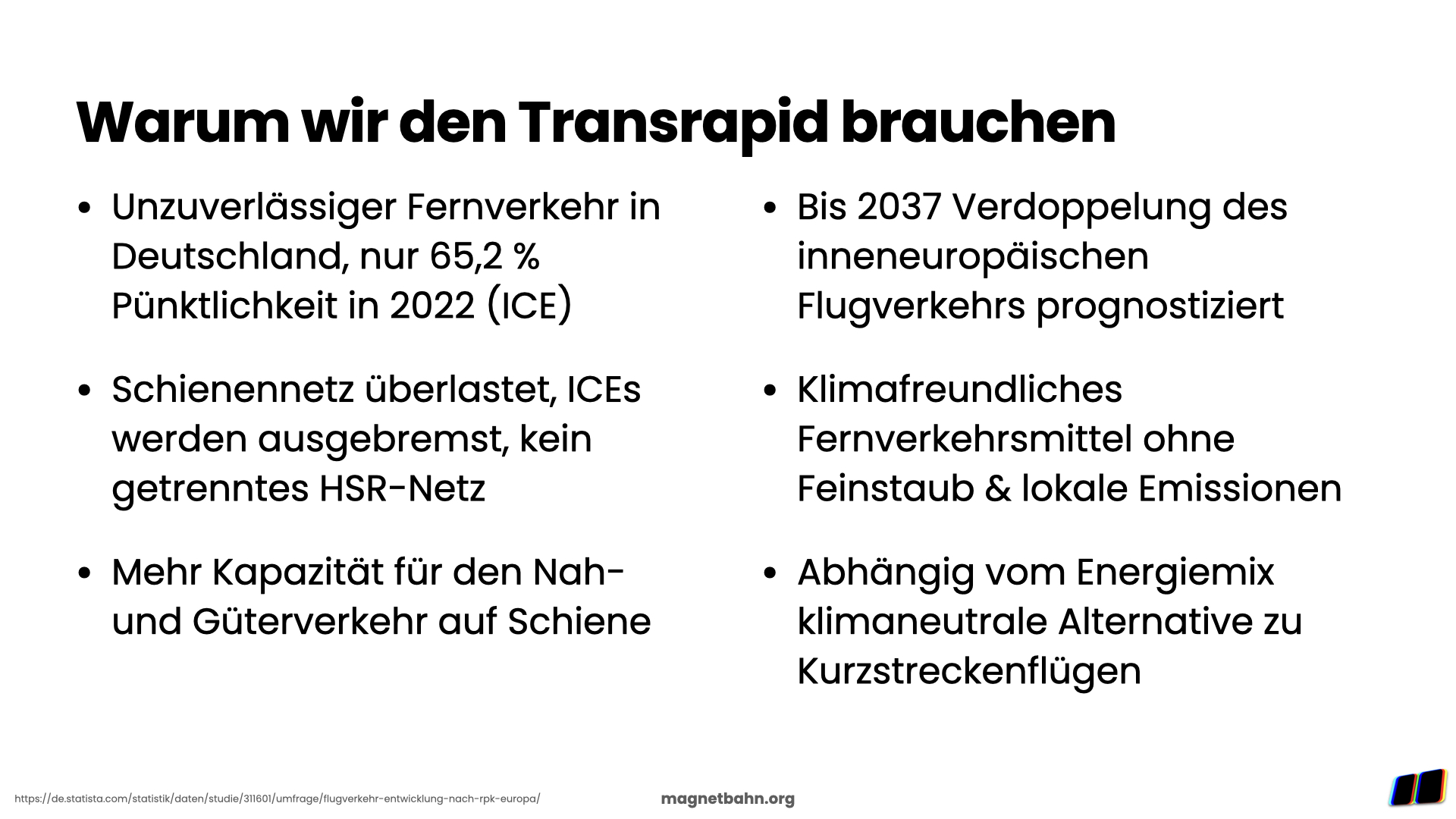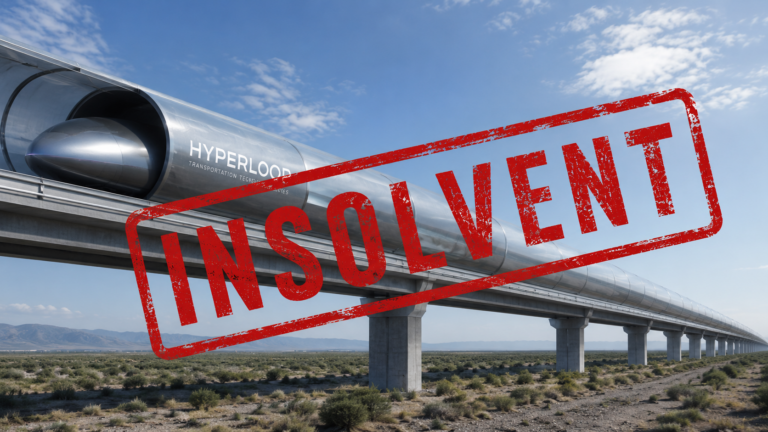
Hyperloop Remains a Pipe Dream, While the Transrapid Has Long Been Ready
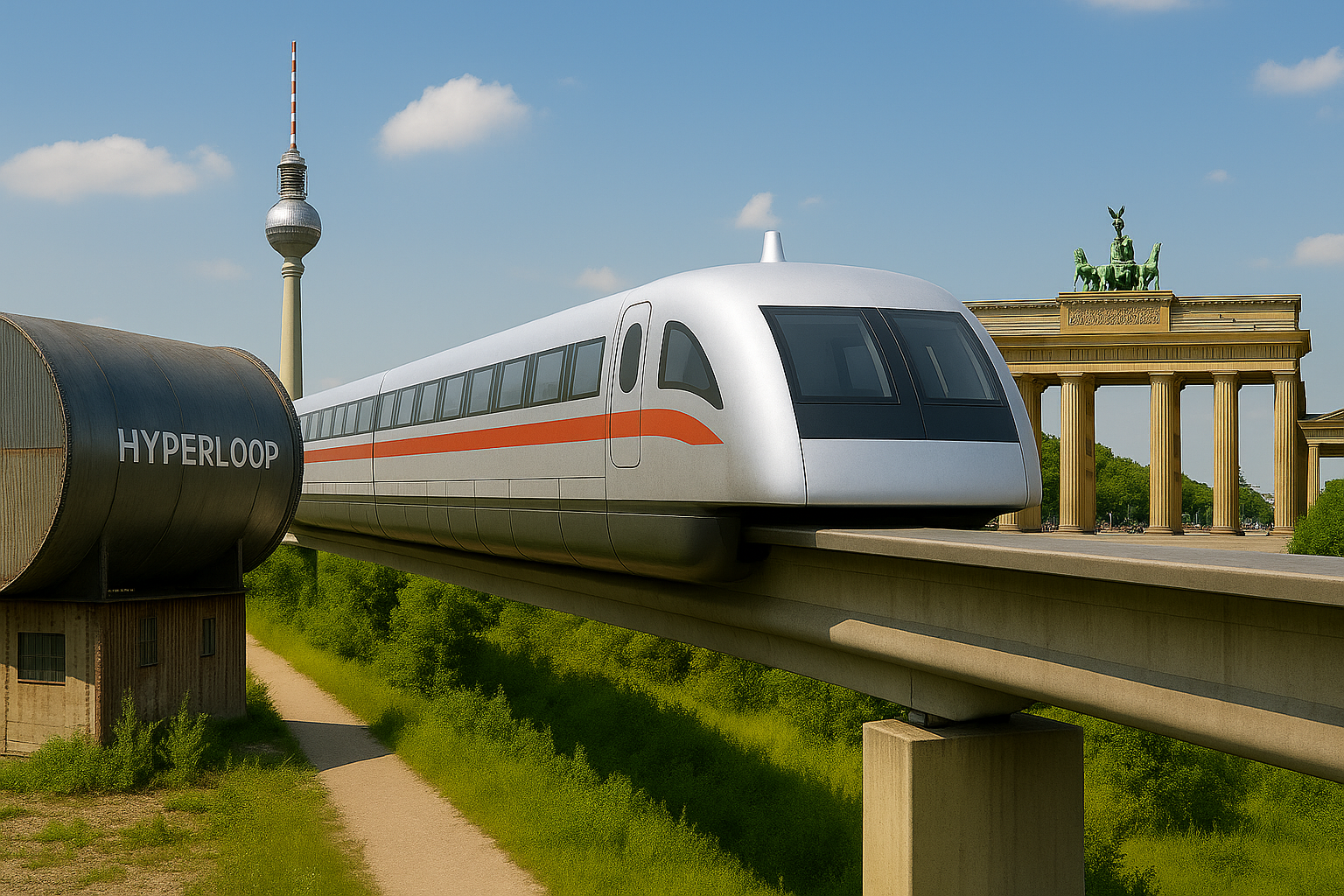
For years, the hyperloop has been touted as a possible revolution in long-distance travel: a system that carries people in small capsules at several hundred kilometers per hour through largely airless tubes. Fast, efficient, theoretically emission-free. Yet even in 2025, not a single hyperloop line exists in passenger service. Meanwhile, the Transrapid has been running in Shanghai for more than 20 years, on a proven line, with more than 28 million kilometers traveled, at up to 431 km/h, in daily operation, without a vacuum and without conceptual question marks, with at least the same promised benefits.
The hyperloop principle rests on the idea of minimizing air resistance through a near-vacuum. Vehicles are meant to glide through the tube levitating, like maglev trains. But what looks compelling on PowerPoint slides requires substantial technical solutions in reality, particularly regarding safety, infrastructure, capacity and maintenance. A critical analysis was published by Table.Media in June 2025.
Germany is testing, and so are other countries
In Germany, the federal government has included the topic in its coalition agreement: a "national hyperloop reference line" is to be built. Research Minister Dorothee Bär (CSU) stressed in conversation with Table.Media that construction must now begin. At the Technical University of Munich, a first 24-meter, full-scale test track with a tube diameter of four meters has existed since 2023. The vehicle uses magnetic levitation technology, as the Transrapid does. A longer, one-kilometer test track is currently being planned to test speeds beyond the 16 km/h reached so far.
In Europe, the European Hyperloop Center in Veendam in the Netherlands is the furthest along. Driverless capsules are tested there in narrower tubes, currently at just 30 km/h over 90 m of track. In China, by contrast, tests at over 600 km/h have reportedly already been carried out, though likewise without passengers.
Small vehicles, big infrastructure
A central problem of the hyperloop is its low vehicle capacity. Depending on the concept, the capsules hold only 10 to 50 seats. To keep up with the transport volume of conventional express trains or the Transrapid, numerous capsules would have to be steered through the system in very rapid succession, an enormous challenge for communication, safety and drive technology at high speeds.
The tube infrastructure also makes high demands: to put a 600-kilometer line with a diameter of four meters under vacuum, around 7.54 billion liters of air would have to be actively pumped out and the low pressure maintained permanently, an enormous effort in terms of energy and infrastructure. The necessary pumping and control systems would have to be operated along the entire route. Maintenance, airlocks, emergency exits and heat generation are so far unsolved challenges.
There are also safety concerns: evacuation in an emergency, such as a fire or technical defect, is much harder in an evacuated tube than on an open line. A simple emergency stop would have a considerable effect on all following capsules; the entire system is extremely sensitive to disruptions. An early critical assessment of these risks can be found in a 2021 article on magnetbahn.de.
The Transrapid: tested, approved, proven
The Transrapid is different. It has been technically ready for service since 1991 and has been approved several times since, including in Europe. The technology was developed and tested over decades and put into operation with real passengers. In Shanghai, the Transrapid has been in regular service since 2004: emission-free, quiet, with large capacity, and it has reliably covered more than 28 million kilometers to date.
The Transrapid not only reaches high speeds but also offers what the hyperloop still lacks: practical operating experience, proven safety concepts, scalable infrastructure and the ability to carry over a thousand passengers per vehicle, in a full-fledged train system.
Conclusion
The hyperloop remains an exciting idea, with potential but also many open questions. As long as no real line exists, no emergency scenarios have been tested and no passenger capacities have been proven in practice, the hyperloop remains a pipe dream.
The Transrapid, by contrast, is already a reality today and could immediately help replace air travel, relieve roads and complement rail transport. Instead of investing billions in an unproven tube technology, Germany could immediately reactivate a working high-speed solution with the Transrapid: economical, reliable and proven.