Coalition Agreement Supports Maglevs and Hyperloop

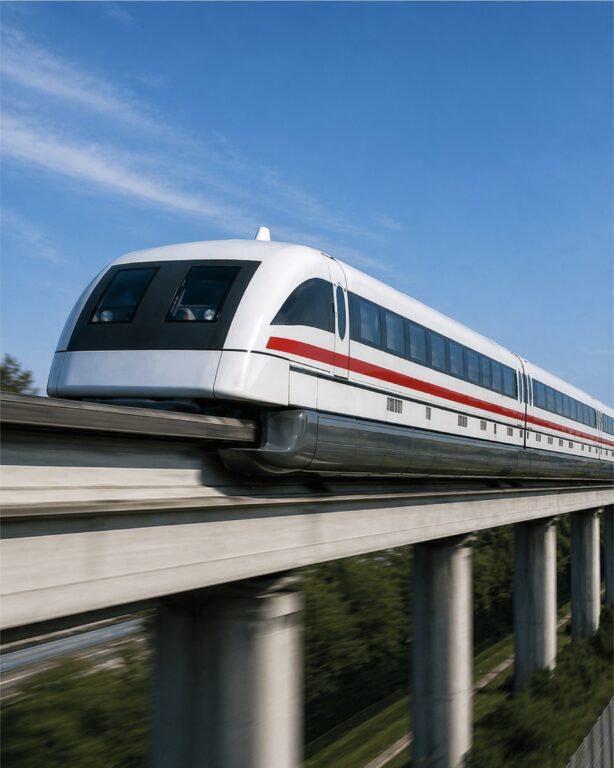
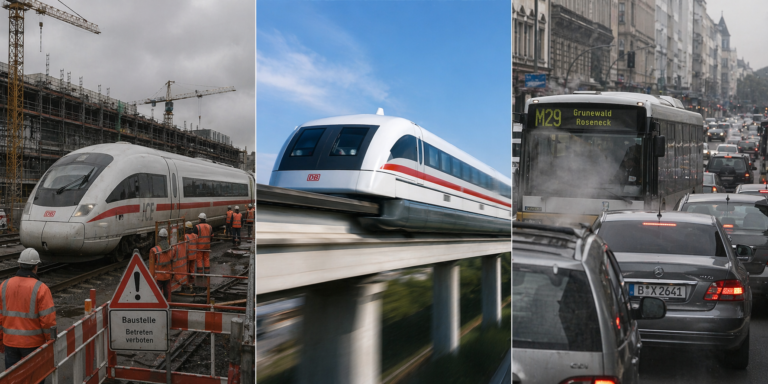
With the new coalition agreement, the new German federal government is sending a clear signal for the future of transport: innovative technologies such as urban maglevs and the Hyperloop are to be specifically promoted. Two central policy measures make this possible: first, the Gemeindeverkehrsfinanzierungsgesetz (GVFG, the municipal transport financing act) is to be modernized and opened to new approaches, explicitly including maglev trains. Second, the government announces the construction of a national Hyperloop reference line. While many media outlets have rashly spoken of a Transrapid comeback, a close look at the agreement shows: what is to be funded are not long-distance systems, but exclusively solutions in local municipal transport, for example urban systems such as the Transport System Bögl (TSB). For the Hyperloop, no concrete locations are known yet, but both the reactivation of the Transrapid Test Facility Emsland and a new test track of the Technical University of Munich (TUM) are under discussion.
Urban maglevs eligible for funding for the first time
Lines 879 to 882 of the coalition agreement state, verbatim: "The Gemeindeverkehrsfinanzierungsgesetz (GVFG) will be simplified and streamlined, opened to innovative approaches (for example maglev) and the barrier-free expansion of stations will be made easier. We will gradually and significantly increase GVFG funds and raise the funding rate." This passage marks a turning point for urban mobility concepts. The GVFG is the central funding instrument for expanding public local transport within cities and municipalities; long-distance projects are explicitly excluded there.
Not a Transrapid revival, but new local transport solutions
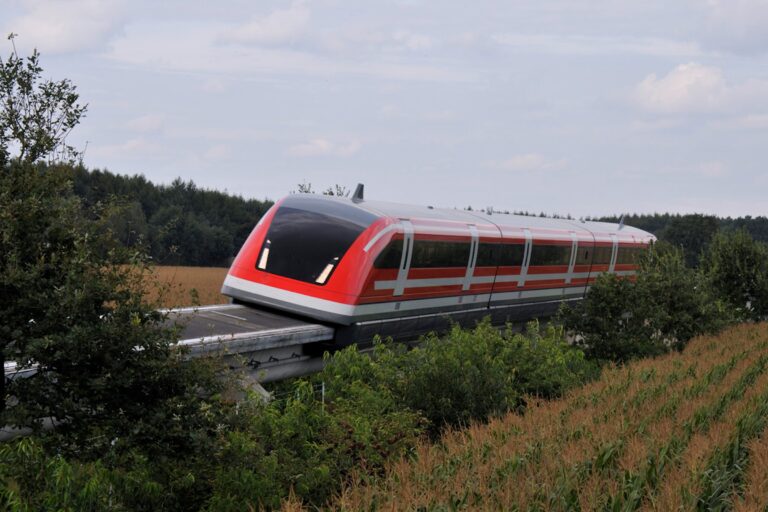
Accordingly, this is not about a renaissance of the Transrapid over long distances, but about compact, automated maglev systems for urban areas. Particularly noteworthy is the Transport System Bögl (TSB), which was developed in Germany and is designed specifically for short to medium routes in local transport. It offers emission-free operation, high availability and a small land footprint, ideal conditions for cities looking to modernize their transport infrastructure.
Hyperloop: Reference line announced
On the Hyperloop, too, the coalition agreement sends a clear signal. Lines 2552 to 2554 state: "We are launching an offensive for aviation and space and successfully bringing together top-level research and commercialization. We will build a national Hyperloop reference line." It is still unclear where this reference line is to be built and how large it will be. The term "reference line," however, suggests a real test environment in which both research and technology demonstration can take place.
Two possible locations in view
Two options are currently emerging: on the one hand, there has been discussion for years about reactivating the former Transrapid Test Facility Emsland (TVE) for Hyperloop tests. With its existing track installations, legally secured land and minimal impact on nature, it offers a nearly perfect starting point. On the other hand, the planned 1-kilometer test track of the TUM Hyperloop project could move into focus. The team at the Technical University of Munich has caused an international stir in recent years and is aiming to build its own test facility, although neither location nor schedule have been made public so far.
Conclusion: New perspectives for transport technologies
One thing is certain: by opening the GVFG to urban maglevs and planning a Hyperloop reference line, Germany is positioning itself as a serious location for innovative mobility solutions. The coalition agreement thus creates not only new prospects for local transport, but also a platform for the technological advancement of future high-speed systems such as the Hyperloop. The Transrapid, developed over decades in Germany, however, receives no attention.