Bundestag Responds to 2020 Transrapid Petition
As early as 2020, there was a first initiative to put the Transrapid back on the political agenda.
As early as 2020, there was a first initiative to put the Transrapid back on the political agenda. That petition, however, was only a first attempt and collected just 272 signatures within a month, not a great success. In 2024, the attempt was made again, this time with impressive success: the new petition received more than 57,000 signatures, clearly underlining public interest in the Transrapid.
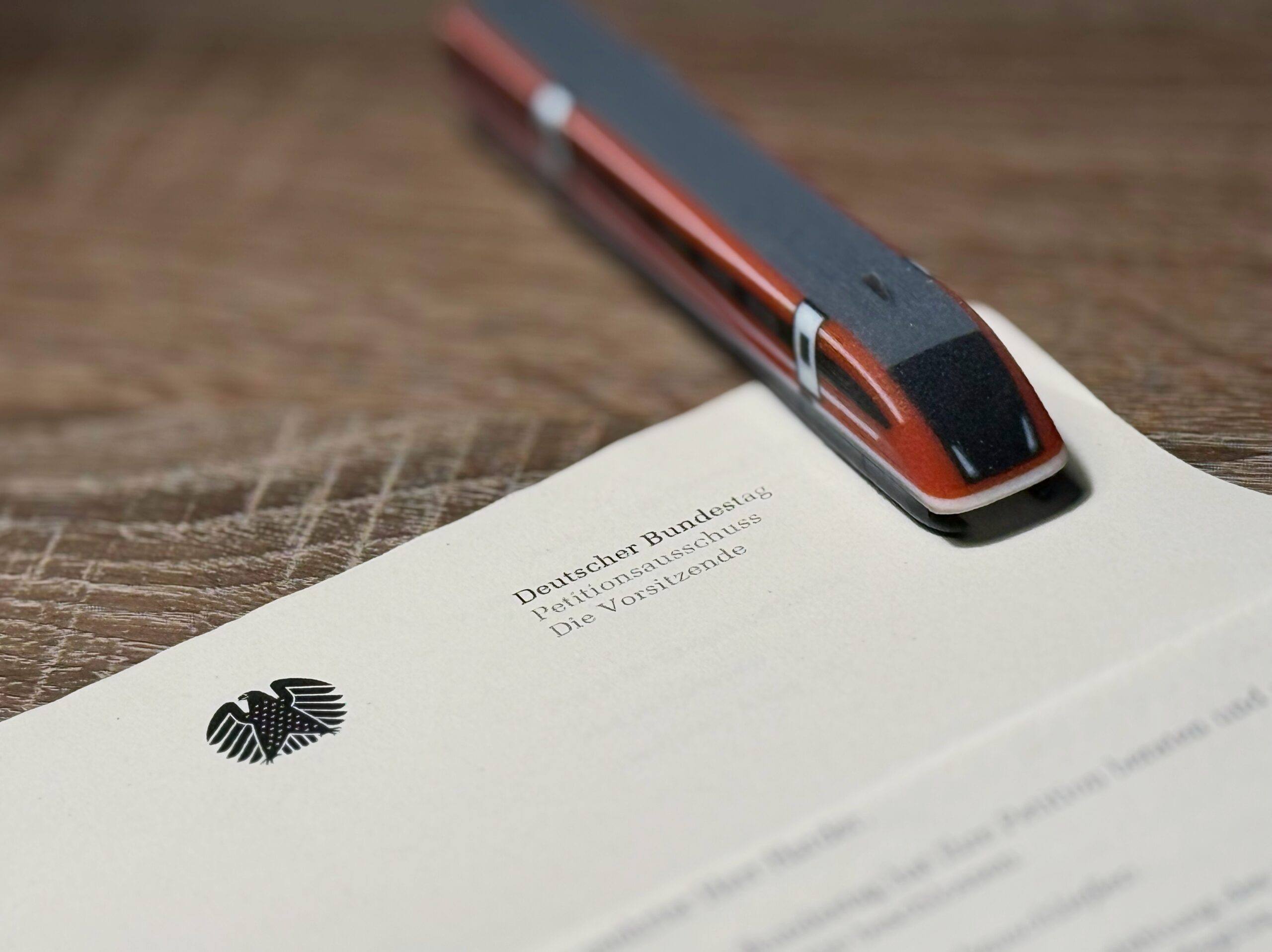
Now the Petitions Committee of the Bundestag (German parliament) has responded to the 2020 petition, after more than 4 years. The response can be downloaded as a PDF at the bottom of the page.
New petition shows strong support for the Transrapid
While the 2020 petition was forgotten relatively quickly, the current initiative shows growing interest in bringing back the Transrapid system. The 2024 petition has no direct connection to the earlier initiative, but it shows that many people now recognize the Transrapid’s potential. With broad support from the public, it is a strong signal that people want a faster, more modern and more efficient alternative to existing rail transport.
The Transrapid: economical and future-proof
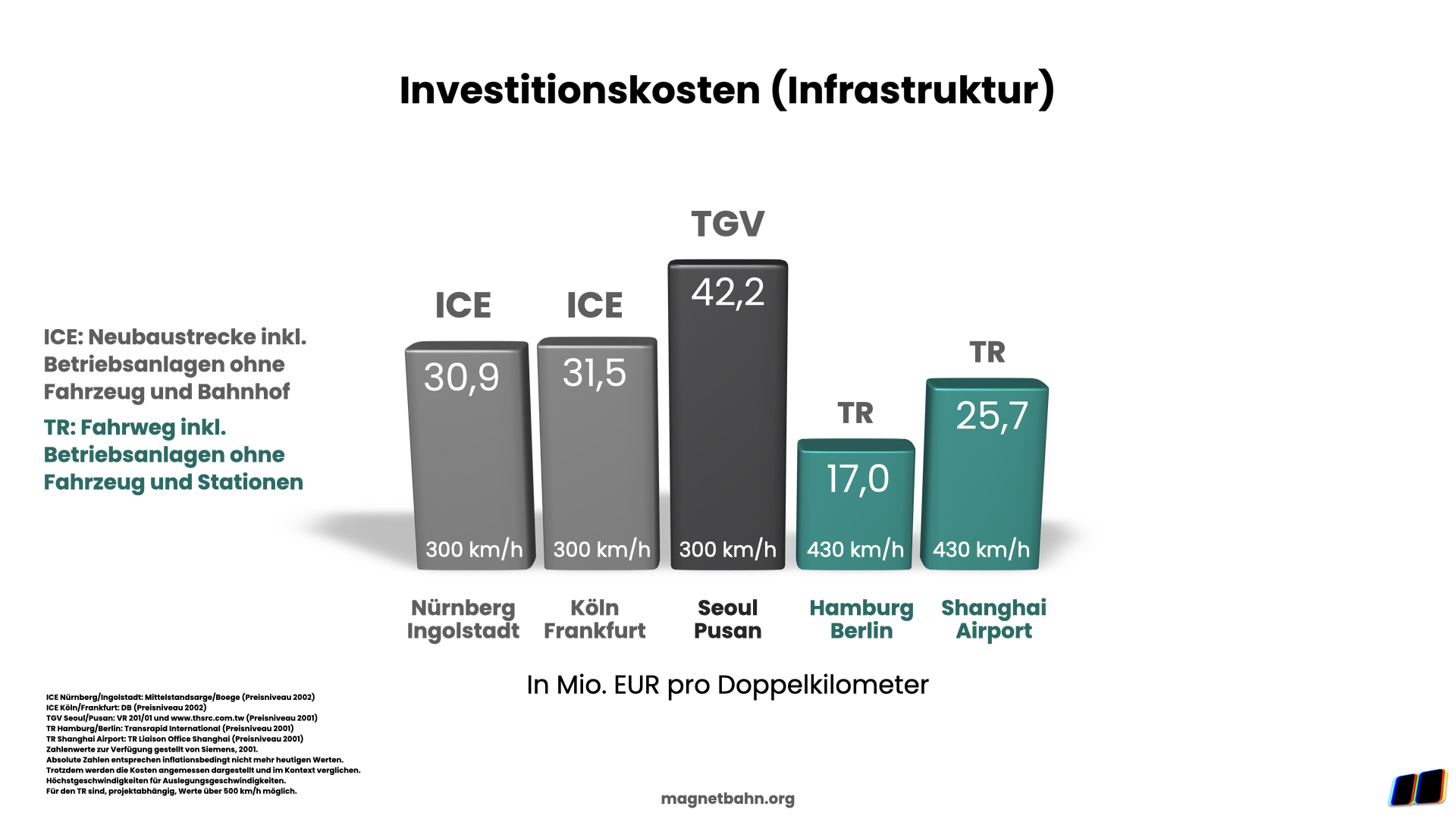
Despite acknowledging the numerous advantages of the Transrapid system, the Petitions Committee unfortunately claimed in its response to the 2020 petition that the Transrapid is less economical than conventional rail systems. This contradicts the facts: the Transrapid uses less energy, has considerably lower operating costs thanks to the absence of wear, and lasts much longer than conventional railway tracks. These factors make it cost-effective in the long run.
The committee argued that the investment in the Transrapid system would not be proportionate to the benefit. This reasoning, however, overlooks the urgent need for new infrastructure in Germany.
Infrastructure crisis: the Transrapid as a solution
The growing problems of German long-distance travel, such as delays and unreliability, as well as the high demand for domestic flights, underline that new transport solutions are urgently needed. The Transrapid could close this gap and offer a fast, reliable and environmentally friendly alternative.
The committee’s decision to close the 2020 petition has no bearing on the current, very successful petition. It continues to be supported and clearly shows the need for modern transport solutions like the Transrapid.
Conclusion
Although the 2020 Transrapid petition was not successful, the 2024 petition is a significant success. It shows that the Transrapid is an attractive and necessary solution to Germany’s transport problems. With its energy efficiency, durability and low operating costs, it is a genuine alternative to existing rail systems and should be seriously considered to secure the future of German long-distance travel.