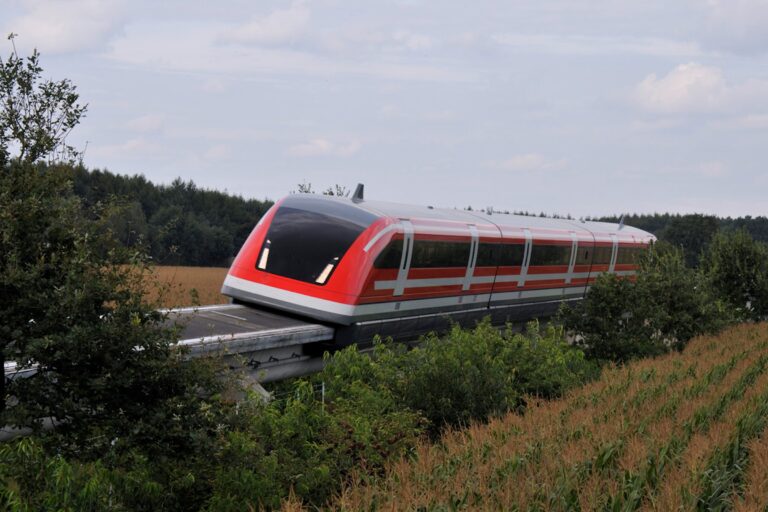
Maglevs and Hyperloop at InnoTrans 2024
This year's InnoTrans in Berlin also features manufacturers of maglev and Hyperloop systems. In this article we look at who is taking part.
This year’s InnoTrans in Berlin also features manufacturers of maglev and Hyperloop systems. In this article we look at who is taking part.
InnoTrans 2024 in Berlin, the world’s leading trade fair for rail technology, brings together the latest developments in rail transport. But besides classic wheel-on-rail systems, it also offers glimpses of the future of mobility. Some exhibitors are presenting innovative concepts such as maglevs and Hyperloop technologies. These visionary approaches show what the transport of tomorrow could look like – faster, more efficient and more environmentally friendly. This article introduces the exhibitors with something to do with maglevs and related systems.
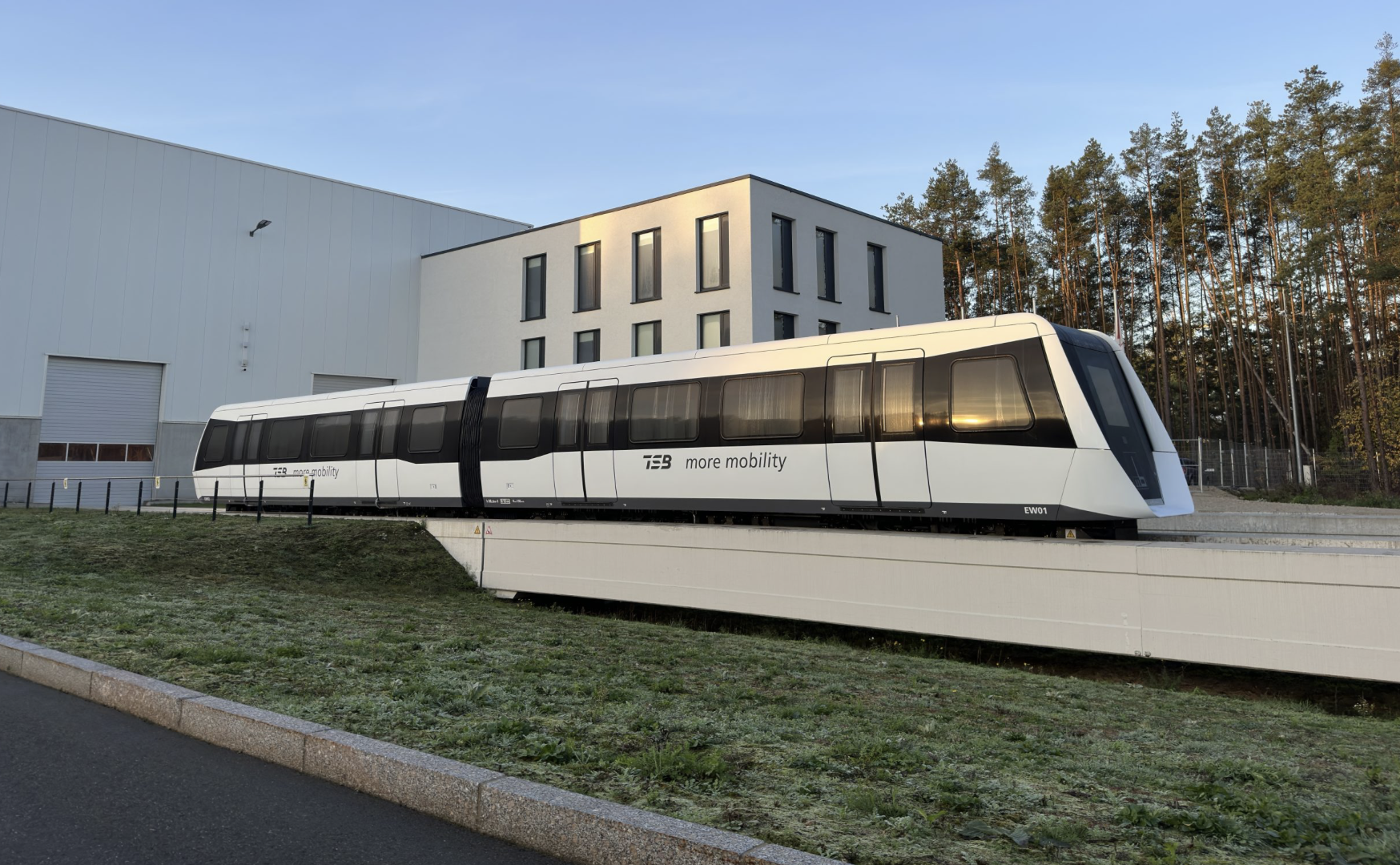
Transport System Bögl
Hall 2.2, Booth 420
As the Max Bögl group of companies announces on its website, the Transport System Bögl (TSB) will be represented with a booth at InnoTrans.
The TSB (Transport System Bögl) is a maglev that the Max Bögl group has been developing since 2010. The system is designed for local transport and carries passengers and freight on its own independent, space-saving infrastructure. It is being developed in Sengenthal, where it runs on an 850 m test track.
You can find more information about the TSB, including an interview, in this video.
TUM Hyperloop
Hall 2.2, Booth 155
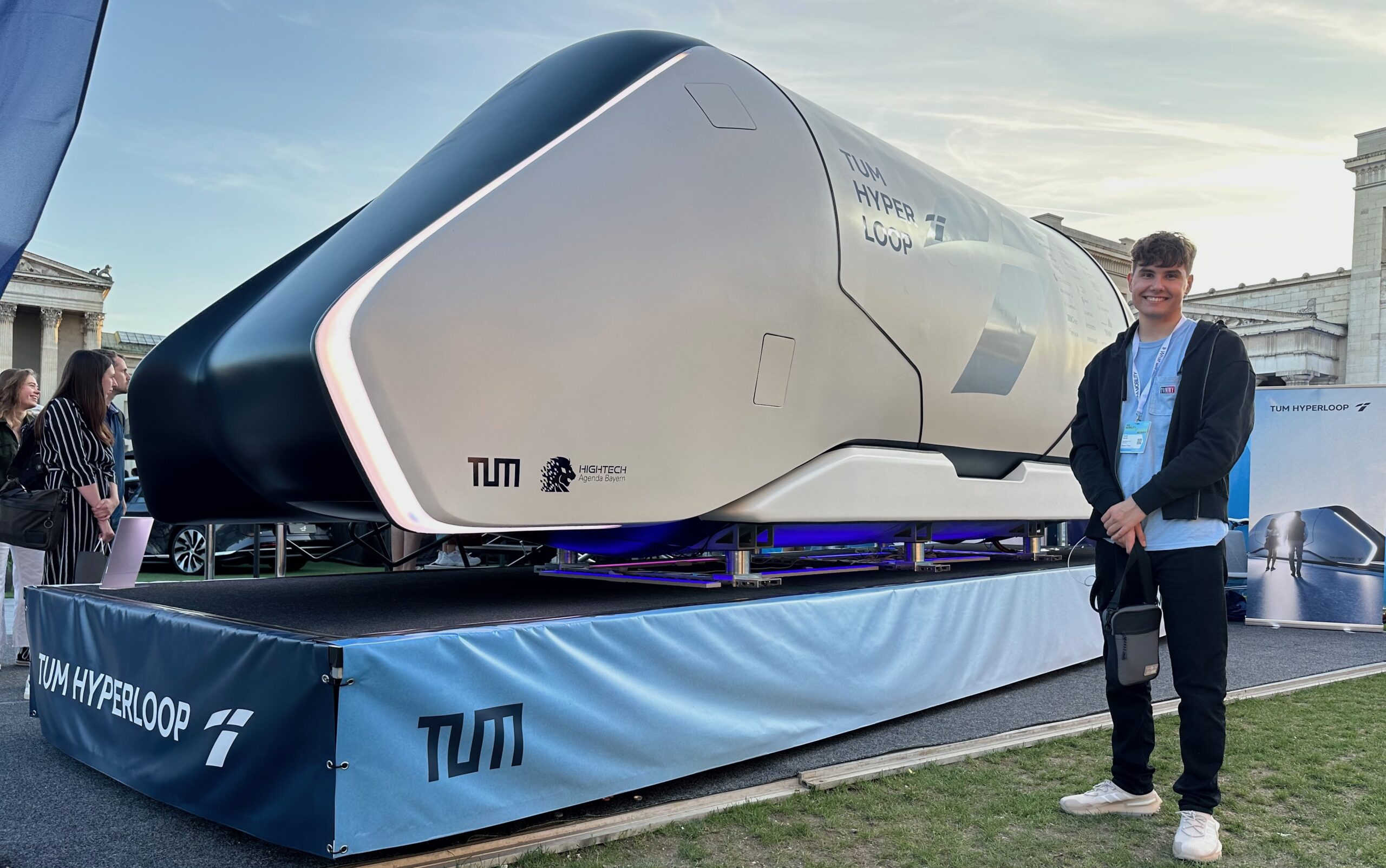
The Technical University of Munich (TUM) has been developing a Hyperloop system for several years. The basic idea behind the Hyperloop is to operate a maglev in an airless tube. By eliminating rolling and air resistance, high speeds can be reached with very low energy demand. In 2023 the research team managed to carry out a crewed test run under vacuum conditions. Shortly before, the new test track in Ottobrunn was opened, which was certified by TÜV for passenger transport and allows testing at full 1:1 scale.
This year TUM will exhibit its current demonstration vehicle at InnoTrans. Trade fair visitors can thus try out a seat in the Hyperloop today. The vehicle was already shown publicly at IAA 2023 (the Munich auto show), and the same will be the case at InnoTrans this year.
At the end of 2023 we had the opportunity to ride in the TUM Hyperloop. At this link the video can be watched on YouTube.
Nevomo
Hall 4.2, Booth 140
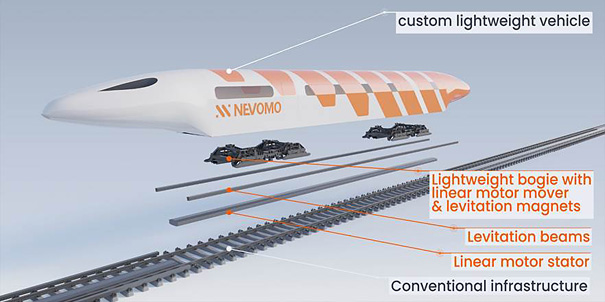
Nevomo is a Polish start-up developing a Hyperloop technology. Nevomo is also known for its MagRail technology, which can make conventional rails suitable for maglevs without having to build completely new infrastructure.
Nevomo is listed in the InnoTrans exhibitor directory. We received no reply to our email of August 8, 2024, so we cannot say anything further about the booth.
CRRC
Hall 4.2, Booth 210
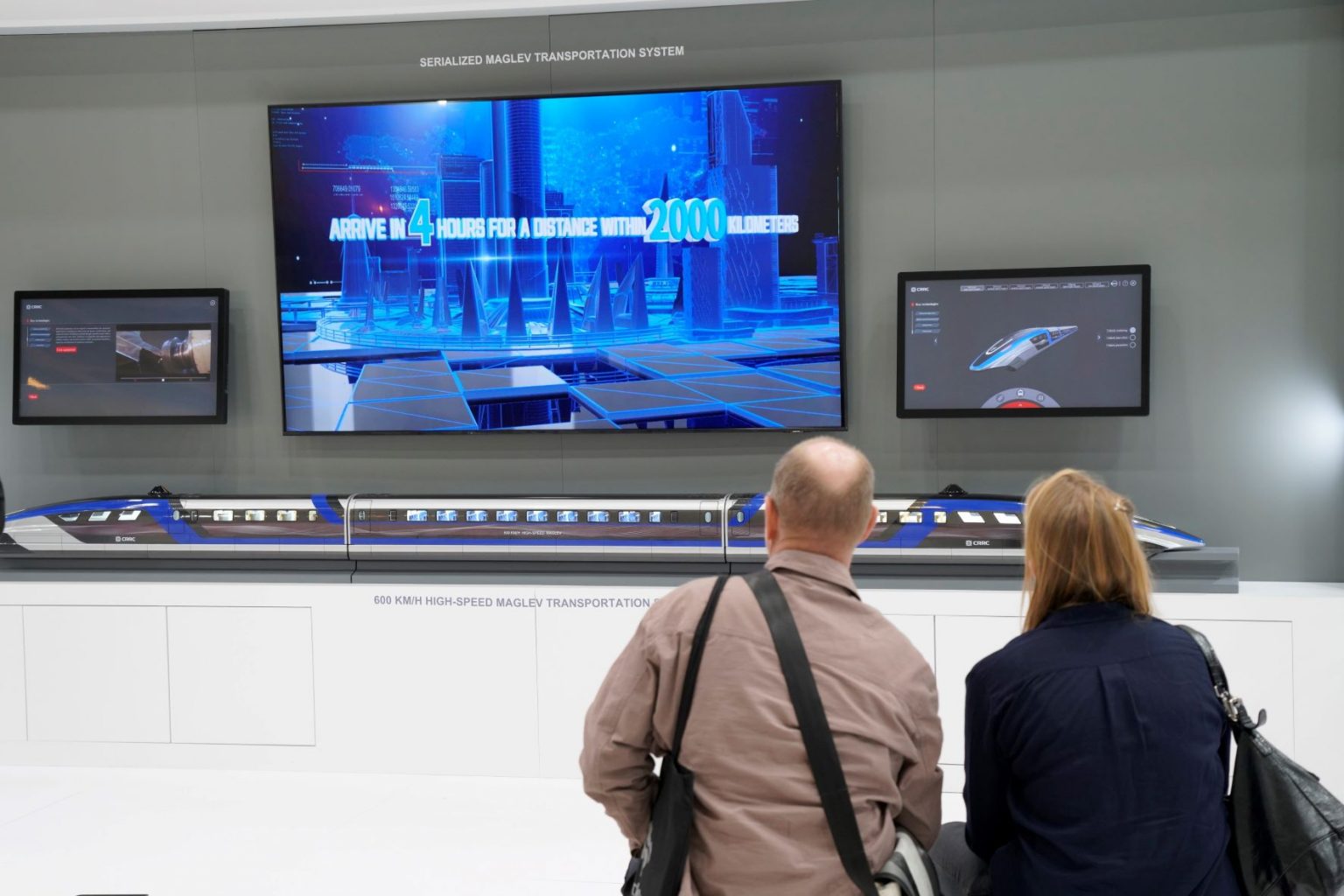
The Chinese rail group CRRC is an exhibitor at InnoTrans this year. In 2022 CRRC presented the CRRC CF600 to a global audience at InnoTrans and promoted the 600 km/h maglev as a Chinese development.
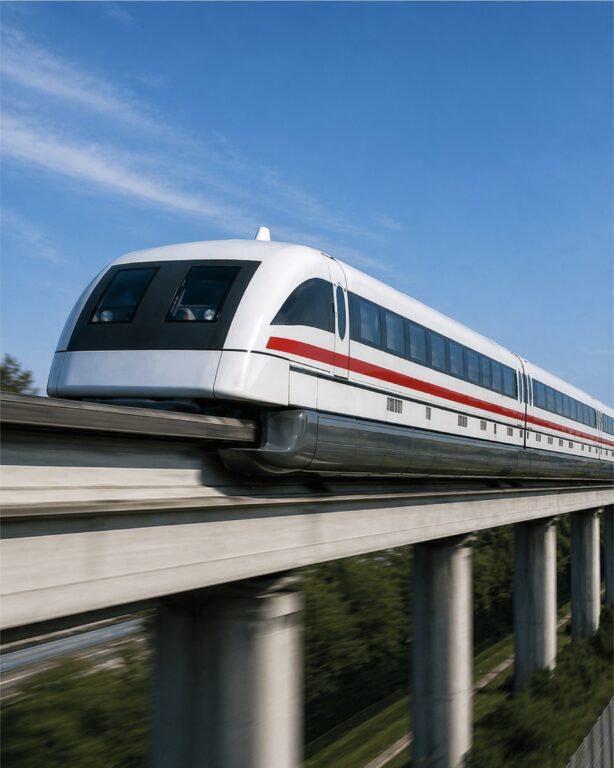
In fact, the CRRC CF600 is a replica of the German Transrapid – though with a different car body.
It is also conceivable this year that CRRC will present its maglev developments. In local transport in particular, four new maglev systems are in use in China. We received no response to our email of August 8, 2024, so we have no details about the booth.
CAN in Automation e.V.
Hall 27, Booth 290
The Controller Area Network (CAN) is a proven communication system that plays an important role in many industrial applications, including the rail and maglev industries. Originally developed for the automotive industry, CAN enables reliable communication between sensors, actuators and controllers. In maglevs it ensures smooth interaction between the various subsystems, which is essential for safe and efficient operation.
Since 2012, the use of CAN in railways has been internationally standardized by the IEC 61375-3-3 standard. This standardization underscores the importance of CAN in safety-critical applications, such as those also required in maglevs. Despite its invisible presence, CAN is an indispensable component that helps innovative transport technologies such as the maglev work reliably.
According to Holger Zeltwanger, Managing Director at CiA, maglevs such as the Transport System Bögl (TSB) and Chinese permanent-magnet maglevs rely on this technology.