Tongji University Tests Three Chinese Transrapid Replicas
China's Tongji University (Shanghai) has been involved in the further development of German Transrapid technology for many years. For this purpose, the university has a 1.5 km test track built from guideway elements left over from the construction of the Chinese Transrapid line in Shanghai.
Background
China’s Tongji University (Shanghai) has been involved in the further development of German Transrapid technology for many years. For this purpose, the university has a 1.5 km test track built from guideway elements left over from the construction of the Chinese Transrapid line in Shanghai.
As early as 2007, the university caused a stir when it became known that German Transrapid technology had been copied by Chinese companies. At that time, however, the replicas of Transrapid technology were not particularly mature.
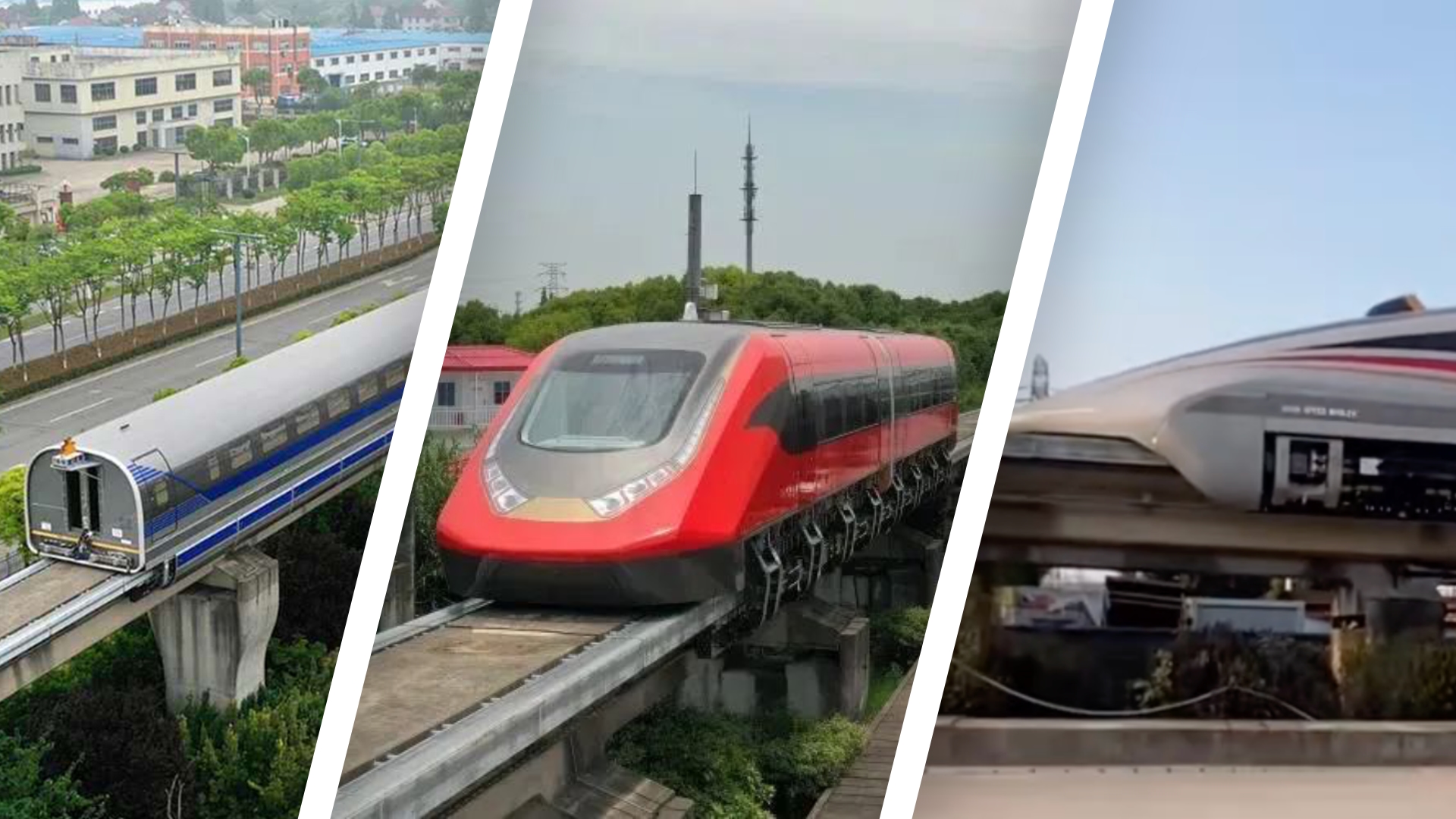
Since 2013, Tongji University has had a research laboratory operated jointly with the German Transrapid manufacturer ThyssenKrupp. There, Chinese scientists work together, with ThyssenKrupp’s support, on further developments of Transrapid technology. Accordingly, the vehicles should not be regarded as “copies” or “plagiarisms” but as authorized replicas or offshoots of Transrapid technology. In cooperation with the University of Stuttgart (Technische Universität Stuttgart), ThyssenKrupp Transrapid and the Chinese rail group CRRC, studies and scientific papers are also published that further confirm the cooperation. The University of Stuttgart also admits on its website that a cooperation with ThyssenKrupp and CRRC Sifang exists.
Three vehicles in use
Until a few years ago, the vehicles that made headlines in 2007 because they proved that China had copied German Transrapid technology were still in use on the track. Those vehicles have since been retired and replaced with significantly newer ones.
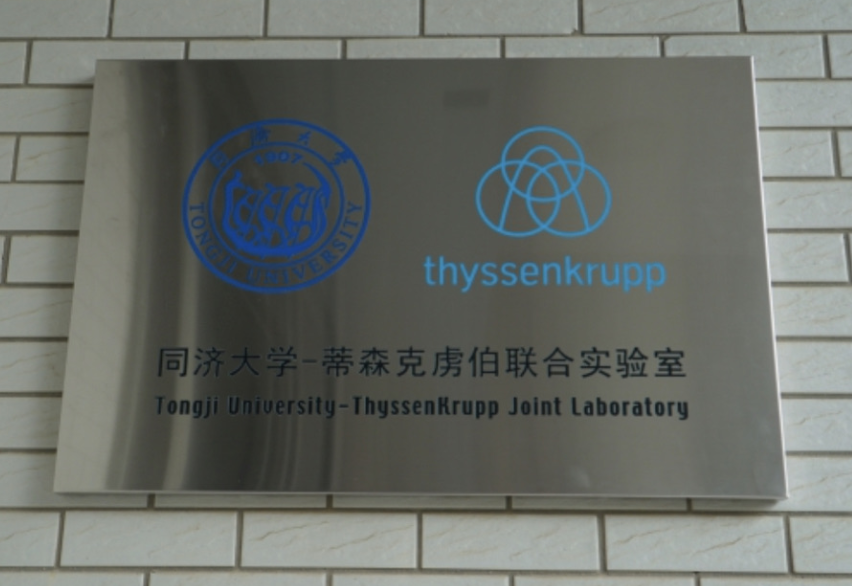
Currently, three vehicles are in use, all from the Chinese rail group CRRC. It should be noted that CRRC consists of various independent companies. Sifang, Zhuzhou and Changchun develop three different vehicles under the “CRRC” name, yet they are tested on the same line in Shanghai in order to benefit from the knowledge and expertise of Tongji University. That three independent companies are developing technically almost identical vehicles encourages competition between them and ensures independence in maintenance and spare parts supply.
1. CRRC CF600 (Sifang) middle section
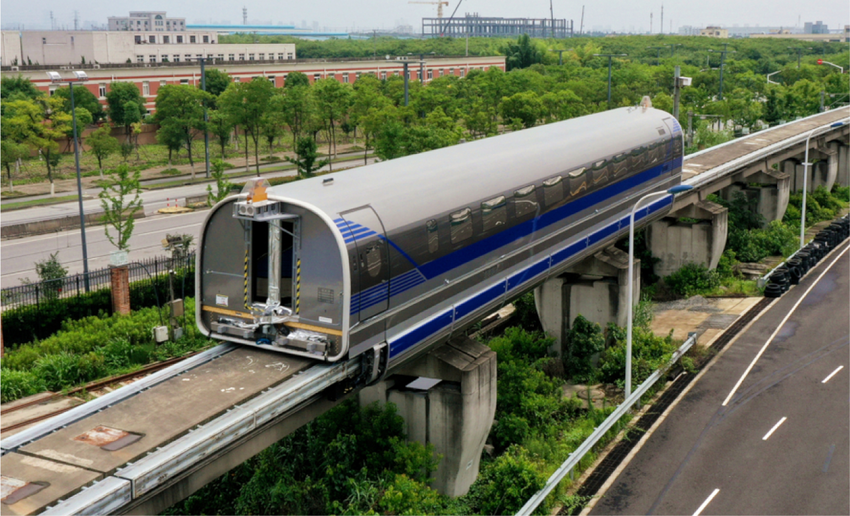
In 2019, the Chinese rail group CRRC Sifang presented a maglev capable of up to 600 km/h that is based on the Transrapid. It is the blue vehicle with sharp edges and a long, flattening front end.
In early 2020, a middle section of the CF600 (Sifang) went to Tongji University in Shanghai to be evaluated in practice. At that time, no other tracks existed that were suitable for testing the replicas of Transrapid technology. The middle section has been in use on the Tongji track in Shanghai ever since.
CRRC Sifang now has its own 660 m test track in Qingdao, on which a 4-section CF600 (Sifang) vehicle is being tested and demonstrated. In early 2021, magnetbahn.org reported that the first complete vehicle had been finished.
In July 2021, the vehicle was officially presented to the public and demonstrated on the test track.
2. CRRC CF200 (Zhuzhou)
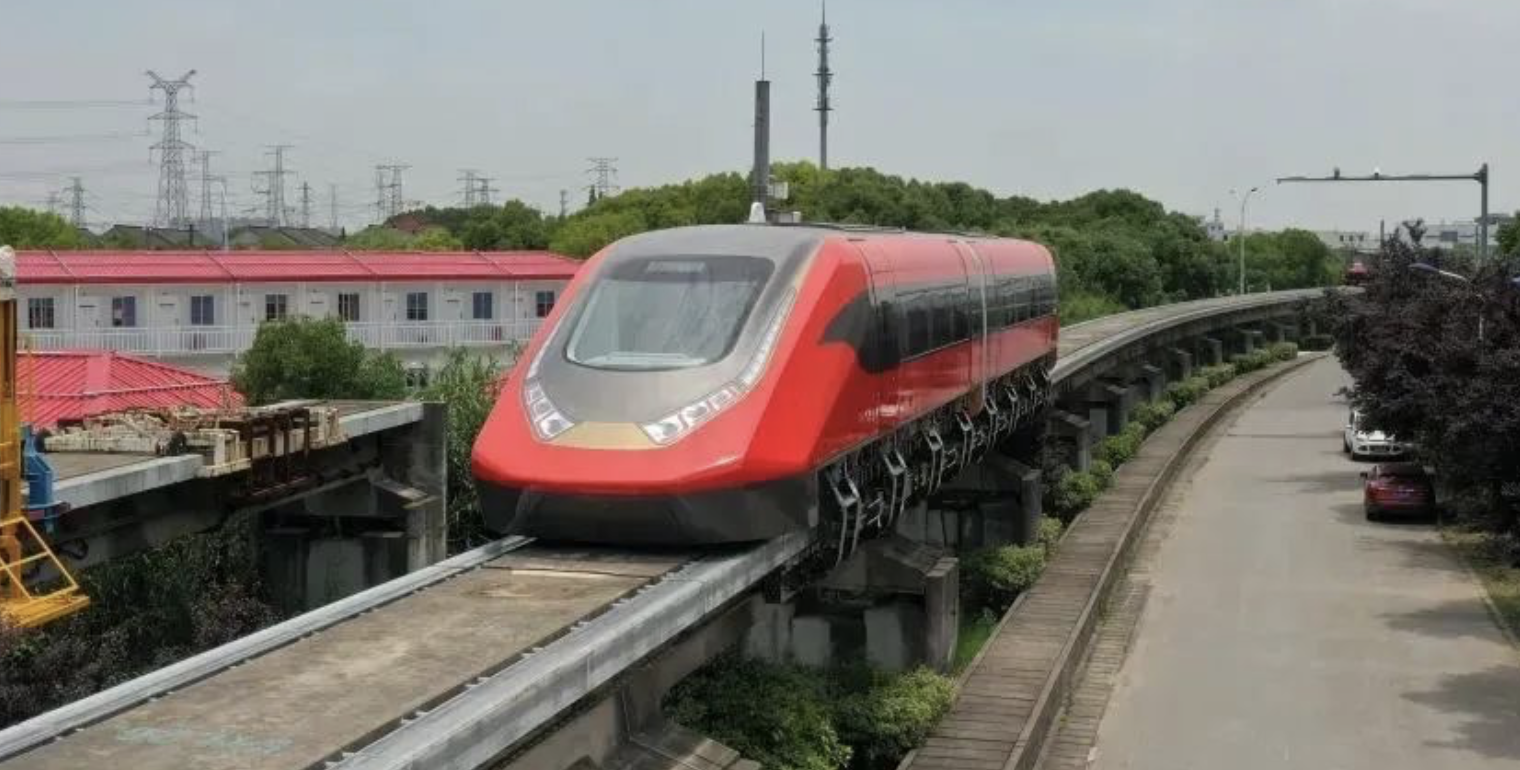
Since March 2021, another vehicle that reinterprets the Transrapid concept has been tested on the Tongji track. Based on an old German study of a possible “Transrapid-N” with sections only half as long and a reduced maximum speed of just 200-300 km/h, the Chinese rail company CRRC Zhuzhou produced a vehicle designed for use on shorter routes.
The vehicle in use consists of an end section and a middle section. Both sections are as long as a conventional Transrapid section (approx. 27 m or 25 m).
3. CRRC CF600 (Changchun)
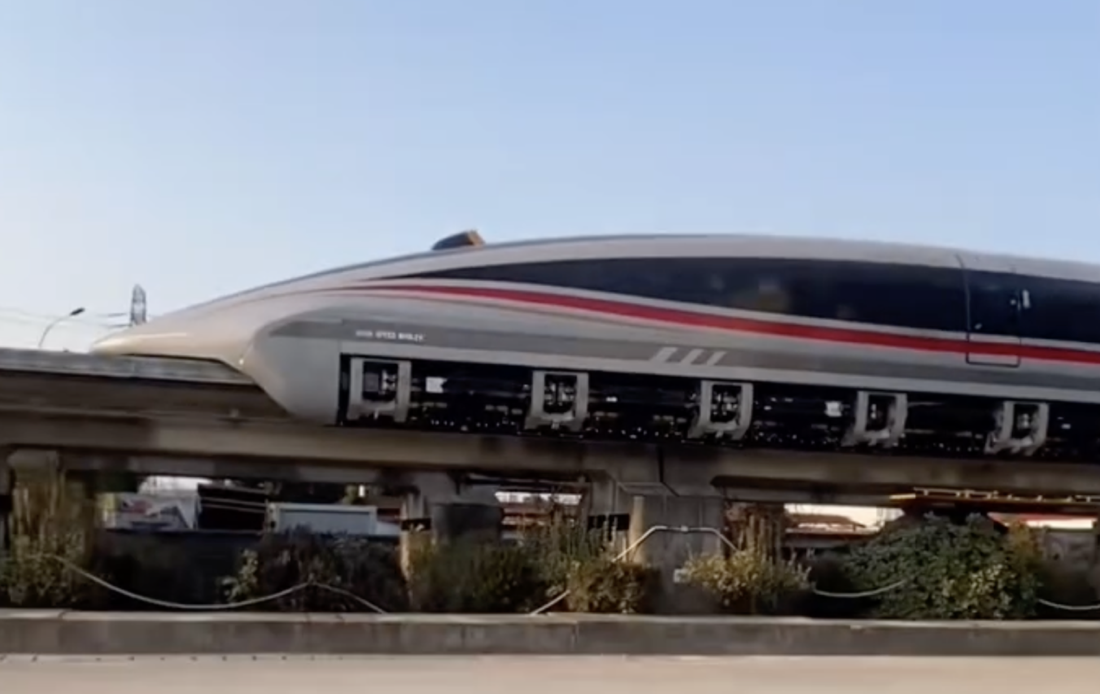
Since late 2023, a new vehicle has been operating on the Tongji track that competes with the one from Sifang. It has a more aerodynamic design and is painted gray.
Another special feature is that this vehicle is not a successor to the CF600 but a parallel development by a different CRRC company, namely CRRC Changchun.
It is intended for use in the high-speed range at speeds of up to 600 km/h.
More offshoots of the technology in planning
Narrower Transrapid vehicles are currently also being examined, with a width of only 2.90 m instead of 3.70 m. Engineers expect this to reduce construction costs through material savings, especially for use on tunneled routes. The 3.70 m wide “normal” Transrapid is suitable for tunnels, but because of its larger frontal area and the resulting less-than-optimal aerodynamics, it is not suited to permanent tunnel use. The narrower vehicle is being developed explicitly for mainly tunneled routes, including the planned Guangzhou-Shenzhen-Hong Kong line. For the normal routes, which are predominantly at ground level and elevated, the vehicle of conventional width is to be used.
Within China, the development of this vehicle has not yet been publicly announced. Information about this vehicle is released only during technical presentations, and we have obtained some of it.
The vehicle is currently in development, and completion could take place in a few months. Nevertheless, a platform with the narrower guideway is already being installed at the CRRC maglev research center in Qingdao.
Conclusion
All the vehicles just mentioned have one thing in common: the Transrapid platform. The Chinese side has made smaller adaptations, however, notably to the operations control technology. While the Transrapid communicates via 38 GHz directional radio antennas connected to the control center by fiber optic cable, Chinese vehicles use 5G technology. It should be noted that the 38 GHz millimeter waves (mmWave) in use on the Transrapid since 1989 even surpass current 5G systems. It is highly likely that the Chinese also adopted the already known technology and simply gave the mmWave system a more modern name.
While Transrapid lines are being planned in China on which up to 650 km/h is to be reached, nobody in Germany seems to be interested in the Transrapid that was developed here. And that despite the fact that it has long been ready for use and has the potential to relieve Germany’s unreliable and unpunctual rail service.