Transrapid Hits 501.5 km/h in Shanghai – 20 Years Ago
On November 11, 2003, the Transrapid reached a record speed of 501.5 km/h in Shanghai - on a line just 30 km long.
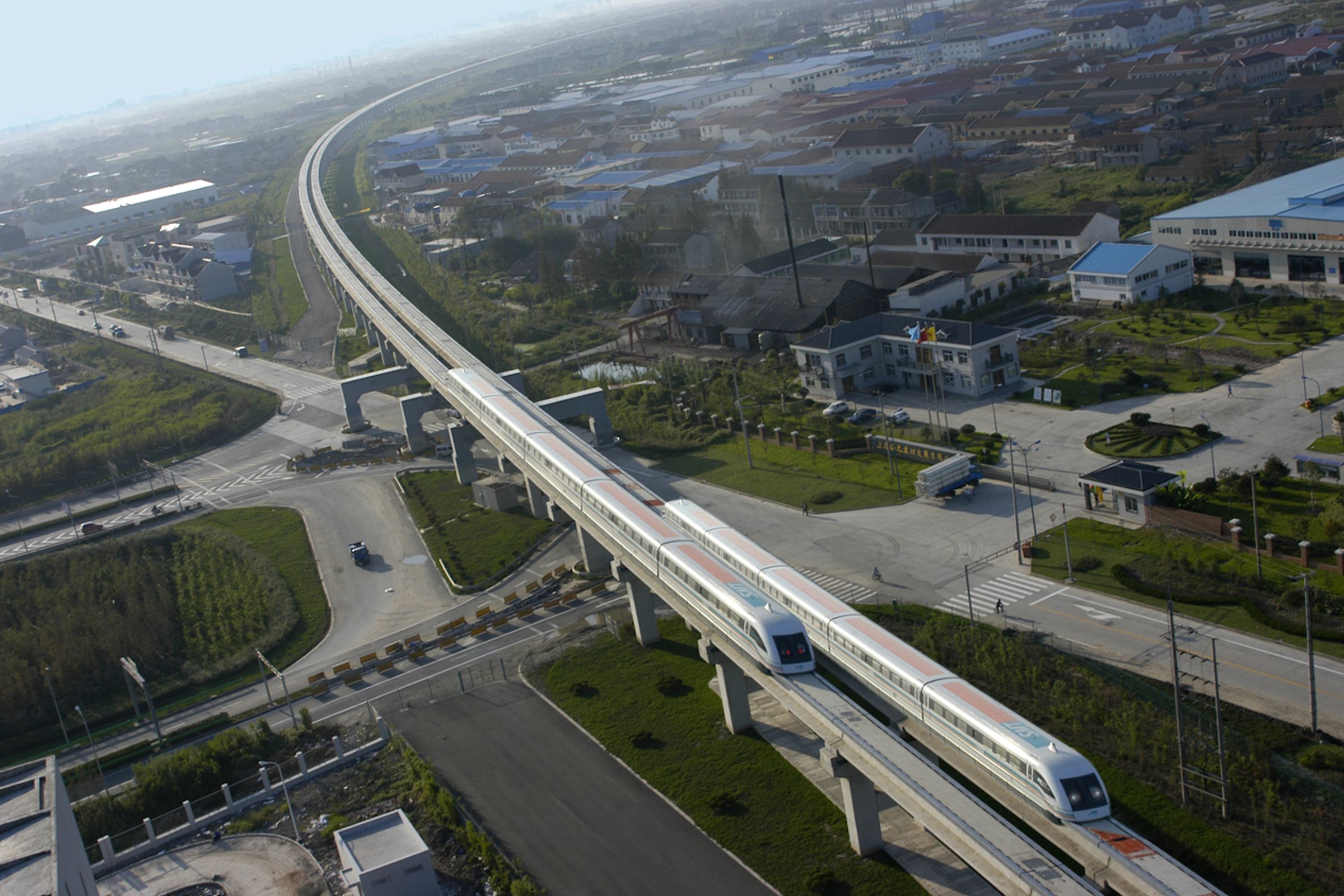
On November 11, 2003, the Transrapid reached a record speed of 501.5 km/h in Shanghai – on a line just 30 km long.
As early as 1993, the Transrapid 07 proved in Emsland what Transrapid technology is capable of: 450 km/h on a 31.5 km test track – with a straight section only 12 km long.
The Transrapid accelerates and brakes much faster than conventional high-speed trains. While the Transrapid needs only 4.2 km to reach 300 km/h, an ICE (Deutsche Bahn’s high-speed train) of identical capacity needs 17.9 km¹. This makes the Transrapid ideally suited to densely populated regions, since more intermediate stops can be served without losing time. In long-distance service, the Transrapid reaches speeds of 430 to 500 km/h, with maintenance effort many times lower than for conventional high-speed trains.
Compared with the overall ICE system (guideway & vehicle), maintenance effort is 66% lower, because the Transrapid has no wheels, no abrasion, no point loads and no mechanical brakes.
The advantages of the technology clearly argue for its use, but political reasons thwarted the plans.
Instead, we have to accept long-distance rail with punctuality of just 58.4% (09/2023) and 4,700 canceled long-distance trains per year (2022). The network is completely overloaded: countless slow-speed zones, construction sites and local/freight trains hold the ICE back from its potential. There is no way around the Transrapid if we want usable long-distance rail.
¹ Schach, Rainer, Peter Jehle, and René Naumann. Transrapid und Rad-Schiene-Hochgeschwindigkeitsbahn: Ein gesamtheitlicher Systemvergleich.