German Government Doubles Demolition Costs for Transrapid Test Track to €68 Million
The German government has quietly almost doubled its own demolition costs for the Transrapid Test Facility Emsland (TVE) in northwestern Germany: instead of the €40 million estimated in 2011, it now expects €68 million for the complete dismantling by 2034. This emerges from the government’s answer to a parliamentary inquiry by Bundestag (German parliament) member Maximilian Kneller (AfD).
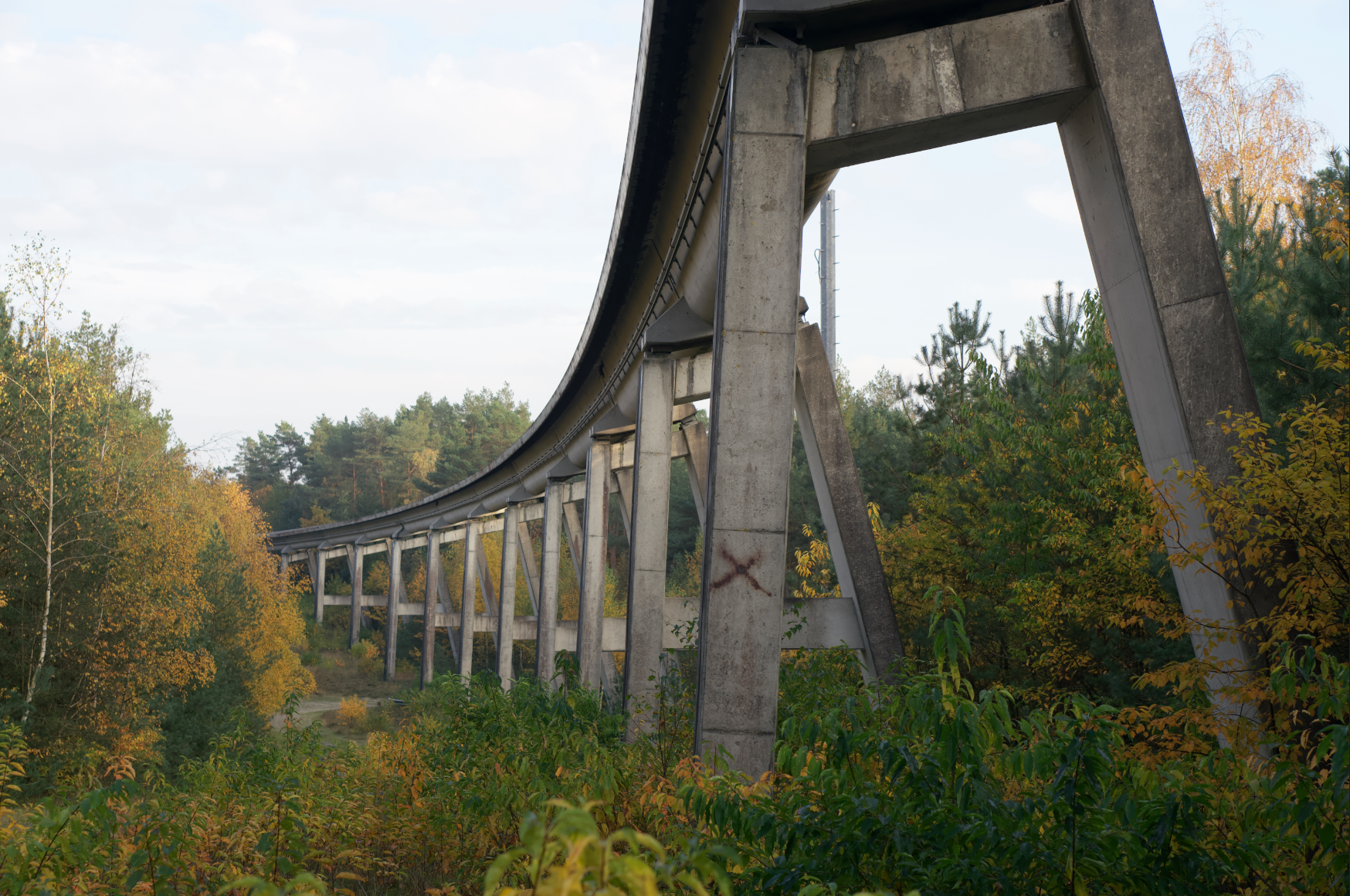
Bothering no one
Especially incomprehensible: the test facility bothers no one.
For the most part it runs elevated over farmland and obstructs no roads, no settlements, no construction projects. Plowing and harvesting continue beneath the guideway girders. There is no safety or planning reason why the line would have to disappear.
The demolition therefore serves no practical purpose; it is purely politically motivated. It removes not a problem but a symbol of Emsland’s history. The maglev stands for engineering spirit, for technological ambition, for a different understanding of progress, and that is exactly what seems unwelcome in Germany today.
Nevertheless, the federal government now wants to spend tens of millions of euros to make it disappear. Nobody benefits from this except the companies that can look forward to demolition contracts. For the region, science or the taxpayer, nothing remains but wasted money and destroyed substance.
Conclusion
While Germany tears down its own monument to innovation, German maglev technology has been running in Shanghai for more than 20 years in daily regular service, at up to 431 km/h, with a punctuality of 99.9 percent and by now more than 30 million kilometers traveled. Reliable, efficient and nearly maintenance-free, the Transrapid there shows what was once possible in Germany. But China is not content with what has been achieved: new vehicles are currently being built on the basis of the Transrapid system that are meant to reach up to 600 km/h, a direct further development of German engineering, while its country of origin tears down its own test facility (CRRC CF600).
At the same time, in 2025 Germany struggles with a long-distance punctuality of only 51.5 percent, with every second ICE late. And yet at least €68 million is being spent on demolishing a test track that stands in nobody’s way.
The Transrapid Test Facility Emsland could today be a place of research, education and pride, a center for mobility innovation, tourism and remembrance of German engineering achievement. Instead it is disappearing because it disturbs the wrong narrative: that there must be no alternatives to conventional rail in Germany.
This is not a technical project but an ideological decision. A country that once developed the fastest and quietest high-speed train in the world is now paying tens of millions to remove every trace of its own future.