Fresh Tailwind for a Maglev in Berlin
The debate about a possible maglev in Berlin seemed long dormant after the disputes of 2023. Back then, the CDU and Transport Senator Ute Bonde had advocated the technology for good reasons and had to endure massive headwind from the SPD, the Greens and the Left Party. The specially created working group was then put on ice, and the topic seemed settled.
But now Bonde is back and is providing fresh tailwind.
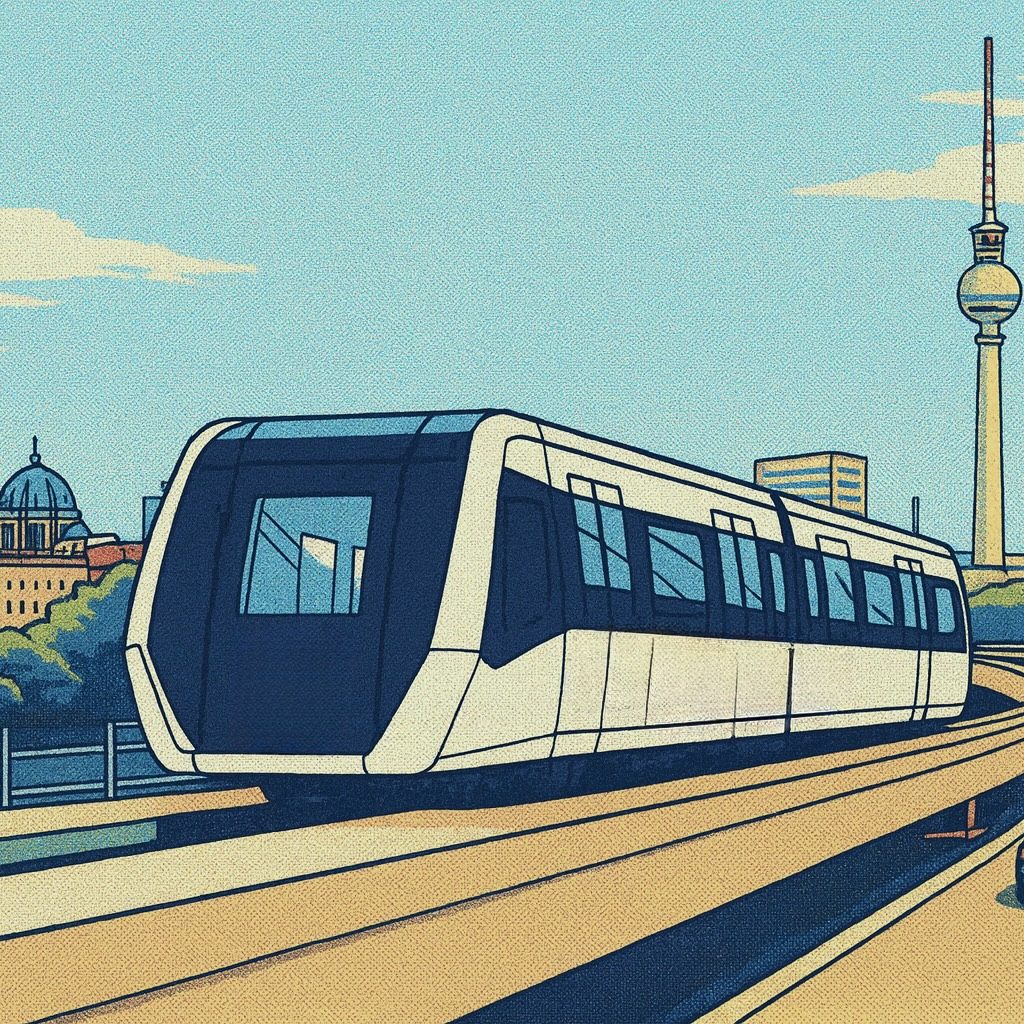
Ute Bonde still sees good chances for a maglev in Berlin. The maglev runs autonomously, it is quiet, and it is cheaper than the U-Bahn (subway). And in construction and operation it is also cheaper than the tram. For the fall she announces a comprehensive strategy paper that is to outline the capital’s mobility in 2035. She deliberately wants to keep all options open.
She also has concrete ideas for possible routes. For example, she could imagine an additional ring between the existing S-Bahn (suburban rail) and the state border, complemented by feeder lines connecting this ring to the existing network. Bonde also considers a direct connection from the International Congress Centrum (ICC) in the west of the city to BER airport realistic. Particularly interesting is her remark that travelers could check in or drop off their luggage in the city center before gliding to the airport without detours. But it is not only tourists and business travelers who would benefit from such a line. Capital logistics could also be relieved, since many freight distribution centers are located around Berlin. With a high-capacity maglev line, truck traffic and congestion in the city center could be significantly reduced.
A decisive advantage for the technology also arises at the federal level. In the current coalition agreement between the CDU/CSU and the SPD, the maglev is explicitly included in the Gemeindeverkehrsfinanzierungsgesetz (the federal act funding local transport infrastructure). This means it will in future be treated the same as U-Bahn and tram projects. For the first time in decades, there is thus the possibility of examining the maglev in official feasibility studies as an equal alternative and comparing it fairly with other modes of transport. That is a historic step after years of political blockade.
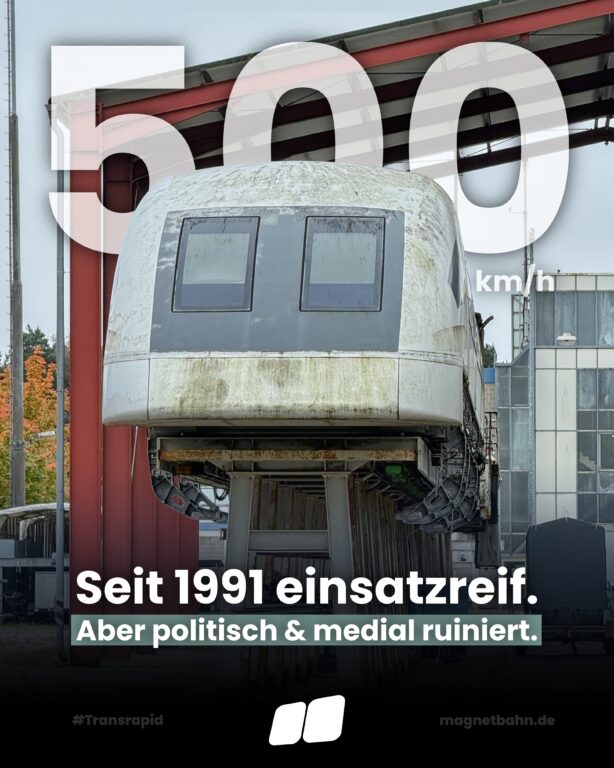
The fact that the public debate was skewed for so long was also due to the flood of false information spread against the project since the end of 2023. David Harder, founder of magnetbahn.de, clearly pointed this out at the time: countless pieces of false information circulated not only in the media but were also spread by climate activists, politicians and even professors of TU Berlin. Time and again, the Transport System Bögl (TSB), the maglev developed for local transport, was equated with completely different technologies in order to create artificial disadvantages. Major media houses such as ARD, ZDF or the Tagesspiegel used images of the high-speed Transrapid or the old Berlin M-Bahn, even though these systems have technically nothing to do with the TSB. Commentators fantasized about “Wuppertalization” (a reference to the Wuppertal suspension railway) or pointed to supposedly failed foreign monorails in order to discredit the German maglev.
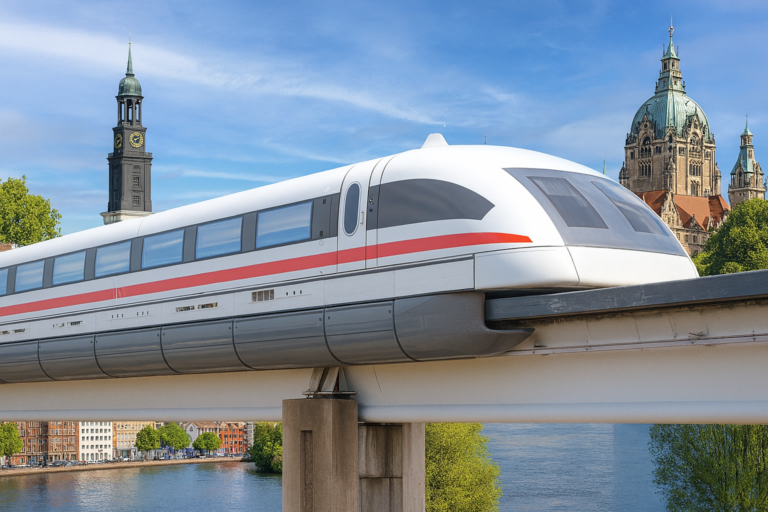
Yet the TSB is an independent, innovative technology. It runs quietly, efficiently and cheaply, needs no overhead lines, can be elevated, and with construction costs of around €20 to 25 million per kilometer is considerably cheaper than a U-Bahn or S-Bahn. Environmental associations such as BUND or Green politicians deliberately concealed these facts and instead resorted to hypocritical arguments, such as the alleged “concrete consumption”. That tunnel construction or conventional rail routes also require enormous amounts of concrete was left unmentioned. Even professors such as Markus Hecht of TU Berlin spread false claims about the system’s energy consumption or safety without backing them up with facts. Harder made it clear: the TSB is the only system besides the U-Bahn that achieves comparable transport capacities while being more flexibly integrated into the city.
The return of Ute Bonde with a clear commitment to the maglev therefore means far more than just a political initiative. It also marks a correction of the public debate. After years of disinformation, prejudice and political blockade, the maglev is finally being seen for what it is: a serious, future-proof option for Berlin.
With Ute Bonde and the CDU, the maglev in Berlin once again has strong advocates. After a long phase of stagnation, the debate is moving again. The clear commitment to the technology, the prospect of fair funding conditions and the concrete route proposals open up new perspectives. The message is unambiguous: the future of mobility in Berlin must include the maglev, and the false information that has held this project back for years belongs finally in the past